Structure Tents: The Temporary Building
Clear-span engineered structures for large events, long durations and serious weather. What they are, who needs them, and what to plan.
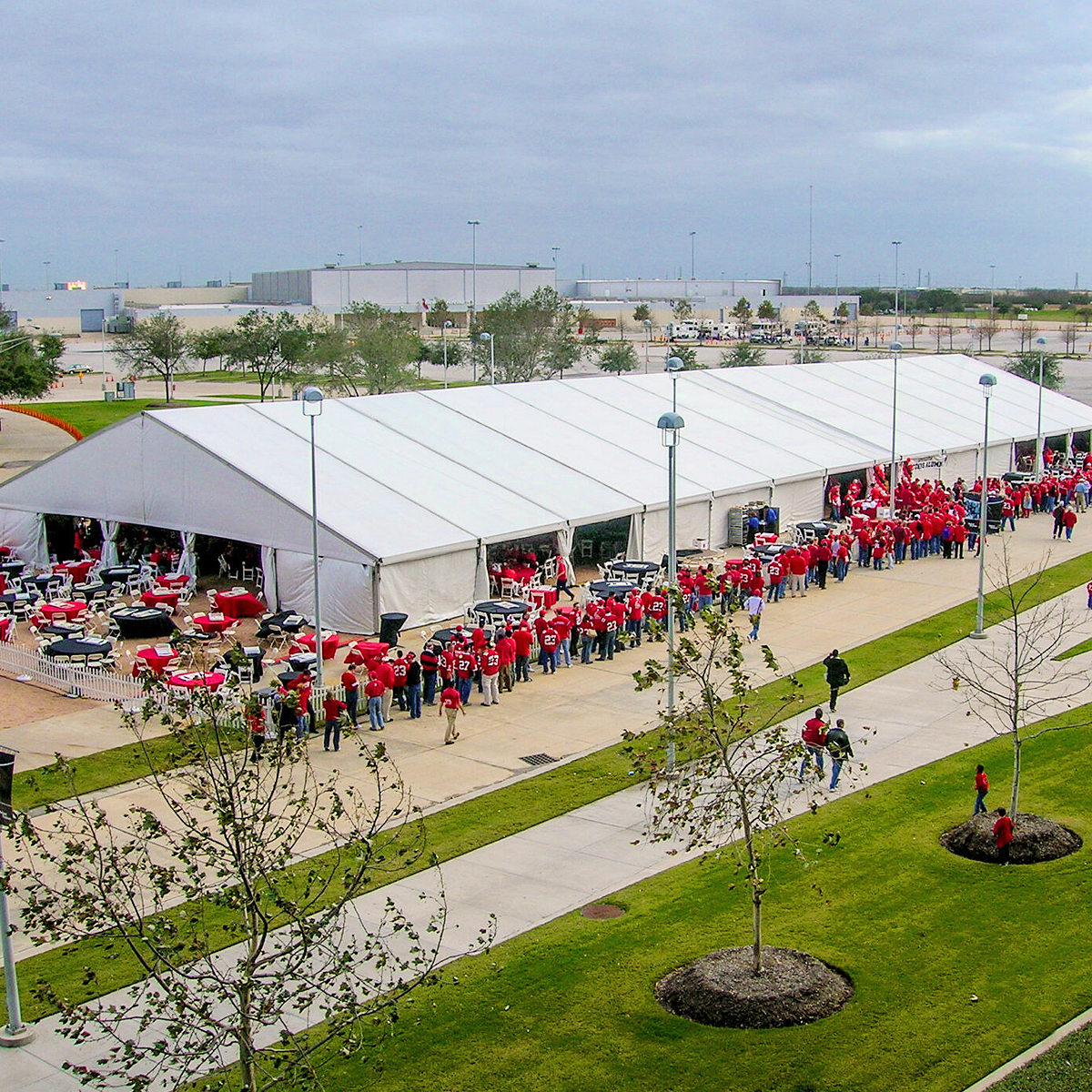
A structure tent is the heavy-duty end of the tent range: a rigid, clear-span aluminum frame with no center poles and no guy ropes, engineered to stand for weeks and rated for wind and rain a lighter tent never could. When the event is big, long, or cannot be rained out, this is the structure. This guide explains what makes a structure tent different, the three situations that call for one, and what goes into installing it across Houston and the Gulf Coast.
Browse Structure Tents and Accessories
The structure tent products and structure-specific walls, doors and ballast in the ACME rental catalog. Add what you need to your quote, or open the full Structure Tents rental page.
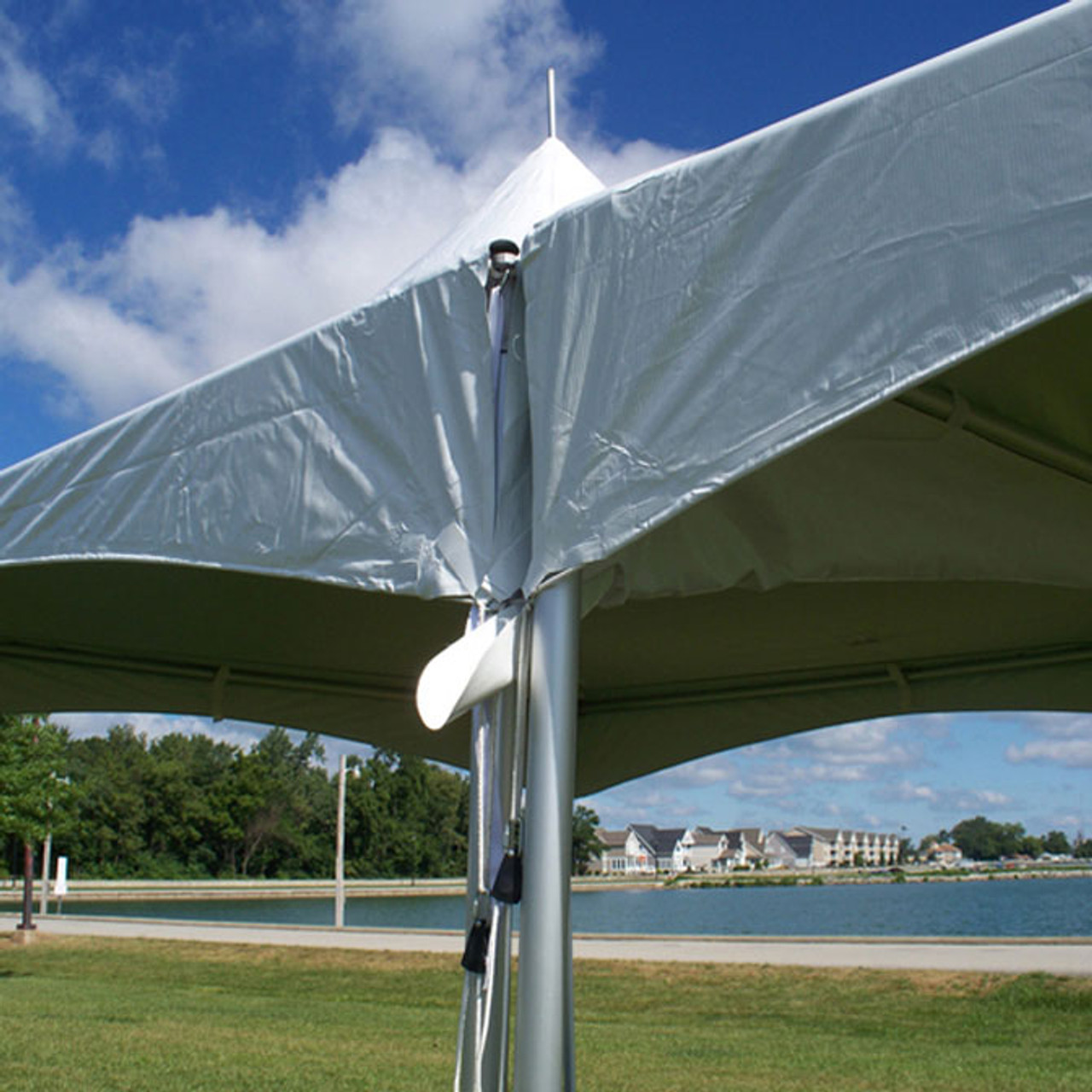
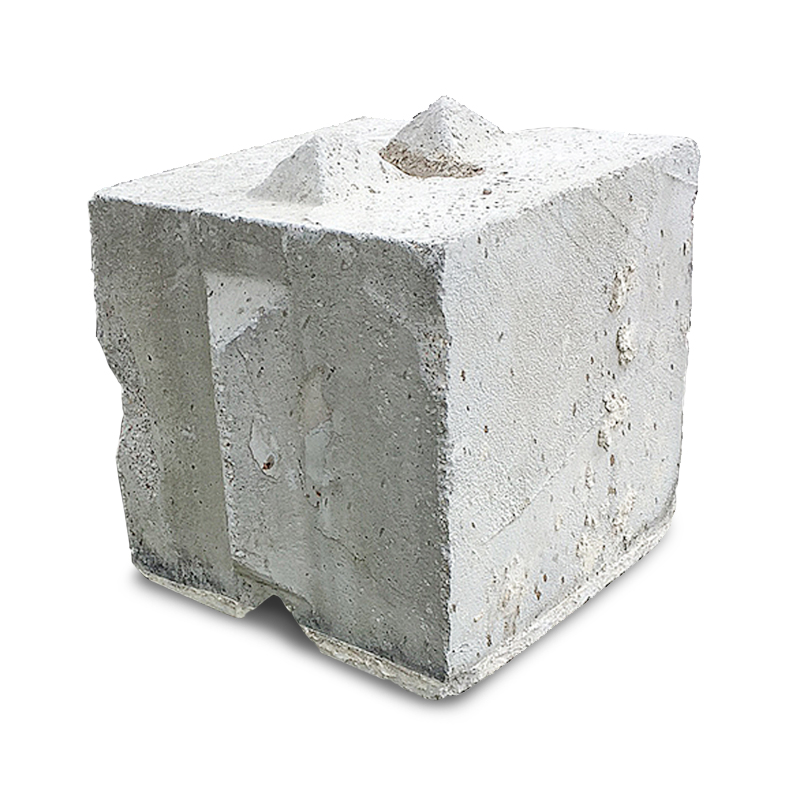
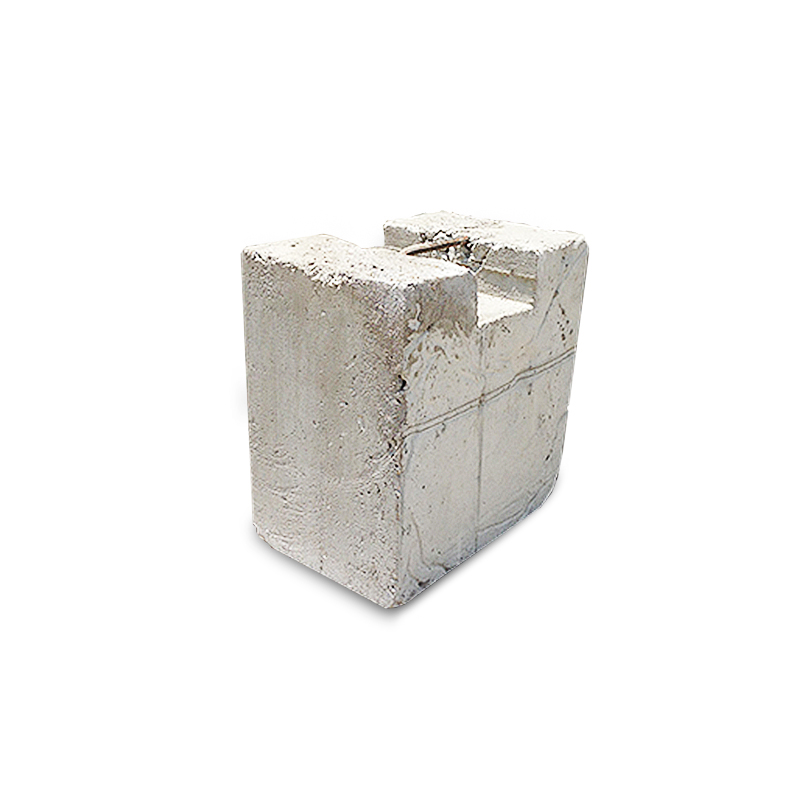
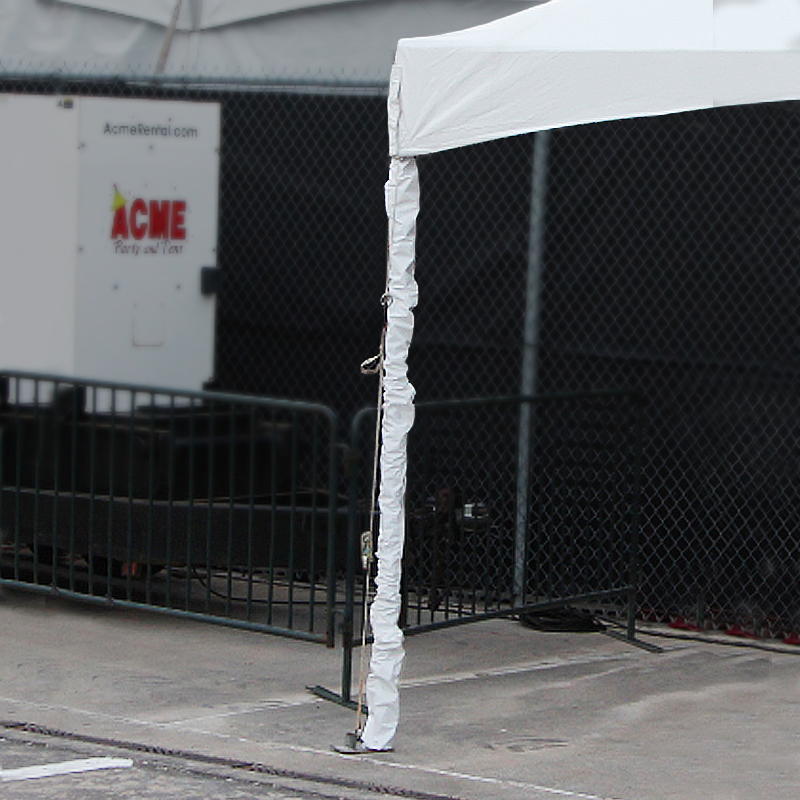
What Makes a Structure Tent Different?
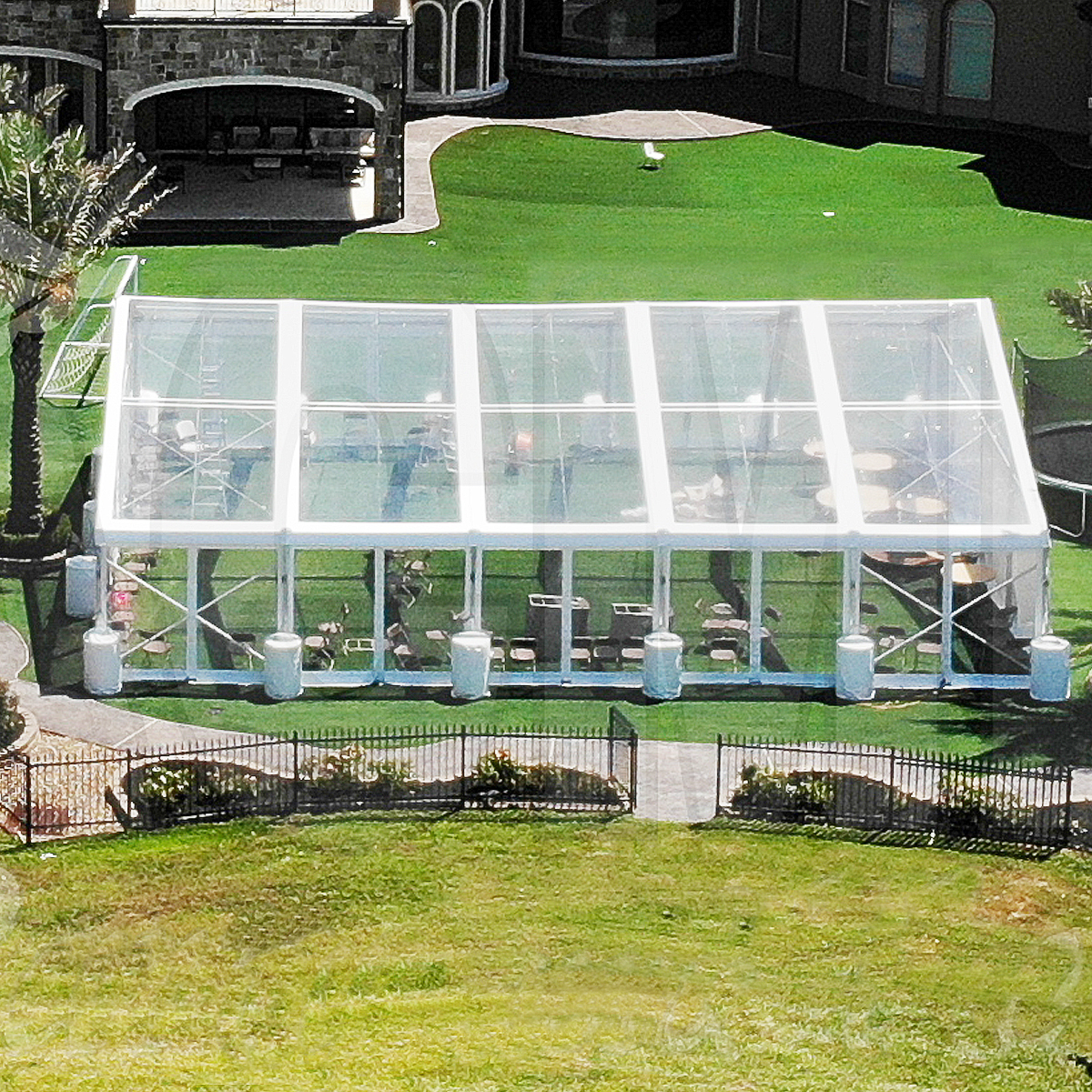
The frame, and what the frame lets you do. A structure tent is clear-span: a rigid aluminum box-beam frame carries the whole load, so the interior is completely open. No center poles, no guy ropes cutting across the floor, no obstruction between the stage and the back row. That is the difference between a tent you put an event in and a tent that is the venue.
It is also engineered. Where a pole tent or frame tent is rated for a day in fair weather, a structure tent is built to stand for weeks and holds up to wind and rain that would take a lighter tent down. The fabric, the anchoring and the connections are all specified for duration, not just for a Saturday.
Structure tents scale in clear-span widths and extend in bays along their length. You add length rather than hunting for one enormous tent, and the usable area is the whole area because nothing stands in the middle of it.
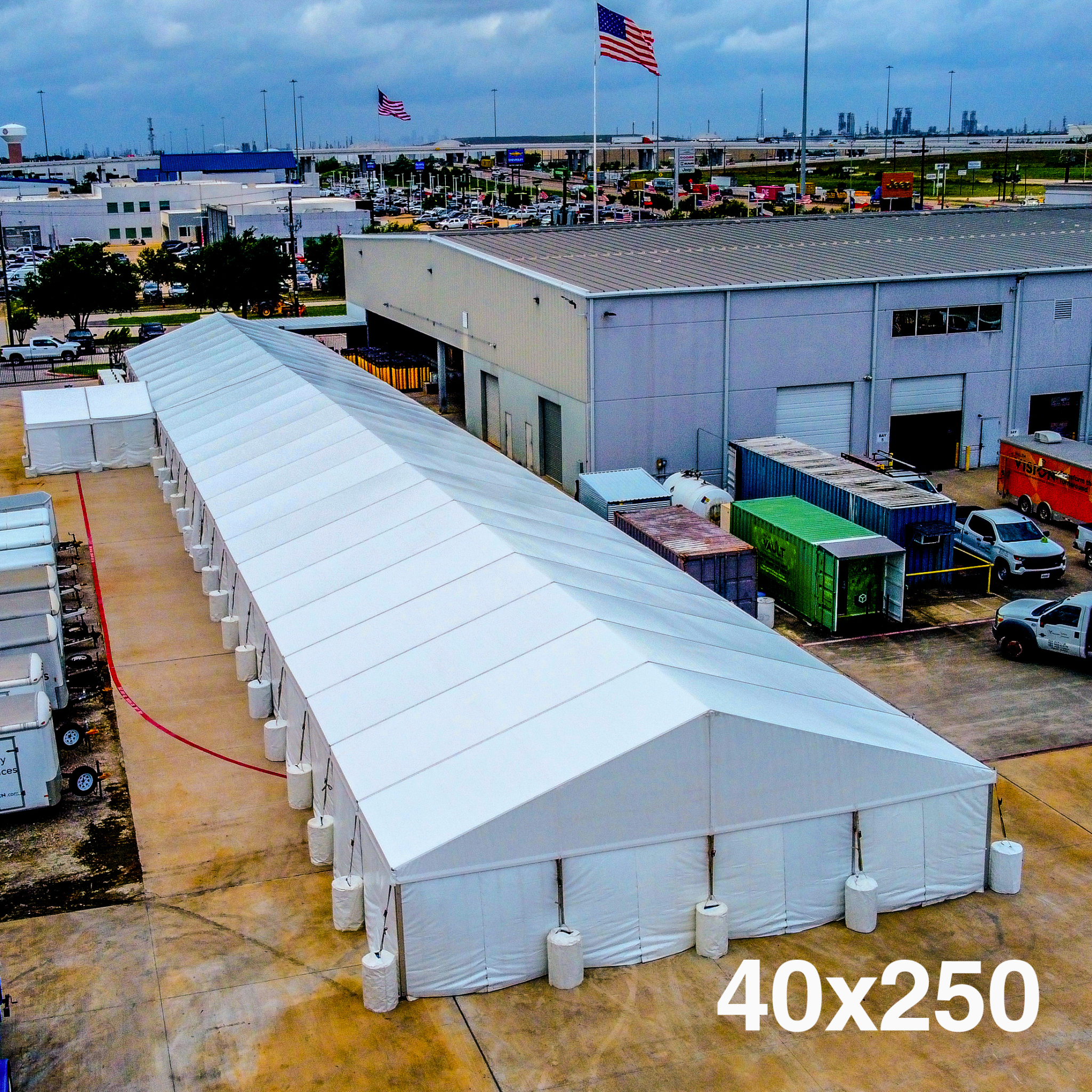
What Is a Structure Tent Used For?
Structure tents show up wherever the tent has to behave like a building. On the event side that means the big, formal, photographed occasions. On the commercial and industrial side it means covered space that has to stand through a season. Typical uses across Houston and Southeast Texas:
- Galas, fundraisers and award nights that need an unobstructed span
- Wedding receptions and large tented venues
- Exhibitions, general sessions and corporate general assemblies
- Commercial installs standing for weeks or months
- Warehouse and storage structures on a company's own yard
- Industrial sites, turnarounds and worker facilities
- Emergency response and disaster relief when a building is out of service
When Do You Need a Structure Tent?
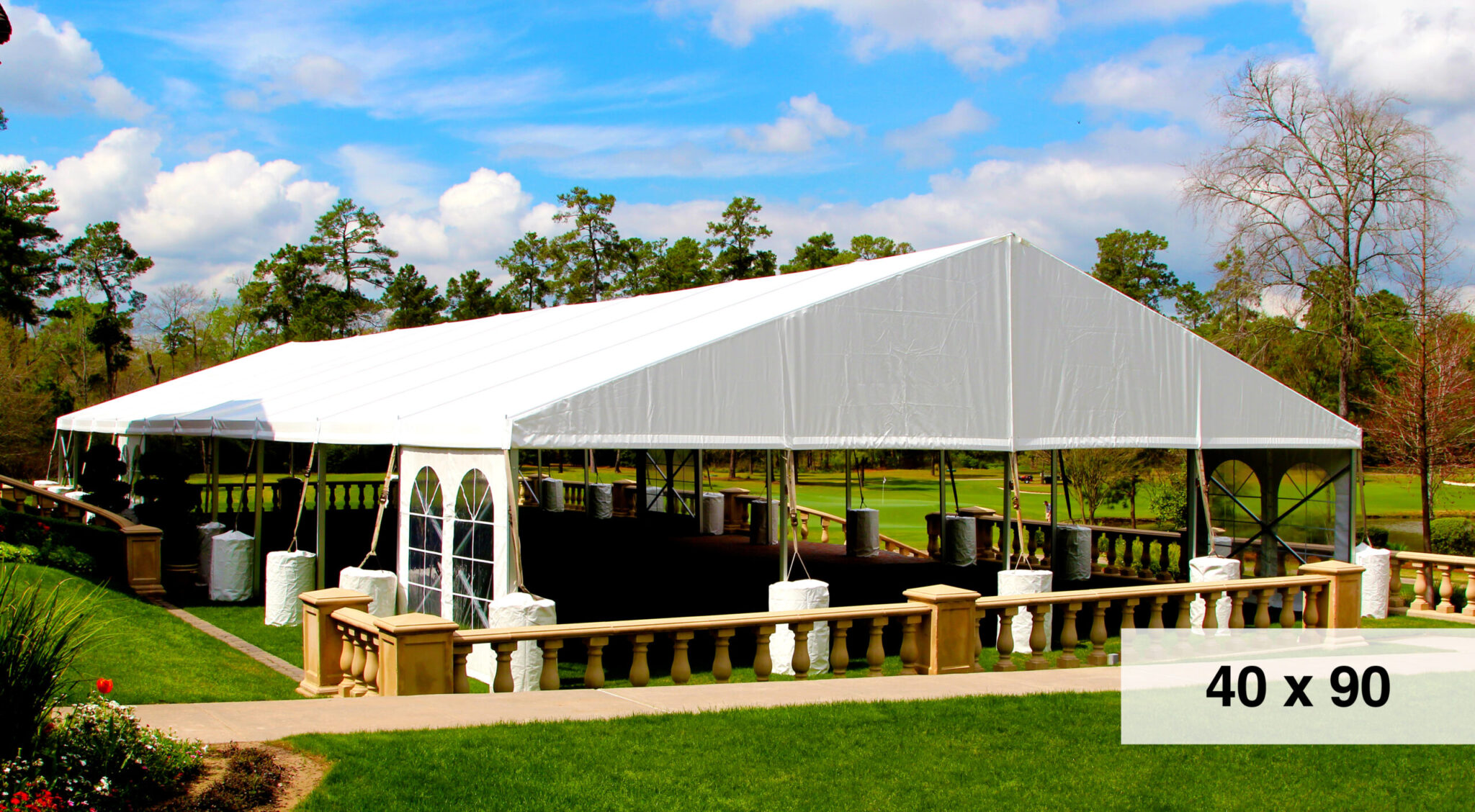
Three situations, and usually more than one at once.
Scale. Large guest counts that need an unobstructed span: galas, general sessions, exhibitions. When the room has to be one room, a structure tent is how you get there.
Duration. Anything standing for weeks rather than a weekend, including long-duration industrial use. A structure tent is specified to stand, be maintained and be handed back.
Weather. Events that cannot be rained out or blown off, where the structure is the insurance policy. If the date is immovable and the budget behind it is real, this is the tent that protects it.
If your event is a single afternoon on a fair-weather day, a lighter tent is cheaper and enough. A structure tent earns its cost when one of those three is true. The Frame Tent Guide covers the lighter option.
What Sidewalls and Doors Go With a Structure Tent?
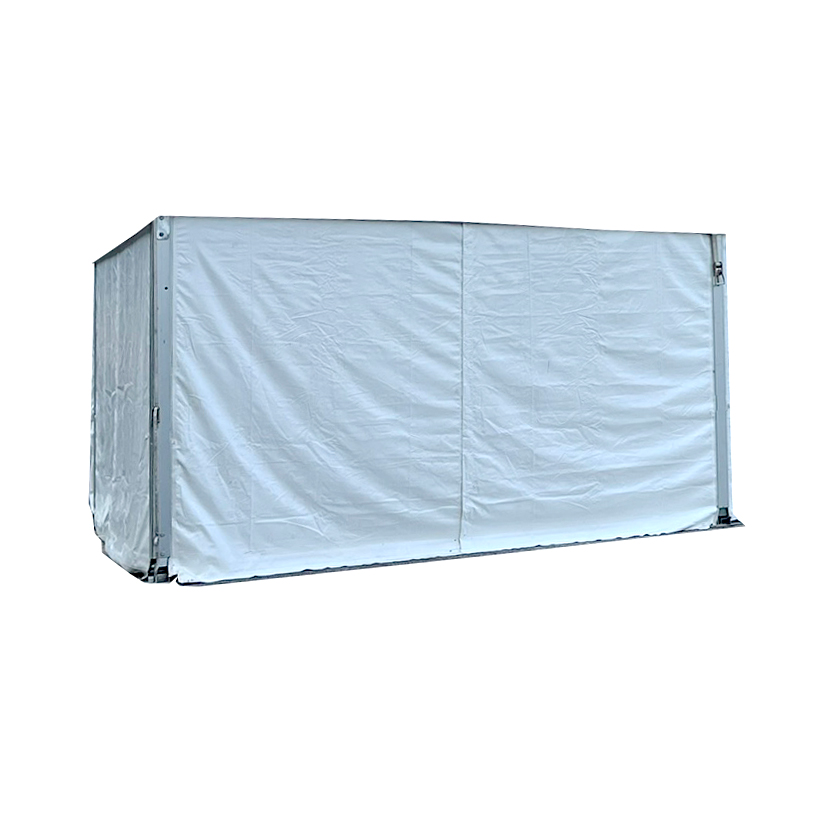
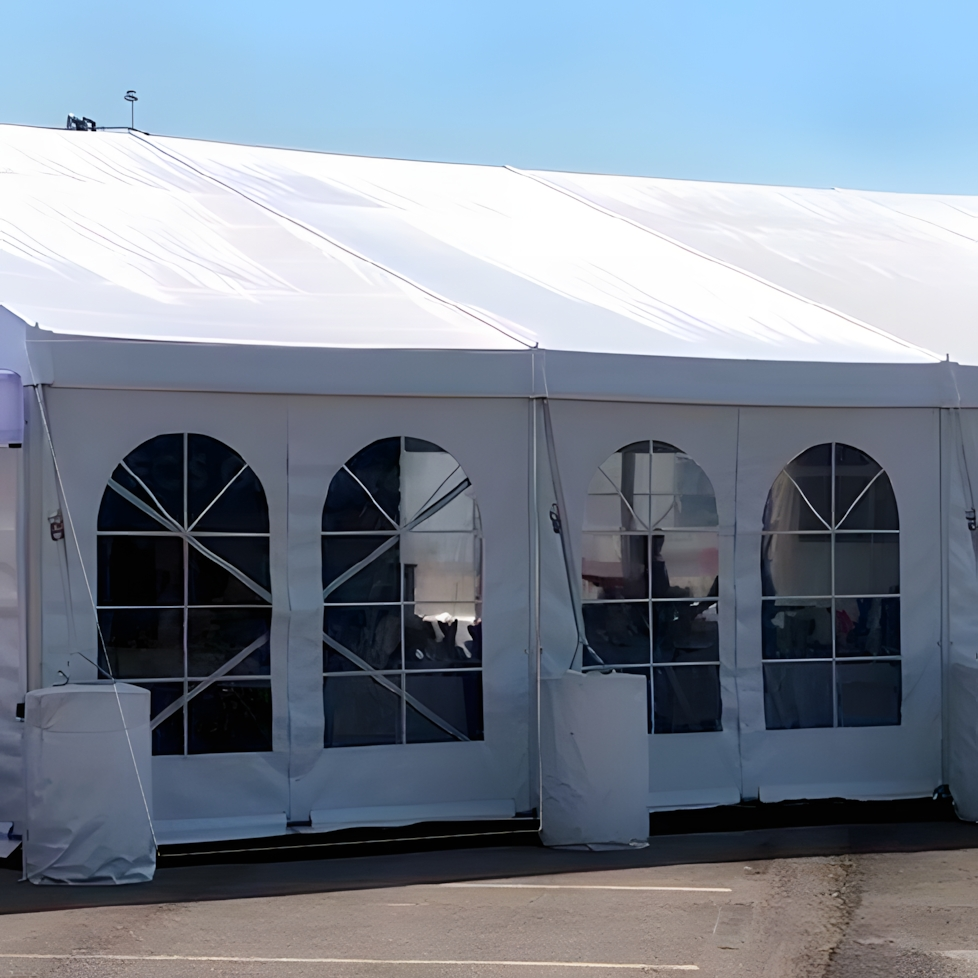
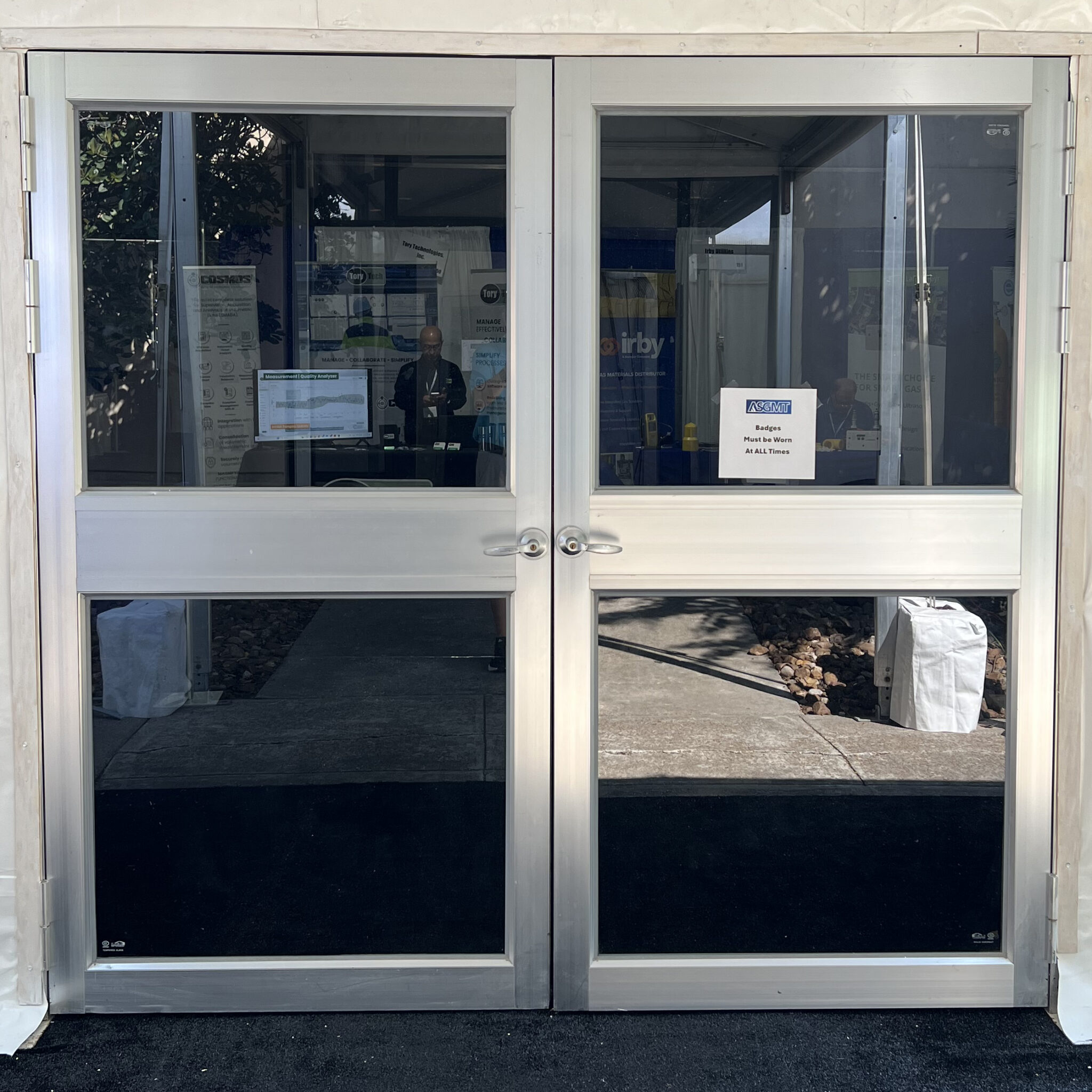
Structure tents take structure-specific walls, not the frame tent ones. Solid sidewalls close the tent for climate control or privacy. Cathedral window sidewalls keep it enclosed but let light in and give a finished look for a wedding or gala. Double glass doors turn an opening into a proper entrance, which matters when the tent needs to feel like a building.
Walls are not optional if you are cooling the tent. You cannot air-condition an open-sided structure. If climate control is in the plan, sidewalls are part of the order, and the generator and climate units are sized against the enclosed volume.
Tent pole and leg covers tidy what guests see. Rain gutters bridge joined structures. The Tent Accessories Guide explains how each piece is chosen to fit the tent.
What Else Does a Structure Tent Need?
A structure tent is a foundation the rest of the event sits on, so plan the layers together.
- Anchoring: on hard ground it needs concrete ballast rather than stakes, which takes perimeter space
- Flooring: for a long install or uneven ground, sub-flooring levels the space
- Power and climate: generators and climate control sized against the enclosed volume
- Lighting: what makes the space look like anything after dark
- Permits: larger structures can attract fire marshal review, so share the size and site early
How Does Structure Tent Delivery and Installation Work?
A structure tent is delivered, engineered and installed by ACME crews. This is not a drop-off product. It goes up in sequence and needs vehicle access to the site and a clear, measured footprint. Larger structures commonly attract fire marshal review, and the requirement scales with span and occupancy.
ACME installs across Greater Houston and the Gulf Coast, including Katy, Sugar Land, The Woodlands and Galveston, with capability for long-term and industrial installs. Worth confirming when you book: the span and length you need, how long it stands, whether it is walled and climate-controlled, the ground type, and your venue’s permit and fire requirements.
If the structure will stand for months, ask about long-term tent leasing rather than a rolling rental. Tell us the span, the duration and the site. Request a quote or call 713-729-2424.
Structure Tents on Industrial and Commercial Sites
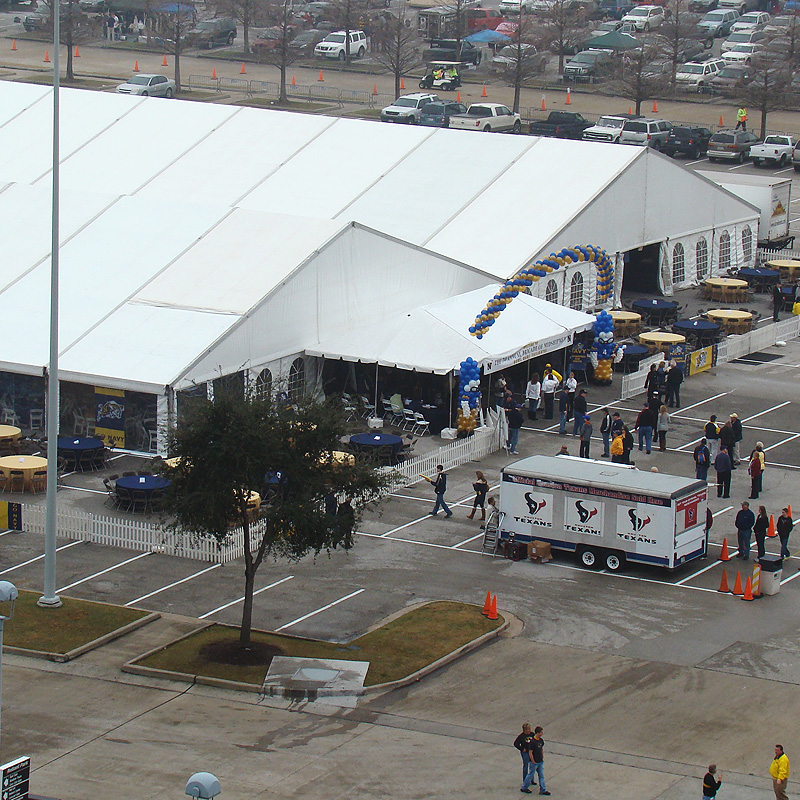
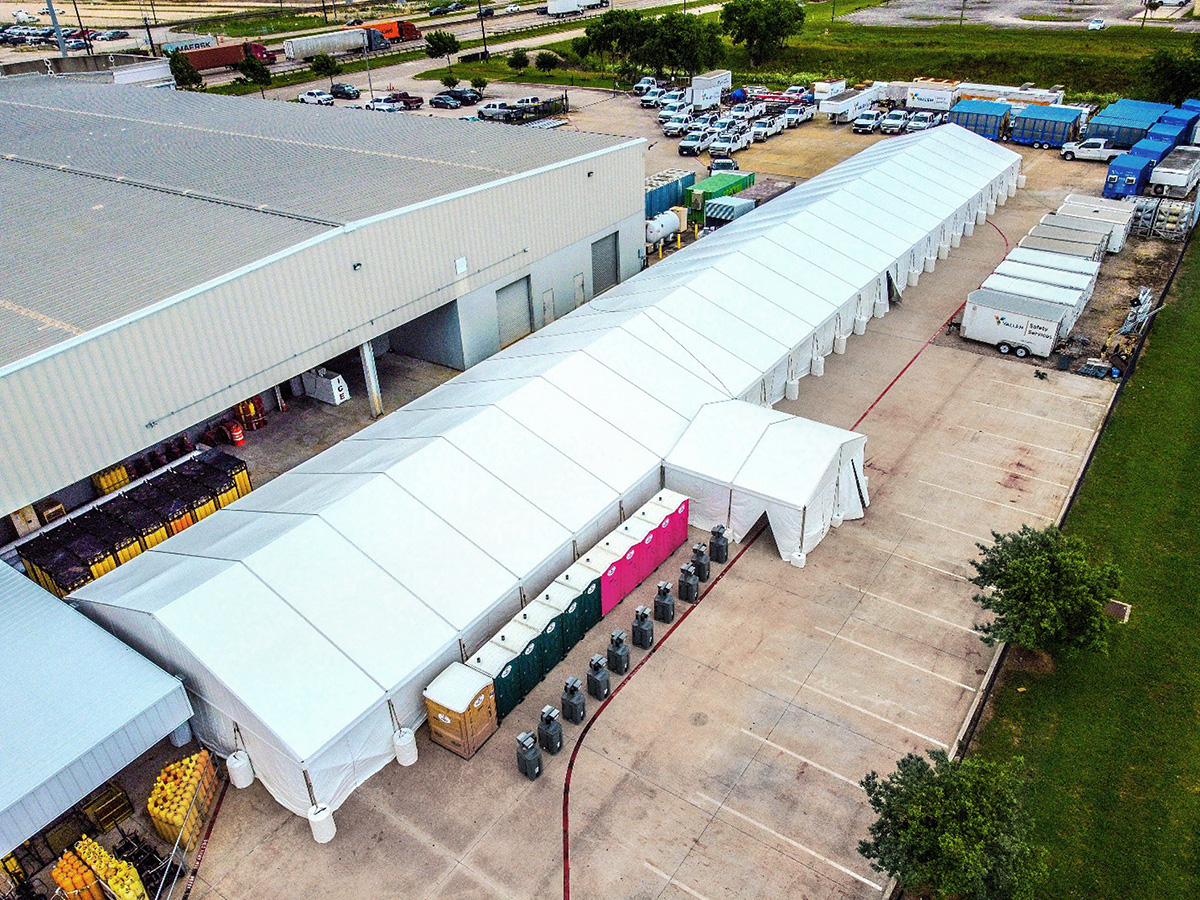
Outside of events, structure tents are the backbone of ACME’s commercial and industrial work. They cover turnarounds, parts staging and worker facilities at refineries and plants. They become temporary warehouses on a company’s own yard. And when a building is out of service after a storm or a facility failure, a structure tent is what the Quick Response Team puts up so the operation keeps running.
On those jobs, walls, doors, flooring, power and climate are standard rather than extras, because people are working under the structure, not celebrating. The Commercial Tent Guide and Warehouse Tent Guide cover those applications, and industrial tenting lists the site types ACME serves.
How Far Ahead Should You Plan a Structure Tent?
Earlier than an event tent, because the structure brings paperwork and sequencing with it. A sensible order of operations:
- Share the span, the duration and the site so ACME can survey it and confirm anchoring, access and level ground
- Decide on walls, doors, flooring and climate at the same time as the tent, not after
- Start any permit or fire marshal conversation as soon as the size is known, since review takes time
- Confirm the build window and the collection window with the venue or site manager
- If the structure might stand for months, ask about a lease at the quote stage rather than in month eight
Structure Tents for Weddings and Galas
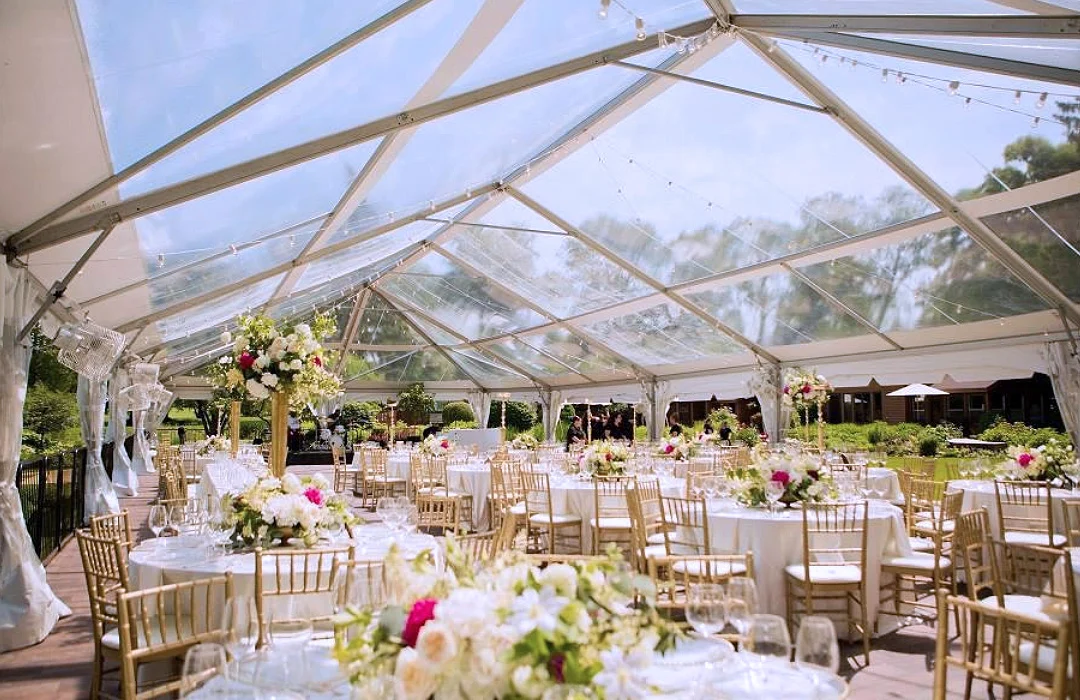
On the event side, a structure tent is the venue. Large wedding receptions, galas, fundraisers and award nights choose it for the unobstructed span: nothing between the stage and the back row, nothing in the middle of the dance floor, and a frame strong enough to hang serious lighting and decor from.
Cathedral window sidewalls and double glass doors give the structure a finished, building-like look, and the clear top version swaps the vinyl roof for the sky. Because a structure tent is rated for weather a lighter tent is not, it is also the tent that protects an immovable date and the budget behind it. The Wedding Tent Rentals guide plans the full footprint around it.
Plan your structure tent with ACME
Tell us the span, the duration and the site. We will spec the structure, the walls, the anchoring and the power, and build it with one crew.
Frequently Asked Questions
A clear-span tent built on a rigid aluminum frame with no center poles and no guy ropes, so the interior is completely open. It is engineered to stand for weeks and rated for far more wind and rain than a pole or frame tent.
Both are pole-free inside, but a structure tent is heavier-duty: a box-beam frame engineered for large spans, long durations and serious weather. Frame tents suit smaller footprints and shorter events.
When the event is large enough to need an unobstructed span, long enough to stand for weeks, or important enough that it cannot be rained out. If none of those apply, a lighter tent is cheaper and sufficient.
Yes, but it has to be walled first. Solid or cathedral window sidewalls close it in, and the generator and climate units are sized against the enclosed volume.
Often, for a structure of this size. Larger temporary structures commonly attract fire marshal review, and the requirement scales with span and occupancy. Tell us the size and site early and read our Houston Event Permit Guide.
Always. A structure tent is an engineered install, not a drop-off. ACME crews deliver and build it in sequence across Greater Houston and the Gulf Coast.
Family-Owned
Serving Houston and the Gulf Coast for decades
Houston & Gulf Coast
Delivering across Southeast Texas
24/7 Quick Response
Disaster relief & emergency deployments
One Vendor
Tents, furniture, power, climate & service
Plan your next event with ACME and let us worry about the details!
From corporate gatherings to a festival for thousands, ACME’s event specialists will walk you through the entire process.