
Event Flooring, Carpet & Red-Carpet Rental Guide
Level ground, finished floors, and red-carpet moments, anywhere in Houston
Why Event Flooring Matters
Flooring is the quiet hero of event production. It takes uneven, soft, or unsuitable ground, grass, dirt, gravel, cracked pavement, and turns it into a stable, level, finished surface that guests never think about, which is exactly the point. Heels don’t sink, tables don’t wobble, wheelchairs roll freely, and the whole event gains the solidity of a real venue. ACME’s flooring and carpet systems are modular, which is where the versatility comes from: the same system levels a sloping backyard, covers a stadium floor for a graduation, protects a golf course green, floors a tent or temporary structure, and can even span a swimming pool to reclaim that square footage for your party.
Subfloor First: the Sequencing Rule
The single most important rule in event flooring: on grass or dirt, the leveled subfloor comes first, always, before anything goes on top. Dance floors, carpet, and finished surfaces are not designed to sit directly on soft or uneven ground; they need the structural layer beneath them. The correct order on natural ground is subfloor, then finish (dance floor, carpet, or both). Skip the leveling step and floors flex, seams open, and the surface fails exactly when the party is on it. When ACME builds your floor, the sequencing is handled, but it’s worth knowing when you’re budgeting, because “a dance floor on the lawn” is really “a subfloor plus a dance floor,” and now you know why.
Carpet: Almost Always Custom
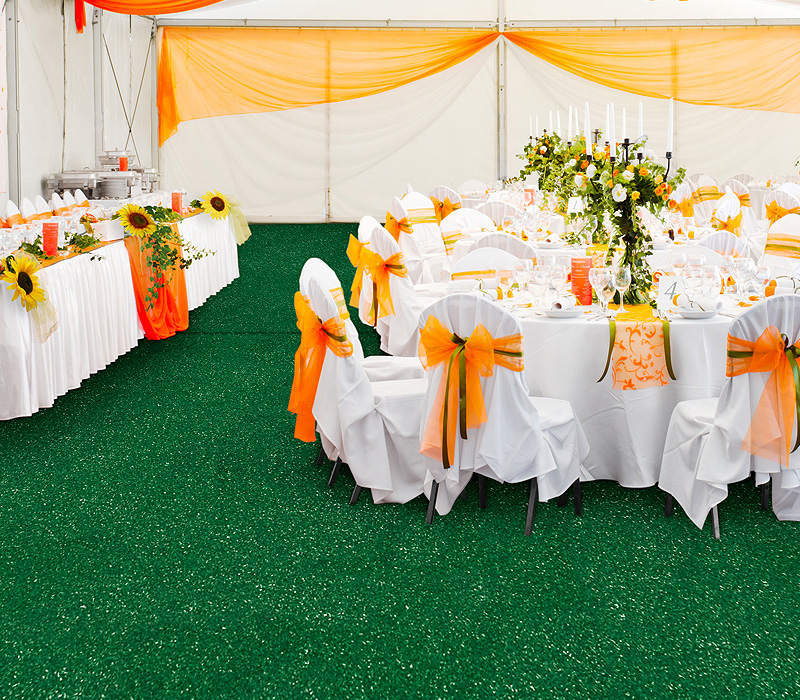
Event carpet is rarely a cookie-cutter item, because event spaces never are. Every site is a different size and shape, so carpet is almost always custom-cut to the space. Installation depends on the surface: some carpet staples directly onto the modular flooring beneath it; other, more rigid carpet types can be secured straight onto pavement without flooring underneath. The rule to remember mirrors the subfloor rule: carpet on grass requires flooring installed first, carpet alone on a lawn isn’t a floor, it’s a rug waiting for rain. Color-matched and branded carpet turns the floor itself into part of the design, a company color underfoot at a product launch, or deep red for a gala entrance.
The Red-Carpet Moment
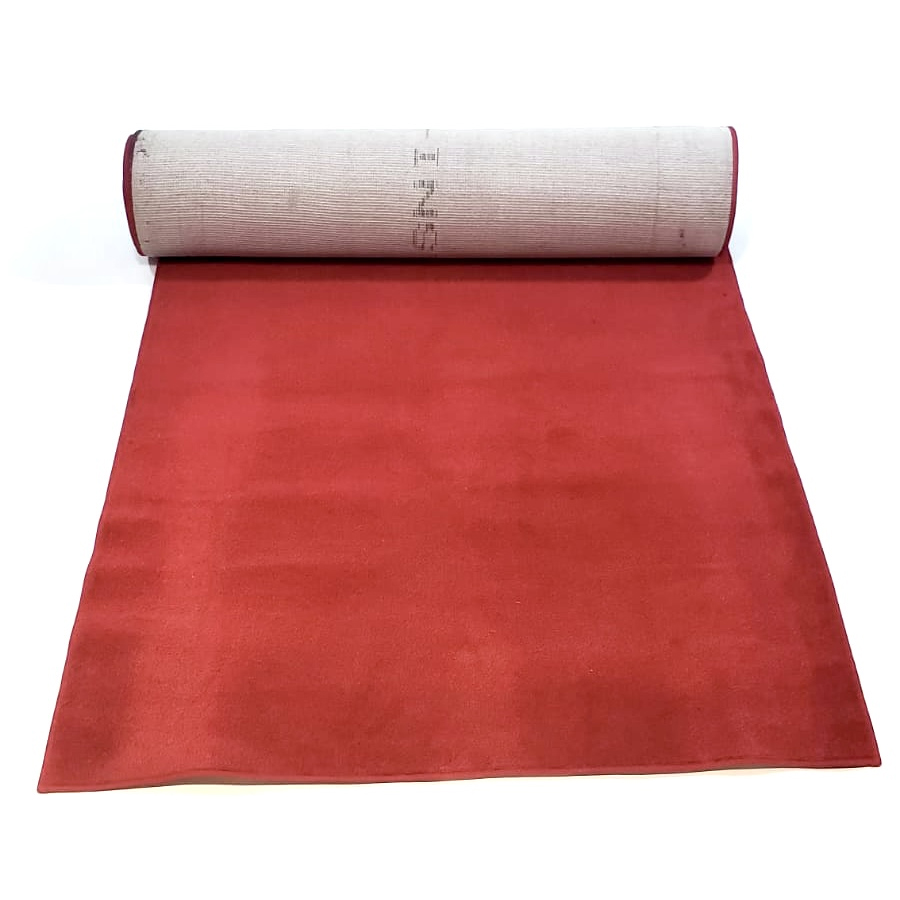
For galas, premieres, grand openings, and photo-worthy entrances, the red-carpet runner is the classic for a reason: it tells every guest, from the curb, that tonight is an occasion. Paired with stanchions and good lighting, it creates the arrival moment cameras love. Runners pair with base flooring for a finished, stable entrance over any surface, and alternative colors, classic black among them, carry the same effect in your event’s palette.
Dance Floors vs. Walkways: Different Jobs, Different Specs
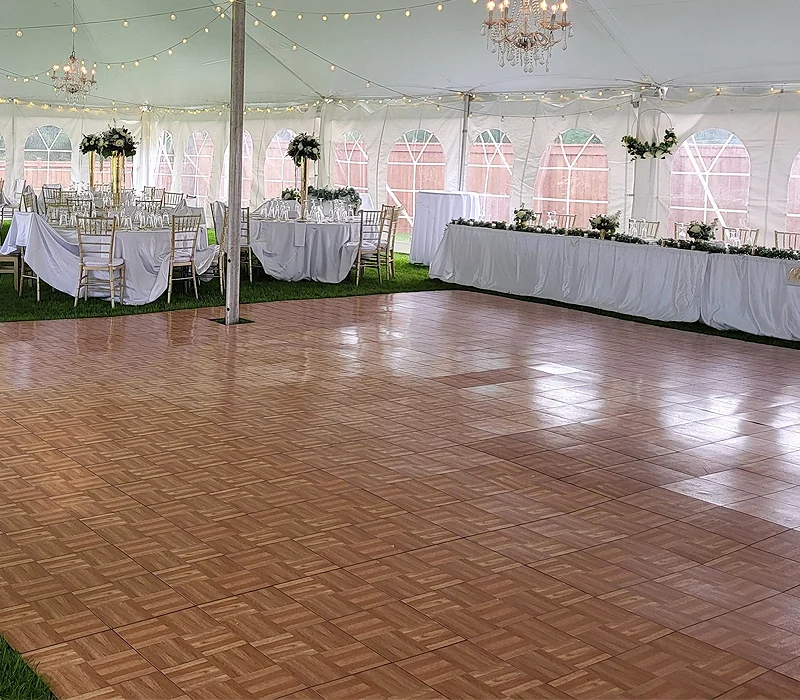
Two flooring uses that look similar and aren’t: a dance floor is a finished performance surface that demands the full stable subfloor sequence beneath it; walkway flooring is about coverage and leveling for foot traffic, guiding guests across soft ground, protecting turf, connecting parking to the party. Walkways matter more than hosts expect: they keep heels clean, define the route through a large site, and after rain they’re the difference between a muddy trek and a dry arrival.
Industrial & Jobsite Flooring
The same modular systems work well beyond parties. On industrial sites, event flooring becomes temporary walkways and working surfaces, stable footing across soft ground for crews, covered routes during turnarounds, and protective flooring inside temporary structures. It’s a small line item that pays for itself in safety and cleanliness on long-duration sites, and it delivers with the same crews and scheduling as ACME’s long-term industrial tenting.
Choosing by Venue: a Quick Matrix
- Backyard on grass, subfloor + finish floor; add walkways from the gate if ground is soft
- Stadium or gym, protective covering over the existing floor for graduations and ceremonies
- Parking lot or plaza, rigid carpet or flooring directly on pavement; ballast-anchored tent above
- Golf course or delicate turf, floated modular floor that protects the surface it covers
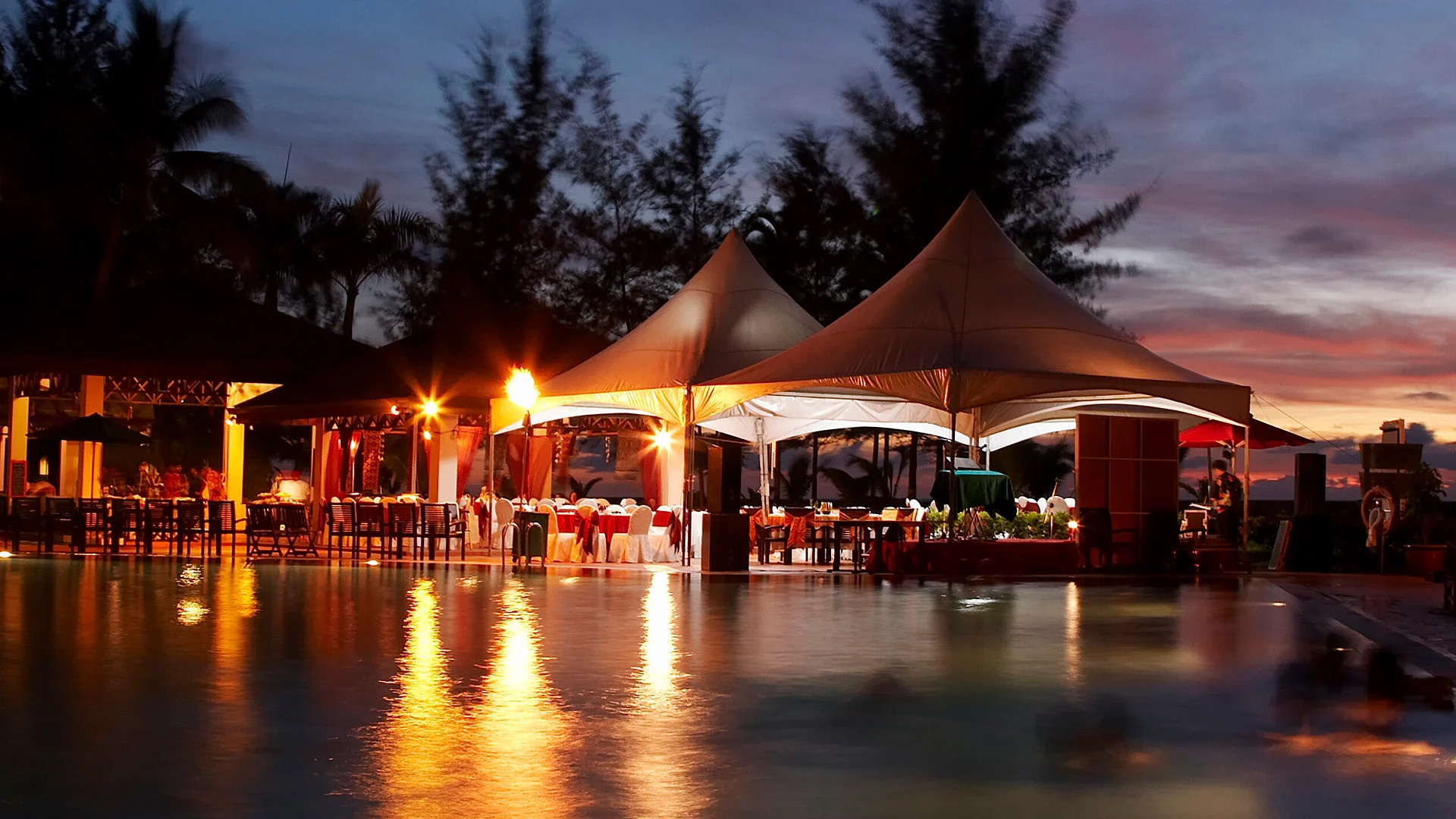
- Poolside (or pool-top), engineered pool cover flooring that turns water into usable square footage
- Tent interiors, full-coverage floor with carpet finish for the polished venue feel
Every one of these starts with the same question: what’s the ground like, and what has to happen on top of it? Bring us those two answers, or a photo, and we’ll spec the rest.
Frequently Asked Questions
Yes, always. On grass or dirt, a leveled subfloor goes down first, then the dance floor on top. A dance floor directly on soft ground will flex and fail.
No, carpet on grass requires flooring underneath. On pavement, some rigid carpet types can be secured directly without a floor layer.
Yes, engineered pool-cover flooring spans the pool and reclaims that footprint as usable, stable event space. It’s a favorite trick for tight backyards.
Almost never, carpet is custom-cut to each site’s dimensions, which is also what makes color-matched and branded floors possible.
Yes, the same modular systems serve as temporary walkways and work surfaces on jobsites and during turnarounds, wherever crews need stable, clean footing.


Get the floor your event deserves
Tell us your surface and your plans, we’ll handle leveling, sequencing, and the finished look.