Frame Tents: The Go-Anywhere Event Tent
What a frame tent is, where it works, and why it is the first tent most Houston event planners should price.
A frame tent stands on its own rigid frame with no center poles and no guy ropes. The structure is on the outside, so the whole interior is usable and the footprint is exactly the tent size. That one design choice is why frame tents cover more Houston weddings, corporate events, restaurant patios and backyard parties than any other tent type ACME installs. This guide explains what a frame tent is, what it is used for, when it is the right call, and what to plan alongside it.
Browse Frame Tents and Accessories
These are the frame tent products and frame-specific accessories in the ACME rental catalog. Pick the pieces you want, add them to your quote, or open the full Frame Tents rental page for the complete range.
What Is a Frame Tent?
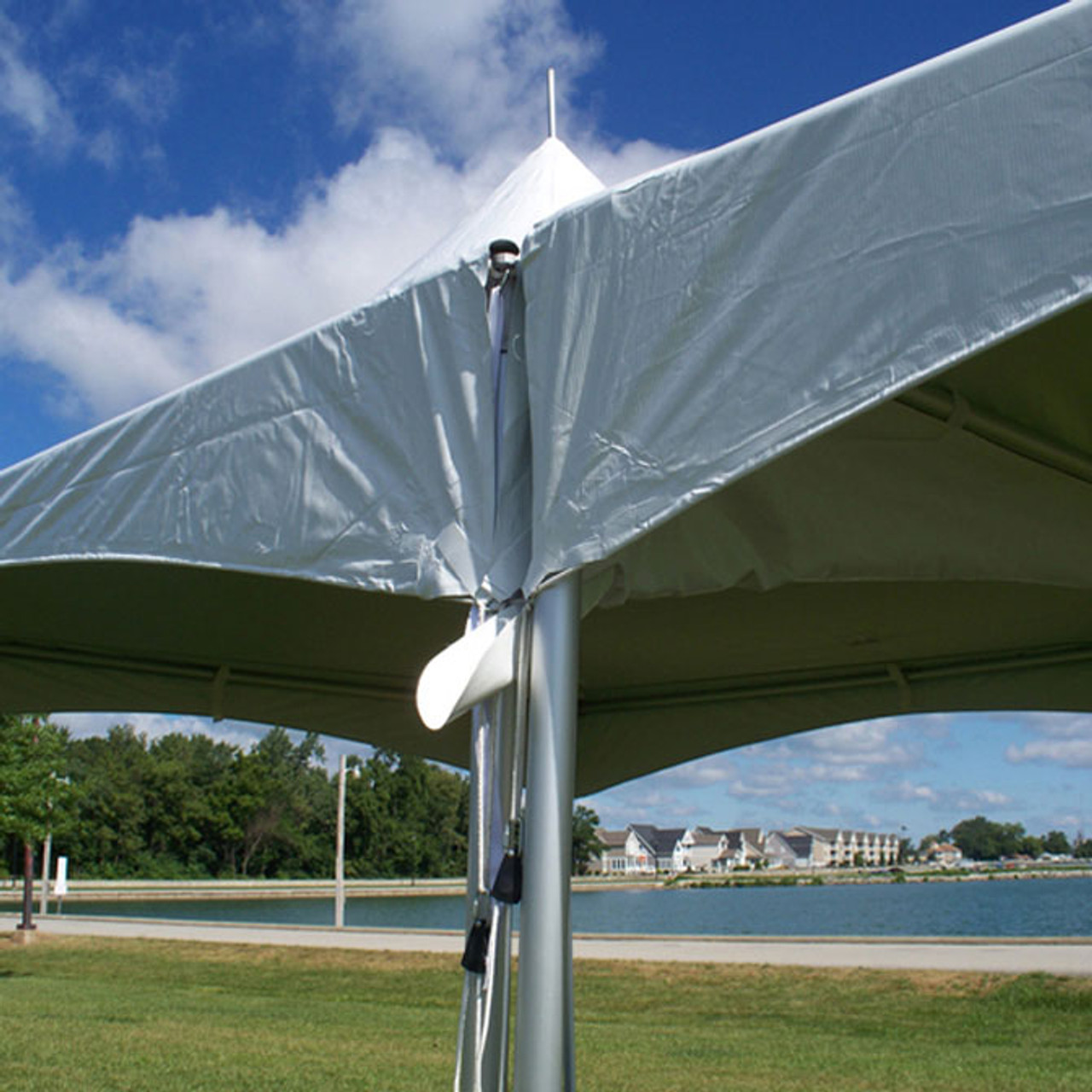
A frame tent is a tent whose structure is on the outside. A rigid frame carries the load of the roof, which means there is no center pole to work around inside and no guy ropes staked into the ground around the edge. Every square foot under the canopy is usable, and the tent occupies exactly its own footprint with no extra margin for ropes.
Compare that with a traditional pole tent, which needs soft ground to stake into and clear space around it for the ropes. A frame tent needs neither. It is the design that lets a tent go where a pole tent cannot: on concrete, a deck, a driveway, or pressed right up against a building to extend a doorway.
Frame tents are also clear span, meaning the interior has no poles at all. That is the same principle a structure tent uses, just at a lighter weight and a faster install. Think of the frame tent as the flexible, quick-install member of the clear-span family.
What Is a Frame Tent Used For?
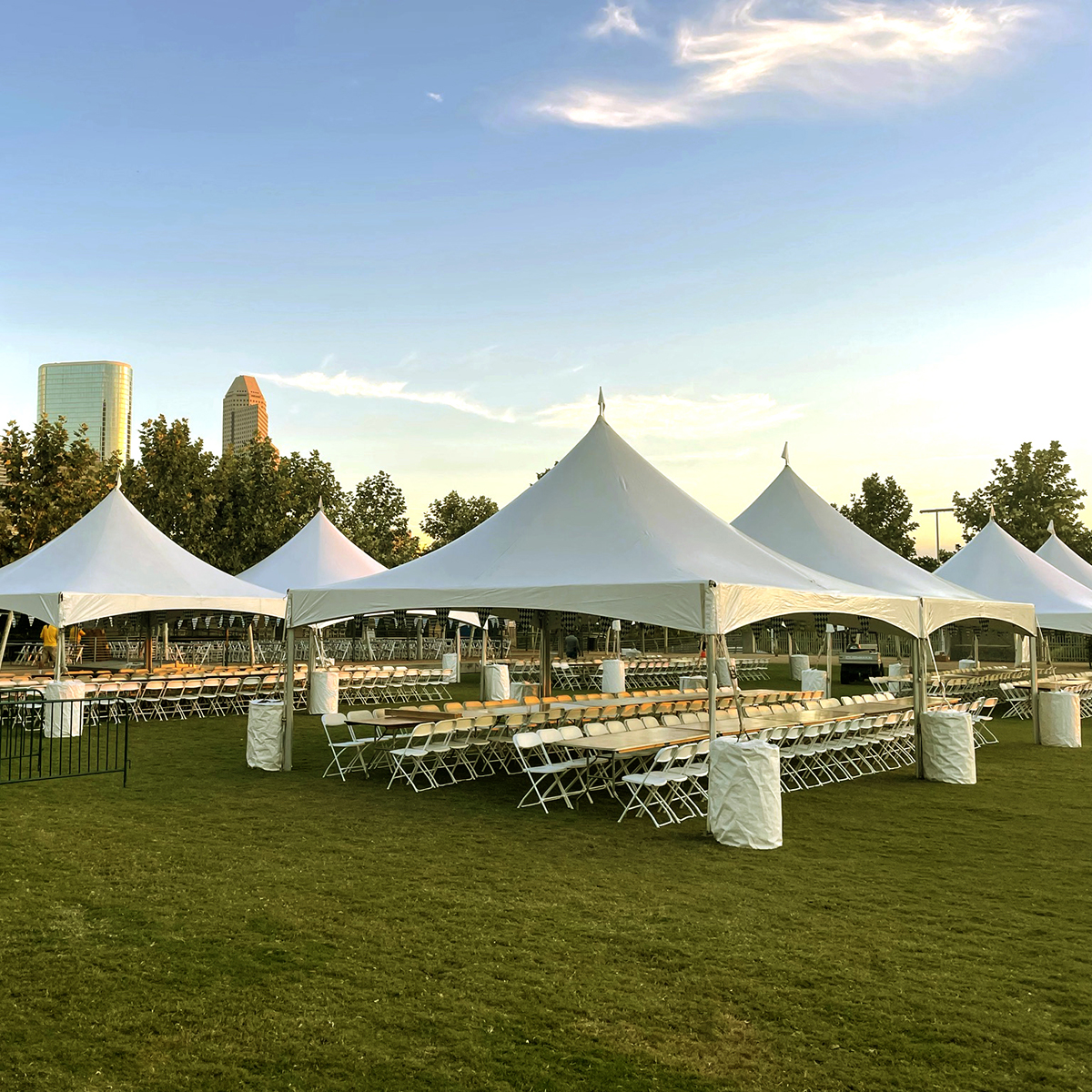
Almost everything that happens outdoors on a fixed date. Because a frame tent installs on grass, asphalt or concrete and does not need staking, it is the default for sites where the ground is anything but a lawn. The most common uses ACME crews see across Houston and the Gulf Coast:
- Weddings and receptions on lawns, patios and courtyards
- Corporate events, company picnics and campus gatherings
- Restaurant patios and outdoor dining extensions
- Backyard parties on paved areas, pool decks and driveways
- Parking lot activations, grand openings and vendor areas
- Industrial sites where the surface cannot be staked
- Connecting two buildings or extending a doorway for weather cover
Why Might You Need a Frame Tent?
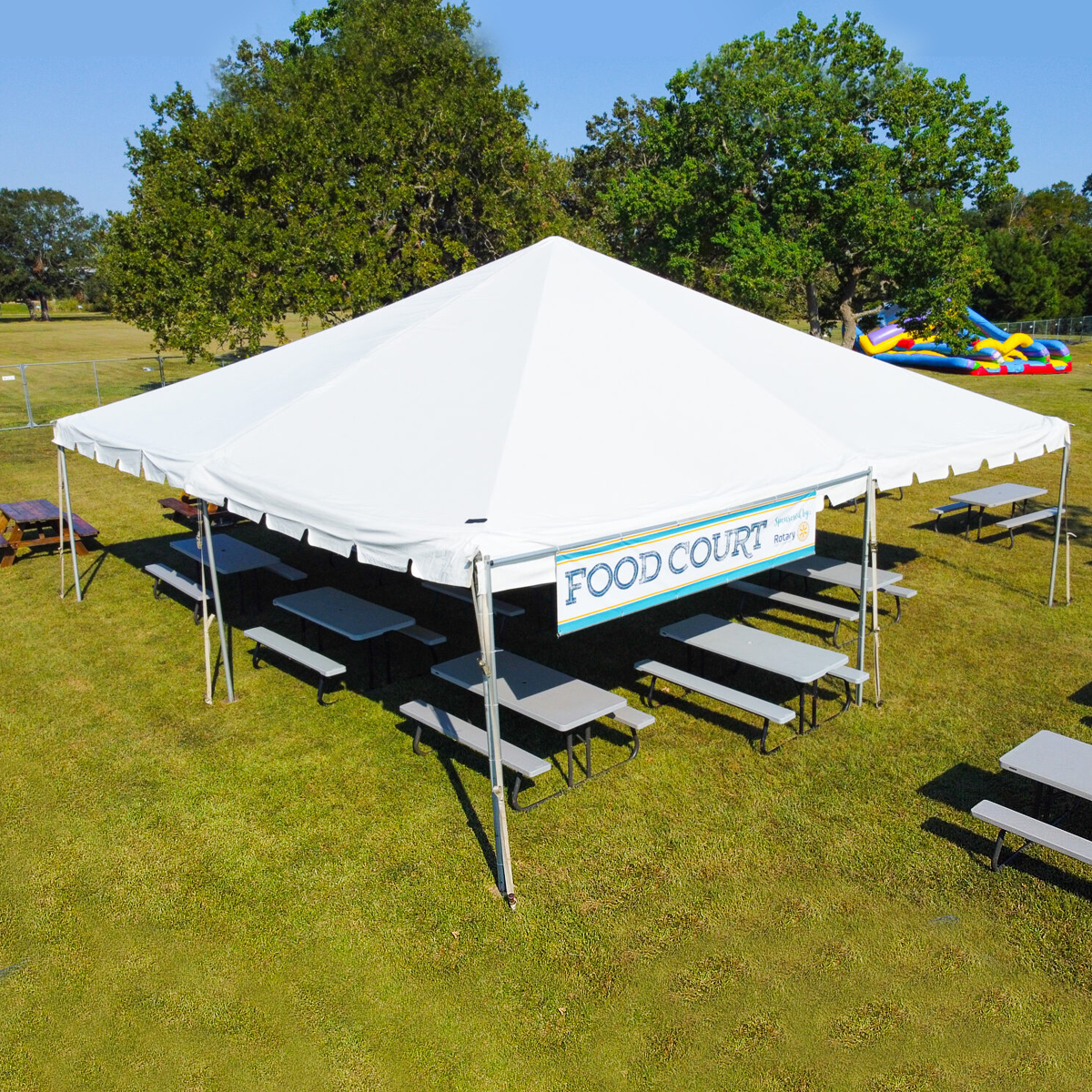
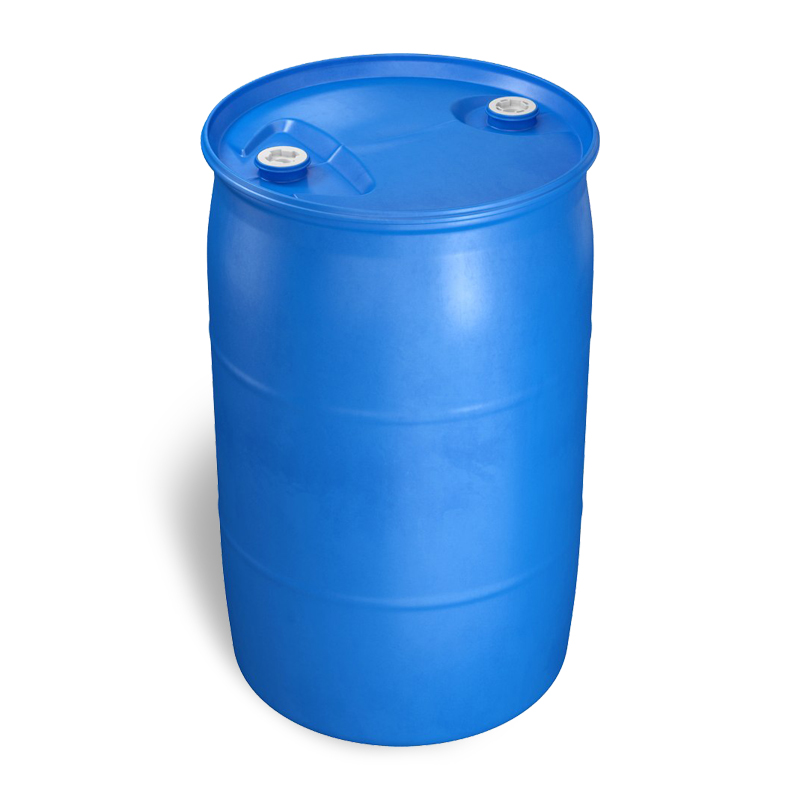
The honest answer is site flexibility. If you can tell us where the tent is going and the answer involves concrete, a deck, a driveway or a wall, you are almost certainly looking at a frame tent. It ballasts with water barrels or concrete weights instead of stakes, so it works where nothing else does.
The second reason is the interior. No center pole means your dance floor, your head table or your buffet line sits exactly where you want it. For a wedding or a seated dinner, that open floor plan is the difference between a layout that works and one that bends around a pole.
The third reason is speed and cost. Frame tents go up fast, fit most event footprints, and for a weekend event they are the right-sized answer. If you need to cover a patio for a Saturday, that is a frame tent. If you are building a gala venue that stands for weeks, that is a structure tent, and the next section explains the line between them.
Frame Tent or Structure Tent?
Both are pole-free inside, so the difference is not layout. It is scale and duration. A frame tent is the flexible, fast-install choice for small to mid-size events and shorter runs. A structure tent is the heavier-duty, engineered option built for large spans, installs measured in weeks or months, and serious weather.
The practical test ACME uses: if the tent needs to survive a season rather than a weekend, or span more than a frame tent comfortably can, you are looking at a structure tent. If it is a single event on a defined date, a frame tent is cheaper, quicker and enough.
If you are still deciding, the Structure Tent Guide covers the other side of that line, and the Tent Styles Compared guide walks the whole ladder from frame to high peak to structure.
What Sidewalls and Extras Go With a Frame Tent?
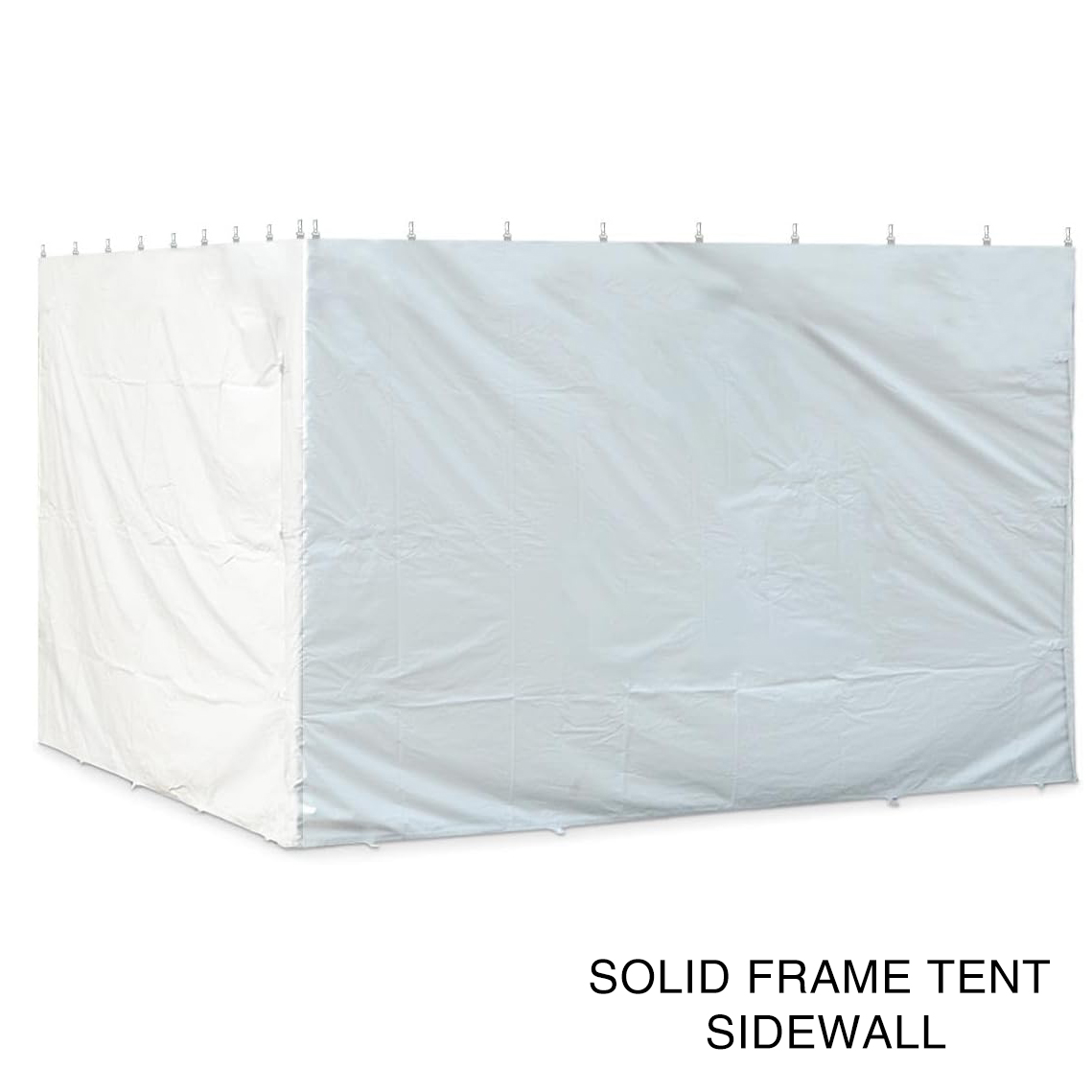
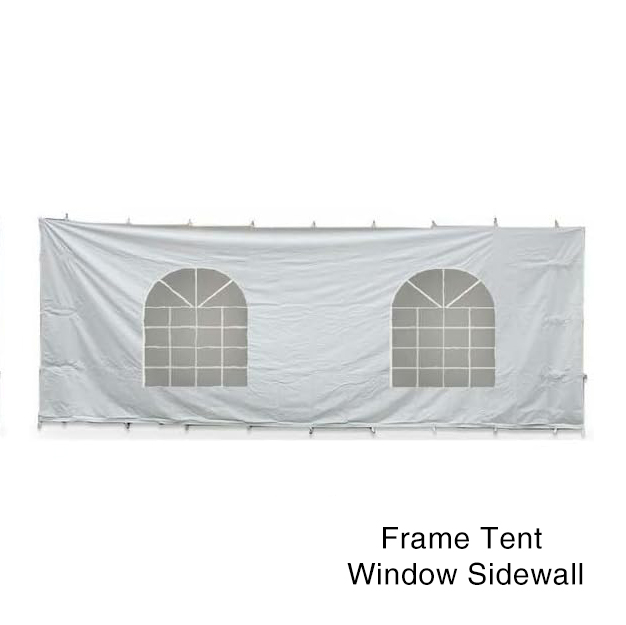
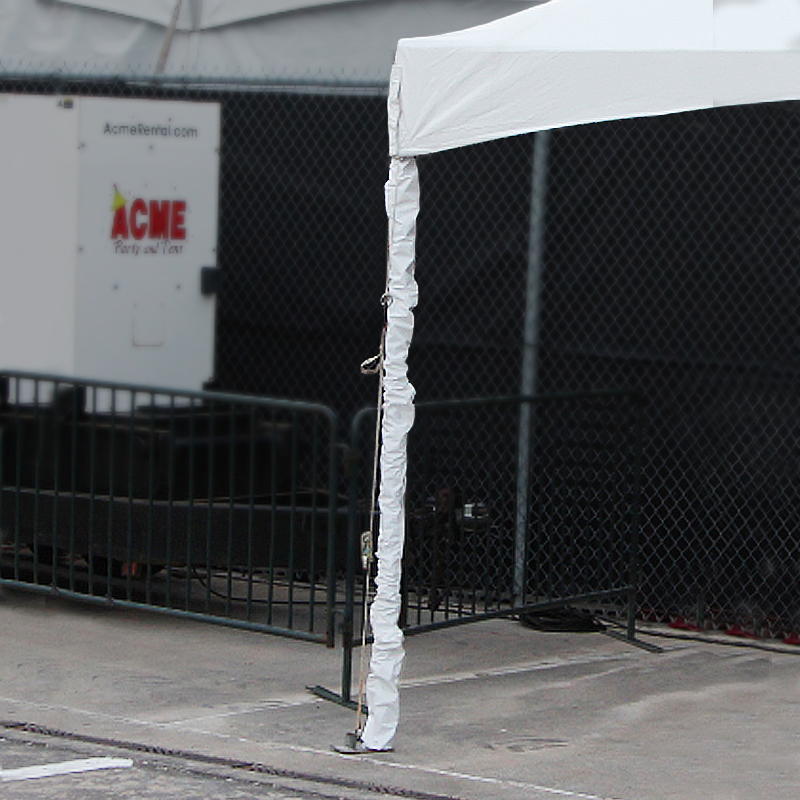
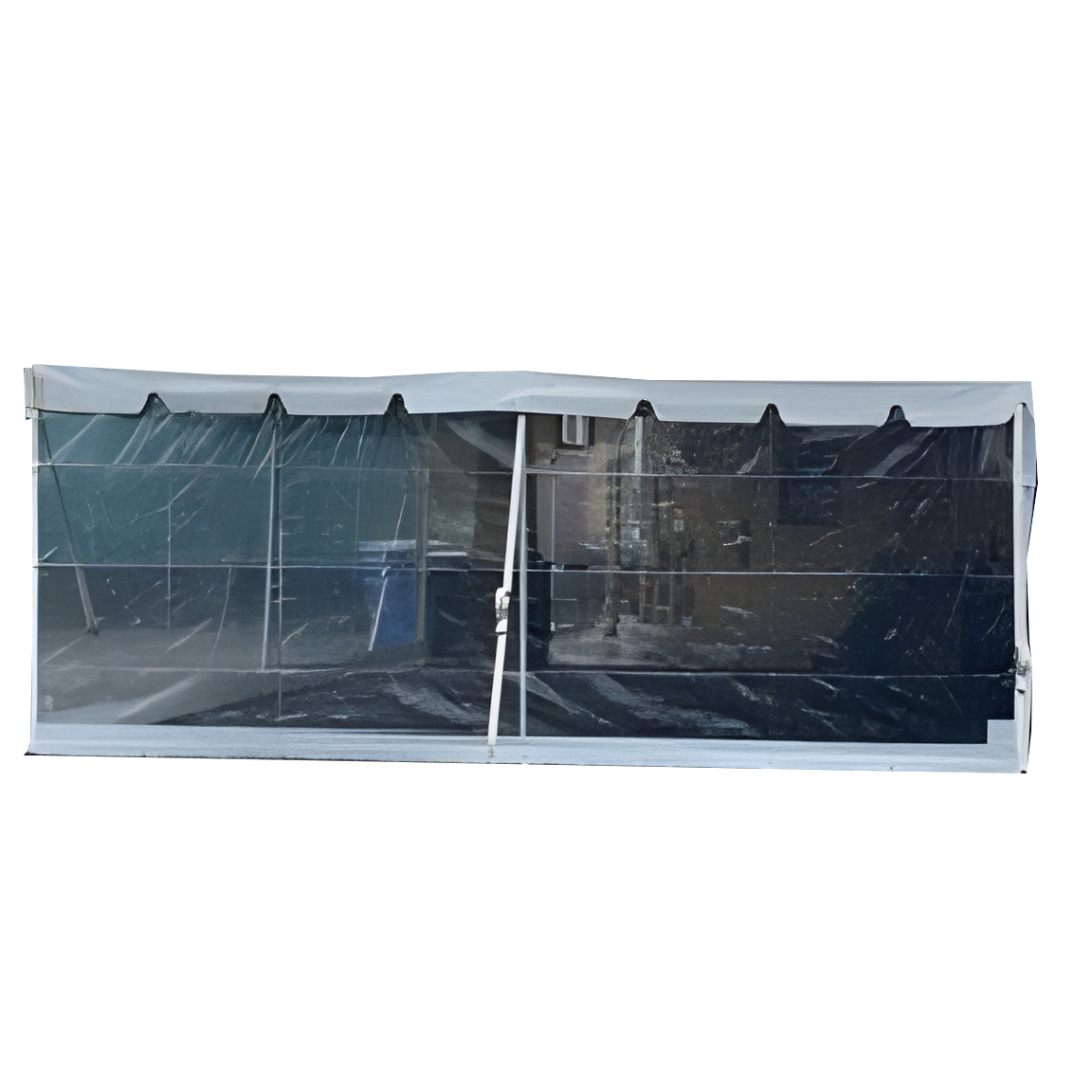
Frame tents take frame-specific sidewalls, not the structure tent ones, so tell us the tent type when you order walls. Solid sidewalls close the tent in for privacy or weather. Clear sidewalls keep the view and the light. Window sidewalls split the difference. Leg extensions raise the eave for extra headroom or a taller entrance.
One rule catches people out in Houston: walls are required if you are cooling the tent. You cannot air-condition an open-sided tent. If climate control is in the plan, sidewalls are part of the same order, and the generator and climate units get sized to the enclosed space.
On hard surfaces the tent is anchored with water barrels or concrete block weights rather than stakes, and that ballast needs a little room around the perimeter. Rain gutters join tents together or bridge a tent to a building so water does not pour into the gap. The Tent Accessories Guide covers all of it in detail.
How Does Frame Tent Delivery and Setup Work in Houston?
Frame tents are delivered and installed by ACME crews. They go up quickly, but they still need proper ballasting, vehicle access and a clear, measured footprint. On a hard surface the crew anchors with weights rather than stakes.
ACME delivers across Greater Houston and the Gulf Coast, including Katy, Sugar Land, The Woodlands and Galveston. Worth confirming when you book: the size, the surface the tent is going on (grass, concrete, deck), whether it is walled and climate-controlled, and any overhead clearance such as tree limbs or roof lines.
Larger or enclosed tents can need a permit, and the rules differ between the City of Houston, unincorporated Harris County and the surrounding municipalities. Our Houston Event Permit Guide explains what to ask and who to ask. Tell us the size and the surface. Request a quote or call 713-729-2424.
Frame Tents by Event: What ACME Crews See Most
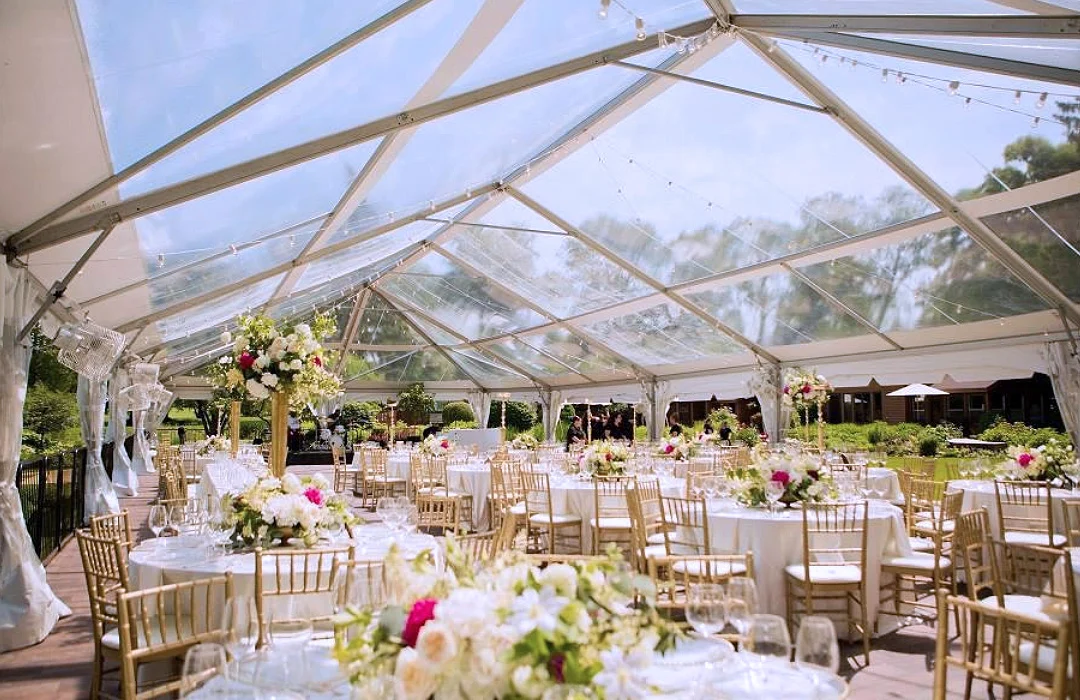
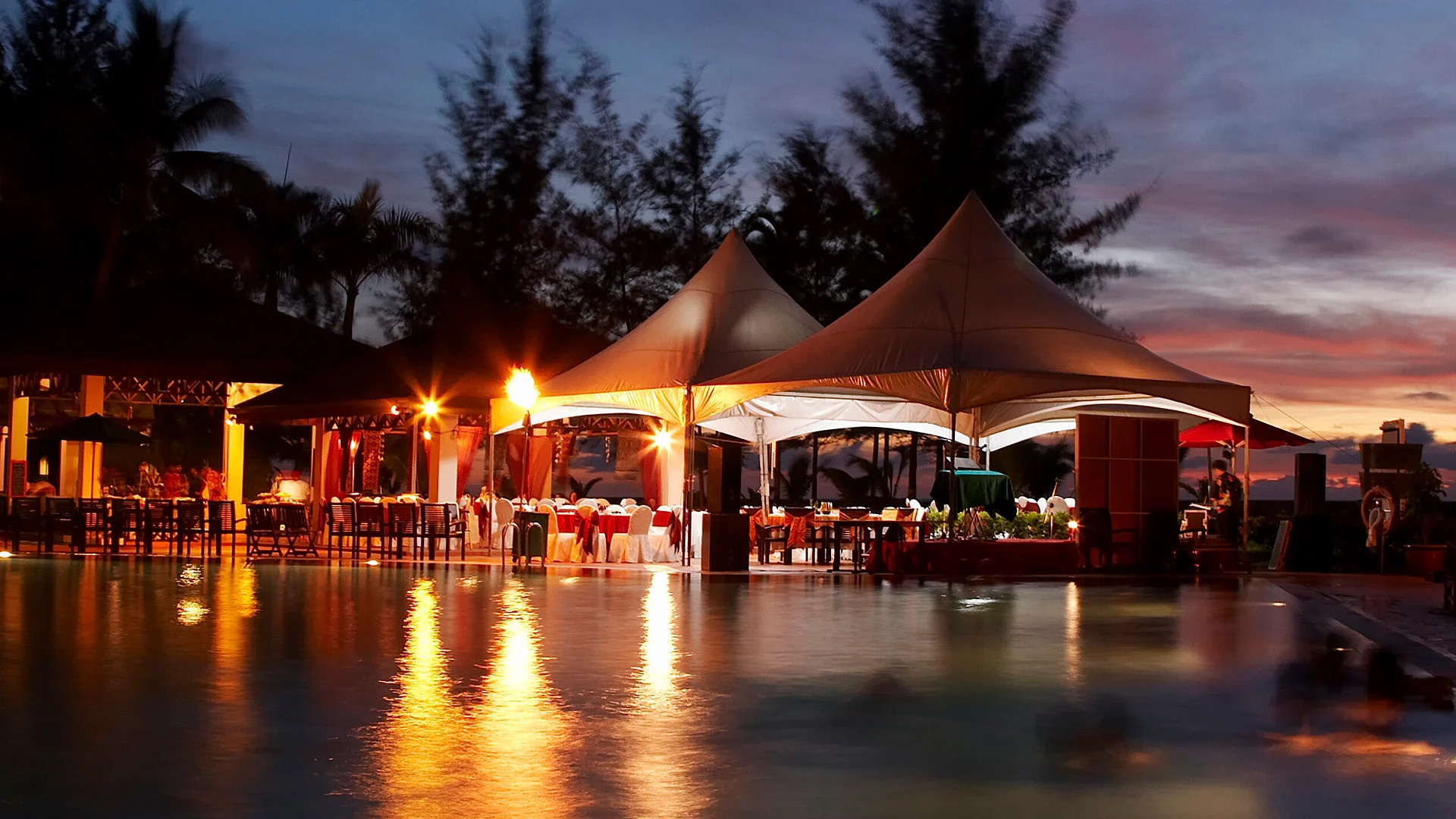
Weddings are the first. A frame tent on a lawn or a paved courtyard gives the ceremony and the reception an open floor with no pole in the middle of the aisle or the dance floor, and clear or window sidewalls keep the view while the weather stays outside.
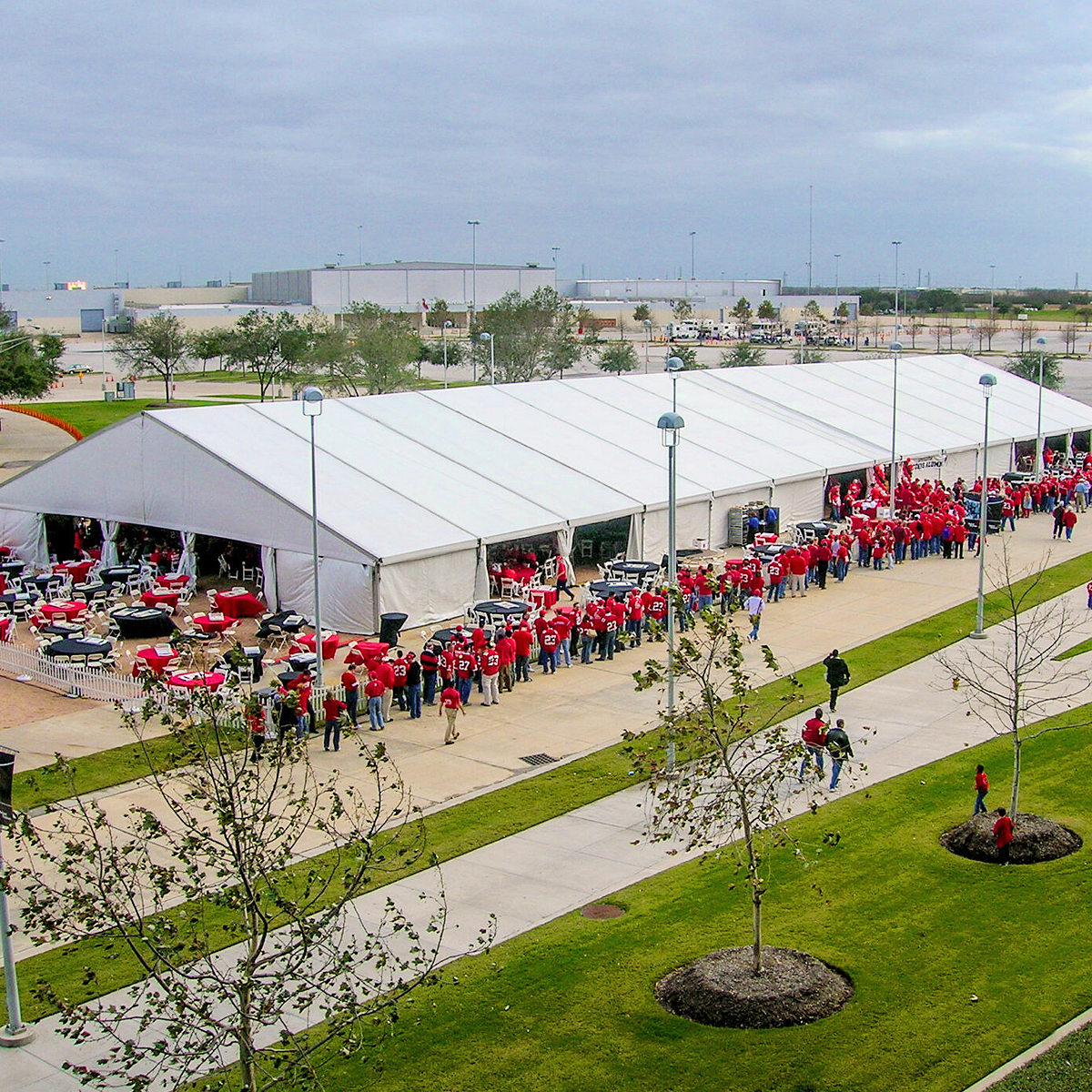
Corporate events are the second: company picnics, campus gatherings, product days and hospitality on a parking lot or a plaza. The frame tent goes exactly where the event needs it, including hard surfaces a pole tent could never use.
Then restaurants extending a patio for a season, homeowners covering a pool deck or driveway for a backyard party, and industrial sites that need quick cover on concrete. In every case the reason is the same: the frame tent does not care what it is standing on.
Common Frame Tent Mistakes to Avoid
A few things come up again and again on Houston installs, and all of them are avoidable with one phone call before you book.
- Forgetting the ballast footprint: water barrels and concrete weights sit outside the tent, so the usable site is a little smaller than the tent itself
- Ordering a tent with no walls and then asking for air conditioning on the day: you cannot cool an open tent
- Mixing wall types: frame tents take frame-specific sidewalls, not structure tent walls
- Ignoring overhead clearance: tree limbs, roof lines and power lines decide where the tent can actually go
- Booking a frame tent for a multi-week install when a structure tent is the right tool for that duration
Plan your frame tent with ACME
Tell us the size and the surface it is going on. We will spec the tent, the walls, the ballast and the power, and install it with one crew.
Frequently Asked Questions
A free-standing tent built on a rigid frame with no center poles and no guy ropes. The frame carries the load, so the entire interior is clear and the footprint is exactly the tent size.
Yes, and that is its biggest advantage. Because it does not stake into soil, it can stand on concrete, asphalt, a deck or a driveway, anchored with water barrels or concrete weights instead of stakes.
Weddings, corporate events, private parties, restaurant patios, backyard events on paved areas, parking lot activations and industrial sites. Any outdoor event on a fixed date where the surface or the layout rules out a pole tent.
Both are pole-free inside. A frame tent is the flexible, fast-install choice for small to mid-size events and shorter runs. A structure tent is heavier-duty and engineered for large spans, long durations and serious weather.
Yes, once it is walled. You cannot cool an open-sided tent. Solid, clear or window sidewalls close it in, and the generator and climate units are sized to the enclosed space.
Yes. ACME crews deliver and install across Greater Houston and the Gulf Coast. Even on hard surfaces the tent needs proper ballasting, vehicle access and a clear, measured footprint.
Family-Owned
Serving Houston and the Gulf Coast for decades
Houston & Gulf Coast
Delivering across Southeast Texas
24/7 Quick Response
Disaster relief & emergency deployments
One Vendor
Tents, furniture, power, climate & service
Plan your next event with ACME and let us worry about the details!
From corporate gatherings to a festival for thousands, ACME’s event specialists will walk you through the entire process.