11144 S Post Oak, Houston, TX 77035
ACME Party and Tent has installed tents across Houston and Southeast Texas since 1997 — from backyard marquees to clear-span structures covering industrial sites. Pick a tent type below, or read on for help choosing between them.
Almost every tent decision comes down to one question: what is holding the roof up?
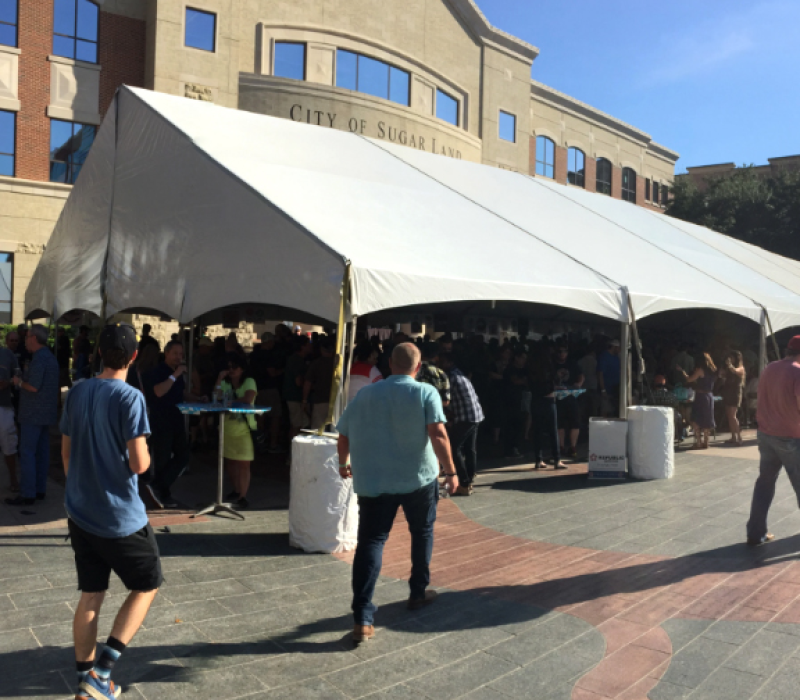
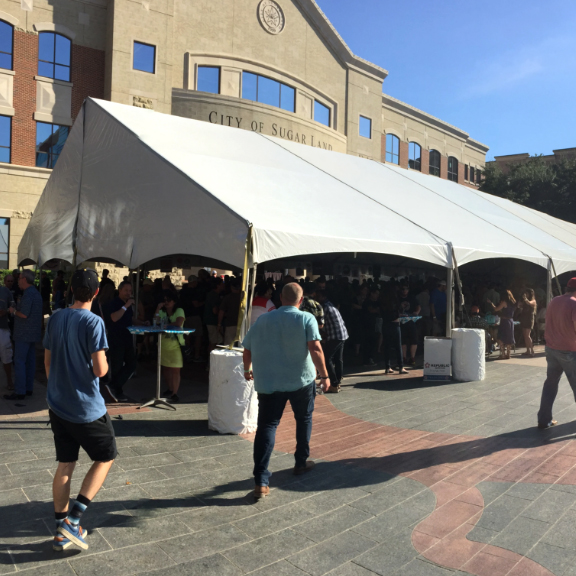
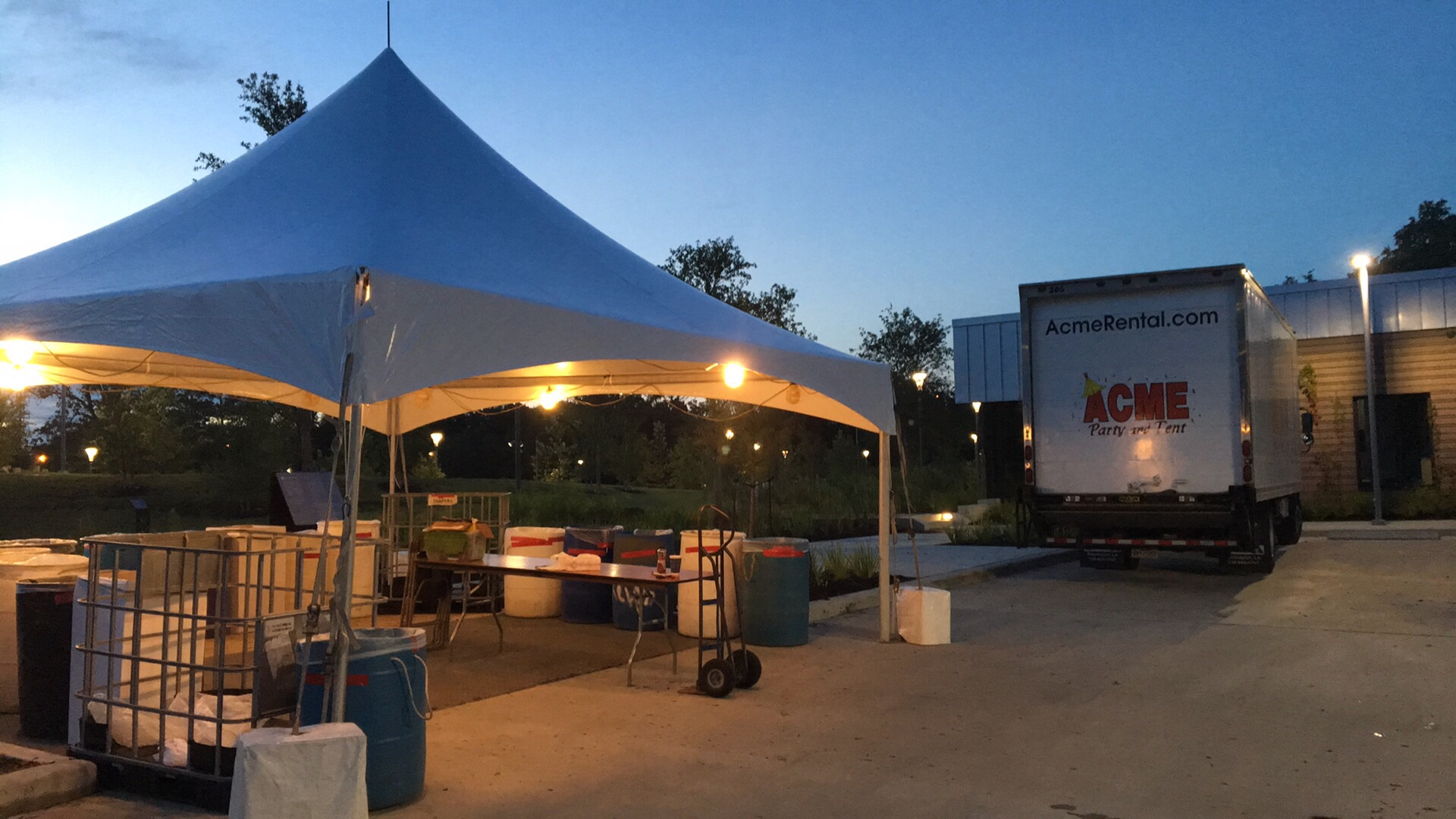
Frame tents carry their load on an external frame, so the inside is completely open, no centre poles in the middle of your dance floor. They handle most event sizes and can go on surfaces where you cannot drive a stake.
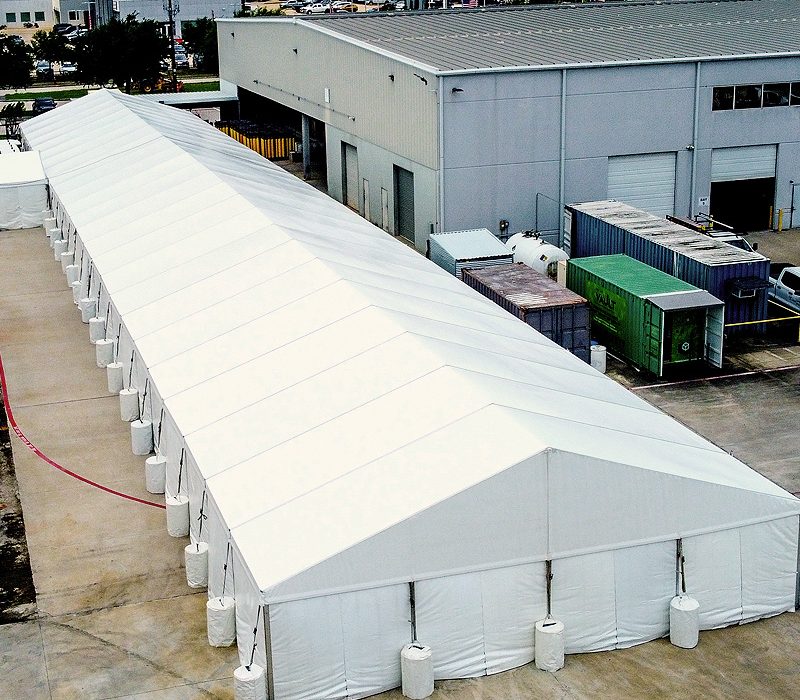
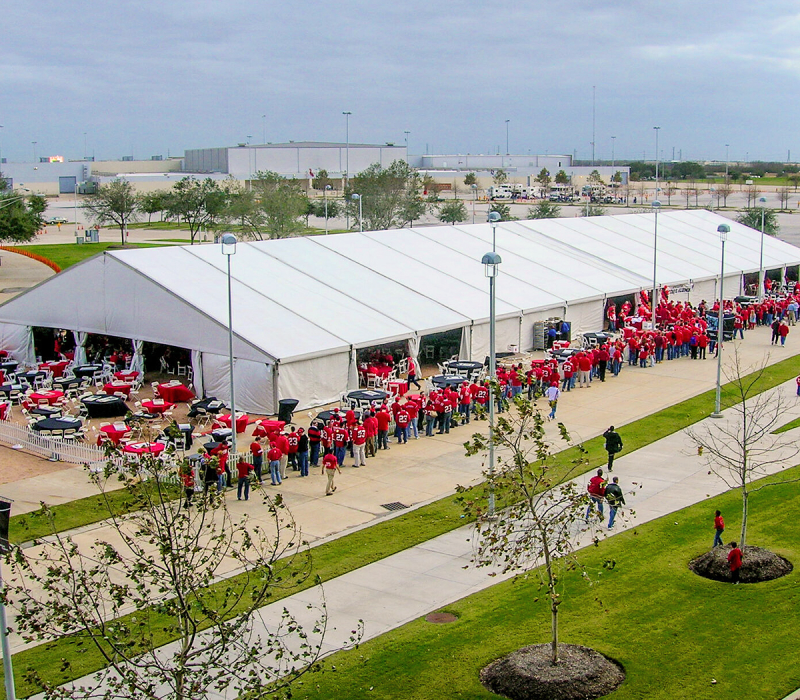
Structure tents are the heavy-duty version of the same idea: engineered clear-span frames built for larger footprints, longer installs and harder conditions. They are what goes up when the tent has to stand for weeks rather than a weekend.
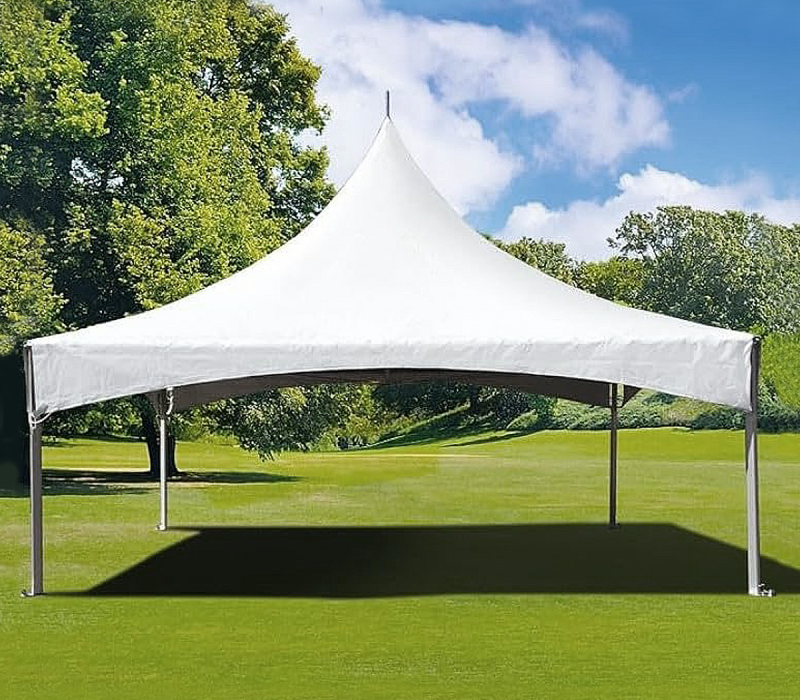
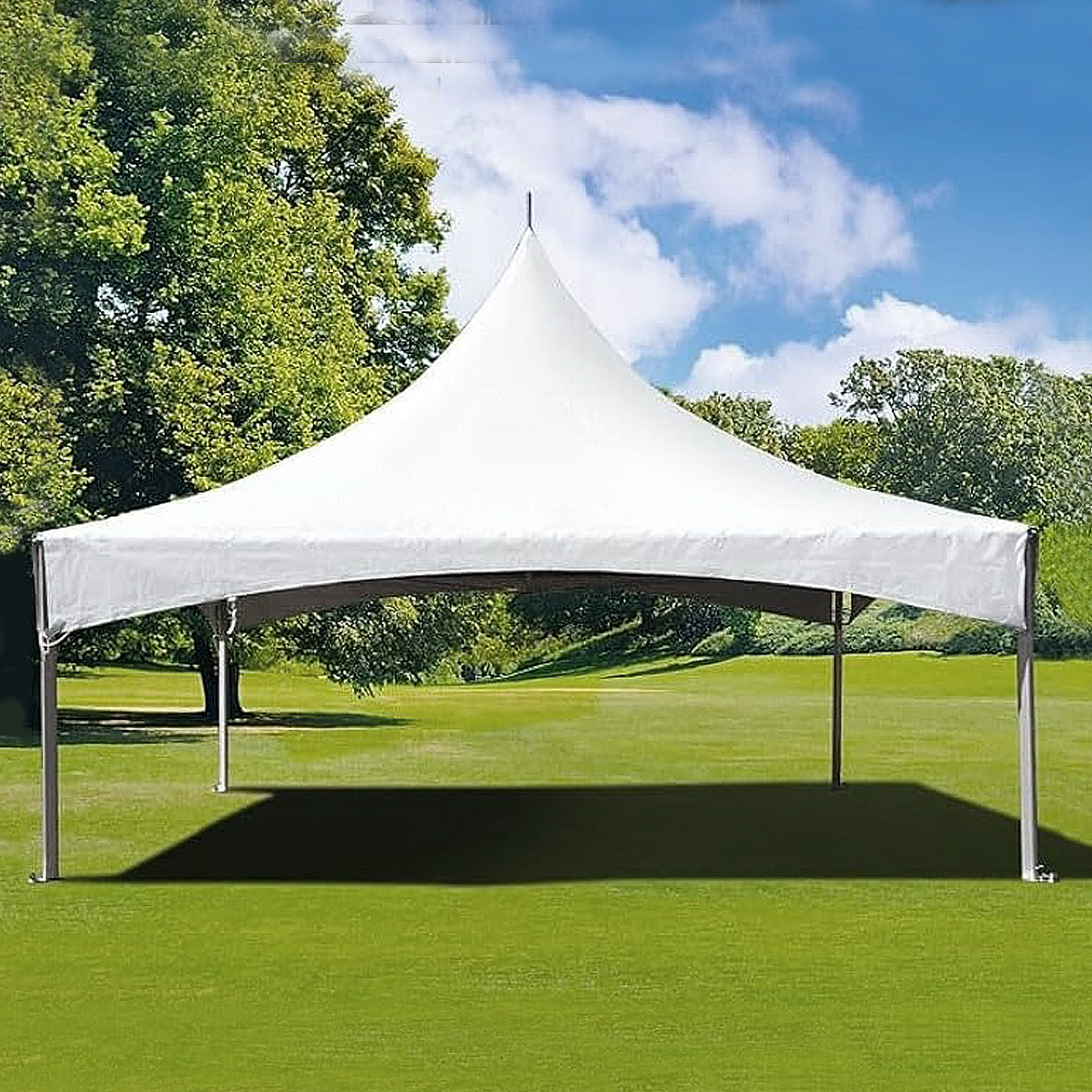
Festival marquee tents take a different shape, high peaks, fast installs, and a look that reads as an event from across a field.
If you are still deciding, our guide to choosing a tent walks through it in more detail.
Not sure which tent is right for your event? Our Houston Tent Rental Guide walks through every tent type, how to size it, and what setup involves.
Both are clear span — no interior poles — so the difference is duration and scale rather than layout.
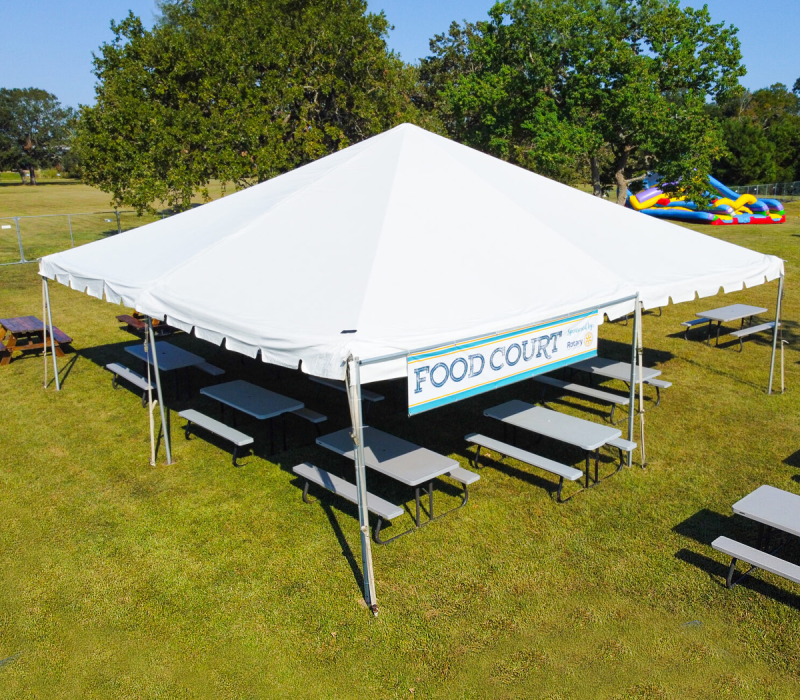
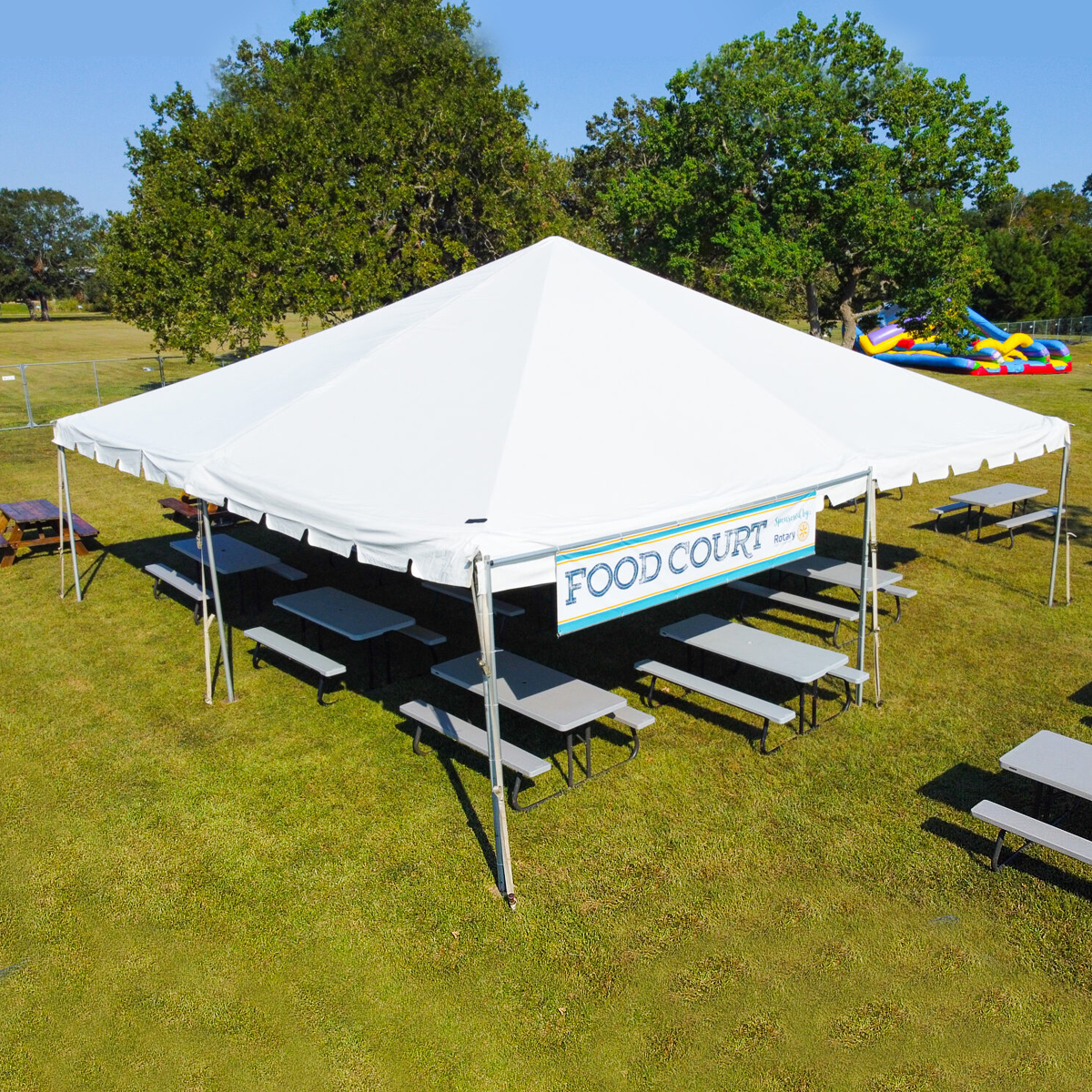
A frame tent is the flexible workhorse. It goes up quickly, fits most event footprints, and installs on grass, asphalt or concrete. For a wedding, a corporate lawn event or a food court, it is usually the right answer.
A structure tent is engineered for more. Bigger spans, heavier loading, and installs measured in weeks or months rather than days — which is why they appear on commercial and warehouse jobs, and on industrial sites where the tent is doing a building’s job.
The practical test: if the tent needs to survive a season rather than a weekend, or span more than a marquee comfortably can, you are looking at a structure tent.
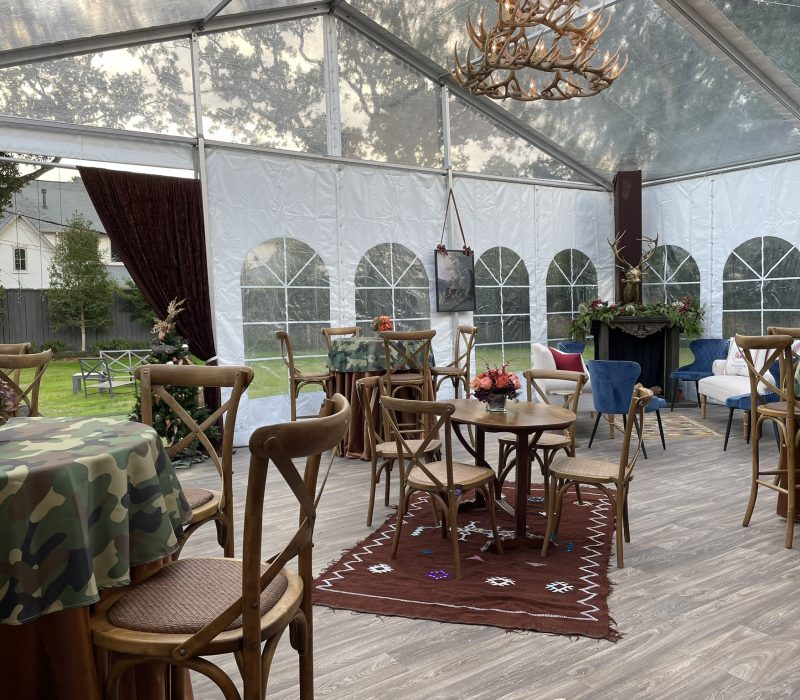
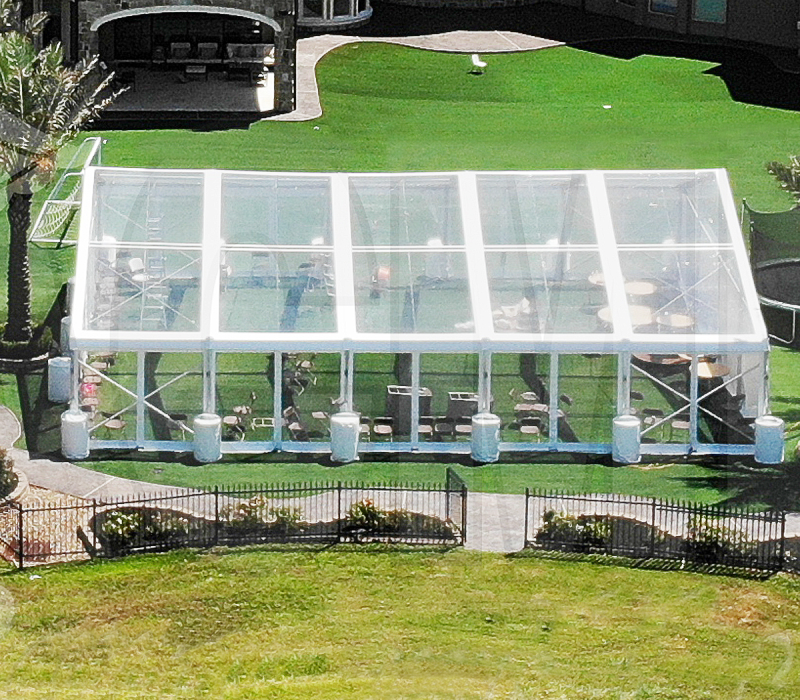
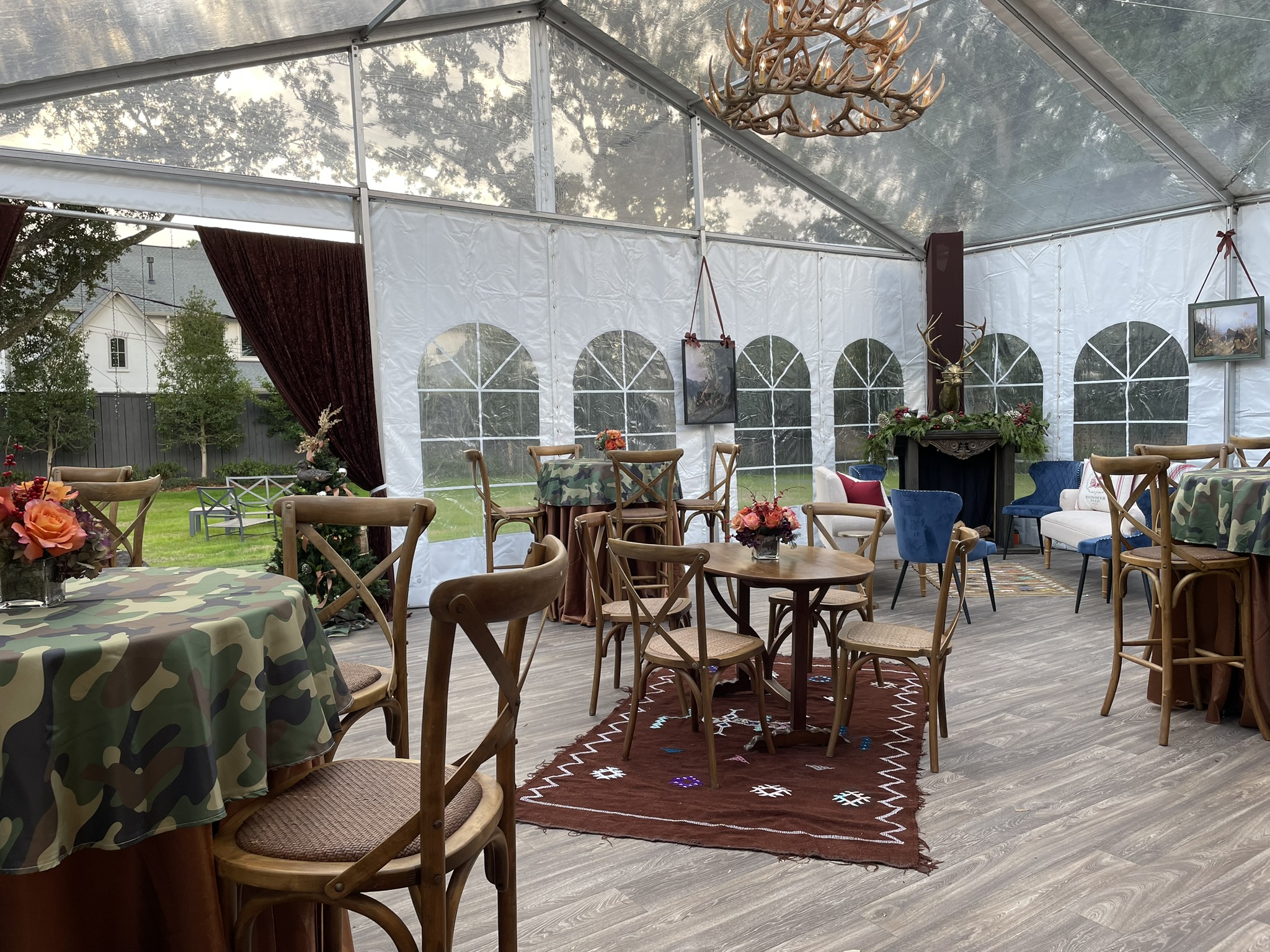
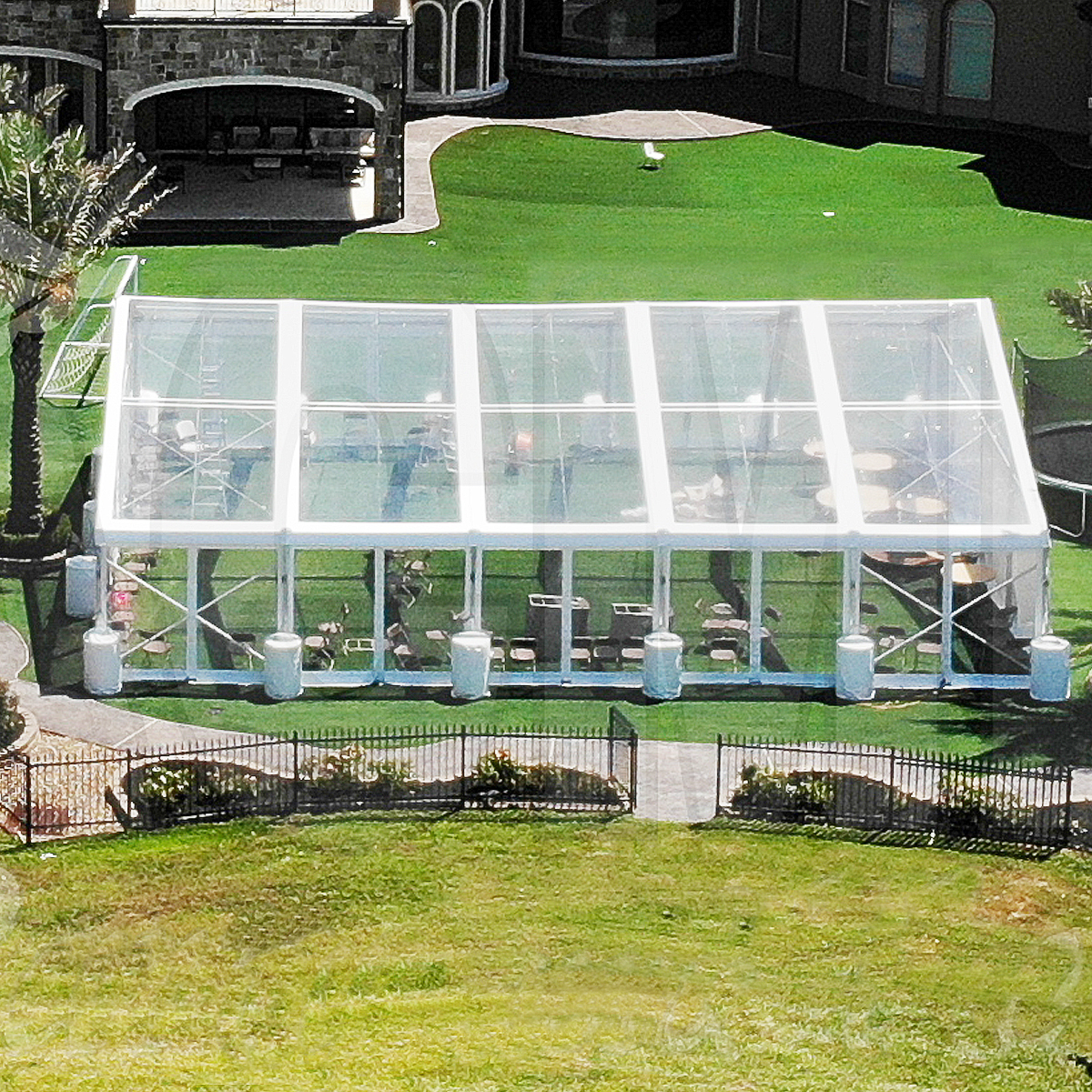
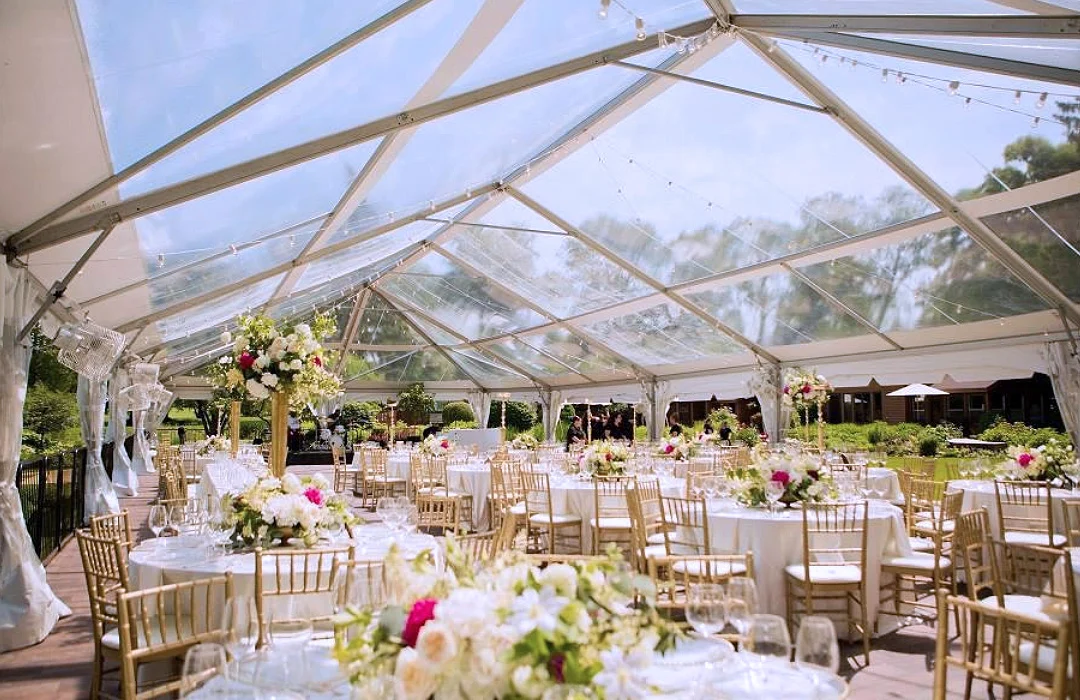
A clear-top tent is a structure tent with a transparent roof, and it is chosen for exactly one reason: the sky.
At night, under lighting, it is the most dramatic tent we install — string lights and stars overhead instead of white vinyl. It is a wedding and gala favourite for that reason, and it photographs unlike anything else.
The trade-off is daytime and Houston heat. A clear roof lets sun in as well as light, so a clear-top in July needs climate control in a way a white-topped tent may not. Plan the two together rather than discovering it on the day.
Clear tops also show whatever is above them. If the view up is a car park light or a building wall, the effect is lost — site it where the sky is worth looking at.
High-peak festival marquee tents are built for footprints that repeat.
Their peaks give height and a silhouette that reads as an event from a distance, and they install fast — which matters when you are covering a vendor row, a gate, a registration point and three concession stands on the same morning.
Because they come in a range of sizes, they scale by repetition: a run of matching marquees along a midway, rather than one large tent trying to do every job. That also means a rain delay does not stop the whole build.
They suit festivals, markets, sports days, school events and any programme where the tent is infrastructure for many small activities rather than a single room.
Keder track tents take their name from how the fabric attaches: a keder edge slides into a track in the frame rather than being tensioned over it.
That detail changes the install. The roof feeds along the track section by section, which makes large spans practical to build in tighter sites and shorter windows, and produces a taut, clean roofline without the ripples a tensioned cover can show.
It is the system to ask about when the tent is large, the site is awkward, or the finish matters — corporate installs, exhibitions and anything where the structure itself is part of the presentation.
If you are not sure whether your job needs one, tell us the span and the site and we will tell you straight — 713-729-2424.
Tent size follows layout, not guest count — the same hundred people need very different tents depending on what they are doing.
Standing receptions pack tightest. Rows of ceremony seating need more. Seated dinners at round tables need considerably more again, because you are fitting tables, chairs and the space for guests to get to them. Add a dance floor, a bar, a stage or a buffet and each takes its own footprint on top.
The site decides the rest. A tent needs clearance around it, a way in for the truck, and ground it can be secured to — the usable area is almost always smaller than the space looks.
Our tent size guide works through the maths, or call and we will size it against your actual layout.
A tent is a roof. The accessories are what turn it into a room.
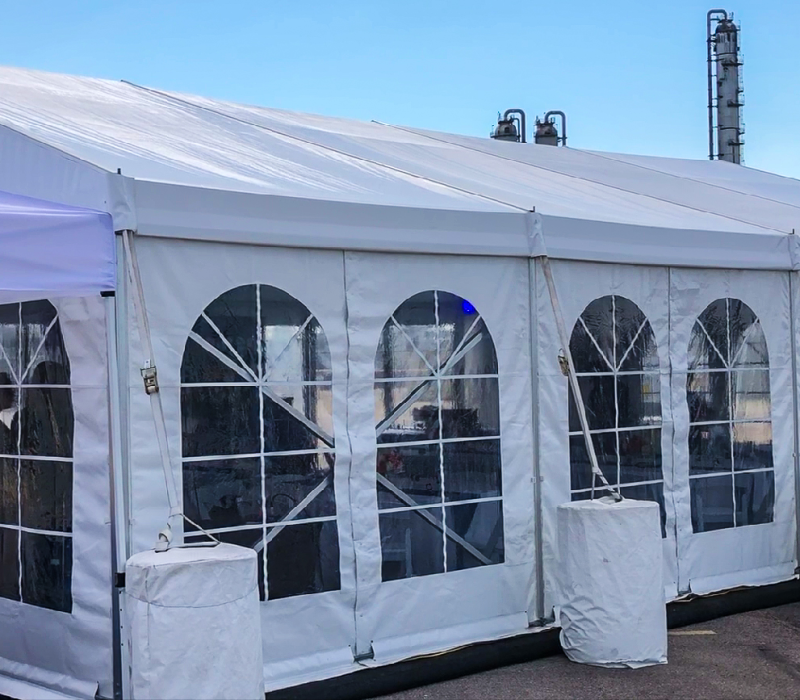
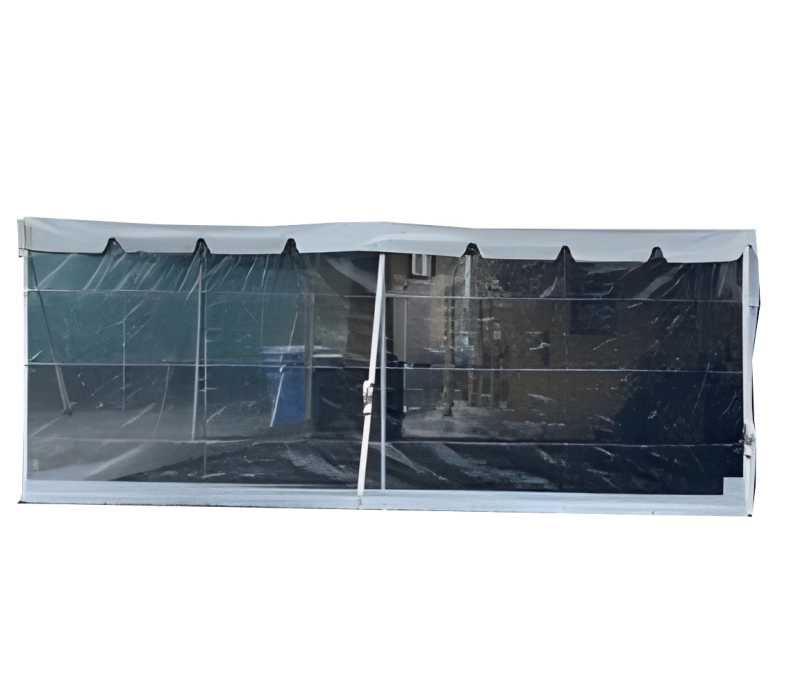
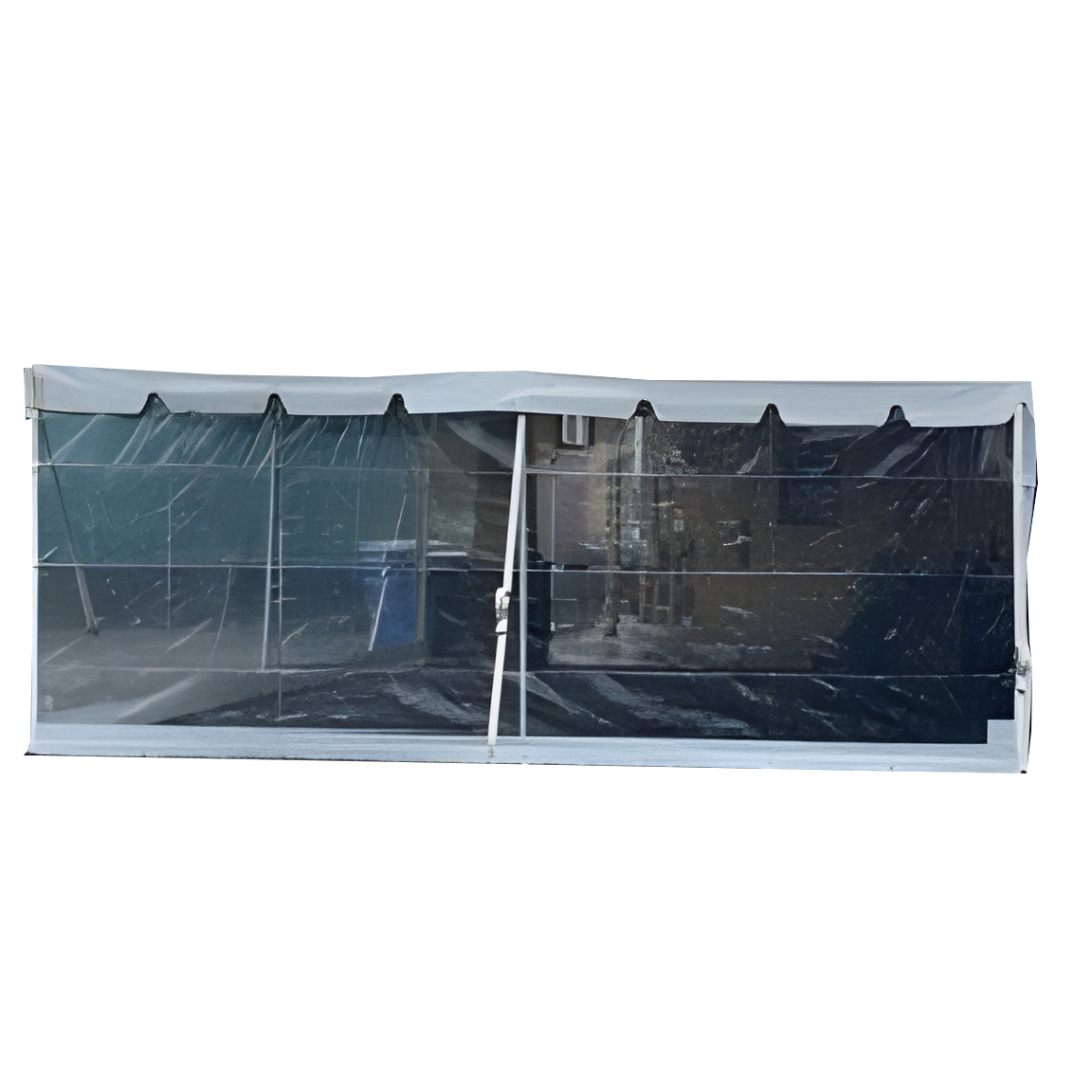
Sidewalls are the big one, and they come in solid, window, cathedral window and clear — walls for weather, or walls you can see through. Doors, including glass doors for structure tents, matter when the tent needs to feel like a building.
Weights are not optional. Where you cannot stake — asphalt, concrete, anywhere with services underground — the tent is held down by ballast: water barrels or concrete blocks. Rain gutters join tents together and move water away from where guests walk. Leg extensions add height; pole covers tidy what guests see.
Most of these are decided by the site, not by taste — which is why it is worth telling us the surface and the season early.
Tents are the rental most likely to need paperwork, and the one most likely to be booked late.
Many jurisdictions require a permit for temporary structures above a certain size, and larger or enclosed tents can attract fire marshal review. Rules differ between the City of Houston, unincorporated Harris County and every municipality in between — our Houston event permit guide covers what to ask and who to ask. Responsibility for permits sits with the organiser, but we provide the specifications and documentation those applications need.
ACME has served Houston since 1997 and installs across Greater Houston and the Gulf Coast, including Katy, Sugar Land, The Woodlands and Galveston.
Worth confirming early: the surface, truck access, how long the tent stands, and whether it needs walls, power or climate control. Request a quote or call 713-729-2424.
The fastest way is our Request A Quote form, or call us at 713-729-2424. Tell us your event date, location, and expected guest count, and one of our event specialists will put together pricing and recommendations for your specific event.
Yes. ACME Party and Tent’s crews deliver, set up, and tear down across Houston and Southeast Texas. Our team positions everything according to your event layout so the site is ready before your guests arrive.
As early as you can — popular dates in spring and fall book up fast. That said, we handle short-notice requests regularly, and our Quick Response Team is available 24/7 for emergency situations.
Absolutely. Most of our customers bundle their rentals into one order — tents, furniture, climate control, power, lighting, and service equipment — with one delivery, one setup crew, and one point of contact.
It depends on guest count, seating style, and what else goes under the tent — staging, dance floor, buffet lines, bars. Our specialists have sized thousands of Houston events and will help you land on the right footprint. See our tent size guide or request a quote.
Family-owned & serving Houston for decades
Delivering across Southeast Texas
Disaster relief & emergency deployments
Tents, furniture, power, climate & service
From corporate gatherings to a festival for thousands, ACME’s event specialists will walk you through the entire process.