Hurricane-Season Readiness: How Gulf Coast Businesses Use Rapid-Deploy Tents
You can't predict the season. You can be ready for it.
Gulf Coast weather doesn’t ask permission. Hurricanes, tornadoes, flooding, and the hard storms of a long season all pose direct risk to refinery, plant, and jobsite operations, and to the communities around them. You cannot predict what the season will do. What you can do is prepare, and the operations that come through storm season strongest are the ones that made their arrangements before the forecast turned. This is a guide to doing exactly that.
Reactive Scrambling Is the Expensive Option
When a named storm enters the Gulf, everything tightens at once: vendor availability, equipment inventory, transport windows, and site access. A facility that starts calling for temporary structures, generators, and support equipment when the cone appears is already at the back of a long line, paying more, waiting longer, and accepting whatever is left. The same is true for planned turnarounds that hit weather trouble mid-schedule. Reactive scrambling costs time, money, and safety margin, and every operations manager who has lived it knows the feeling.
The alternative is simple and almost free: call before hurricane season. A conversation with ACME in the spring puts a plan and an agreement in place while calendars are open, so when the season delivers, your response is a phone call, not a procurement project.
What the Quick Response Team Actually Does
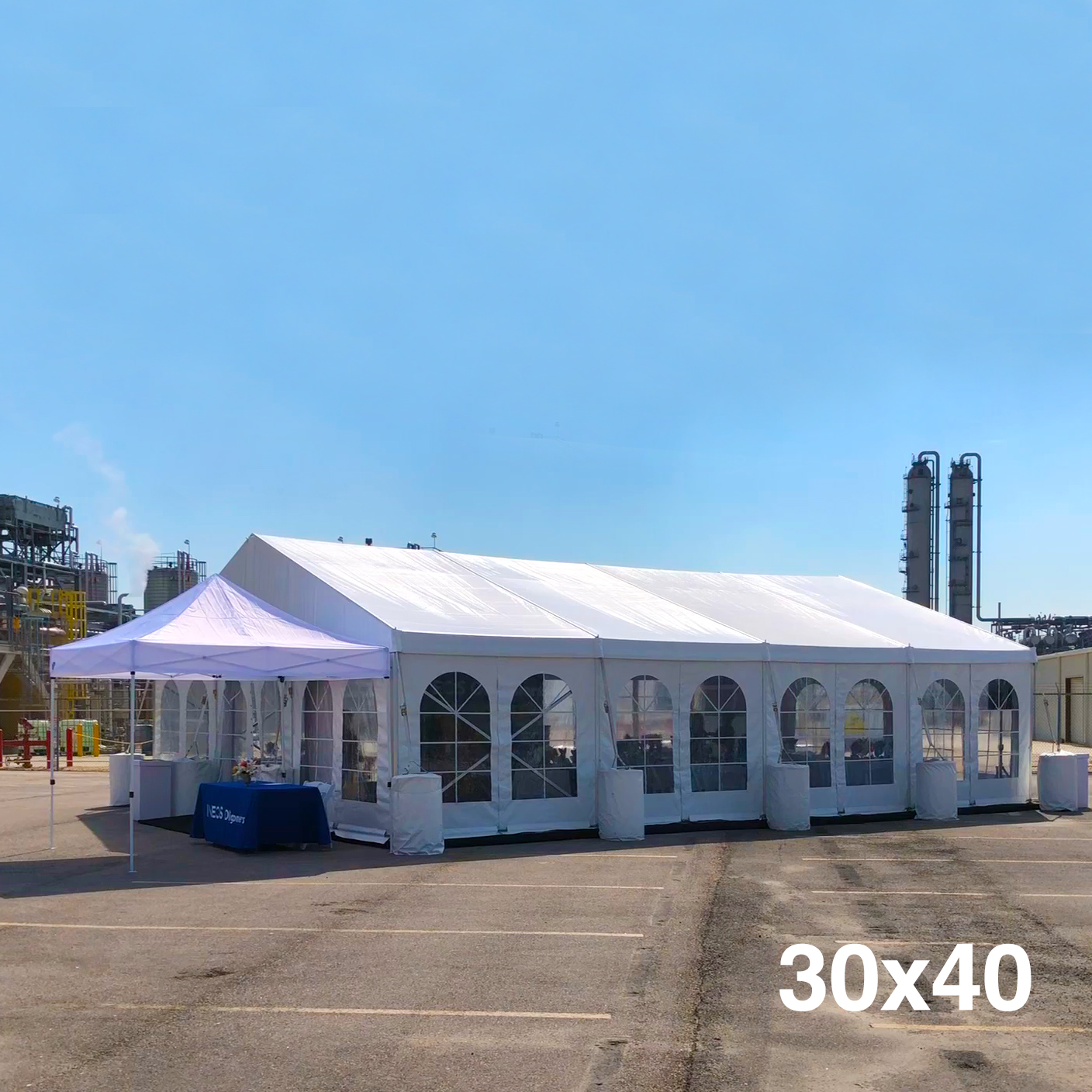
ACME’s Quick Response Team (QRT) is a 24/7 deployment capability, every day of the year, ready to move on short notice. Concretely, that means three things arriving where they’re needed, fast:
- Structure delivery, engineered temporary structures for operations, break areas, staging, storage, and shelter, including structure tents rated for serious weather
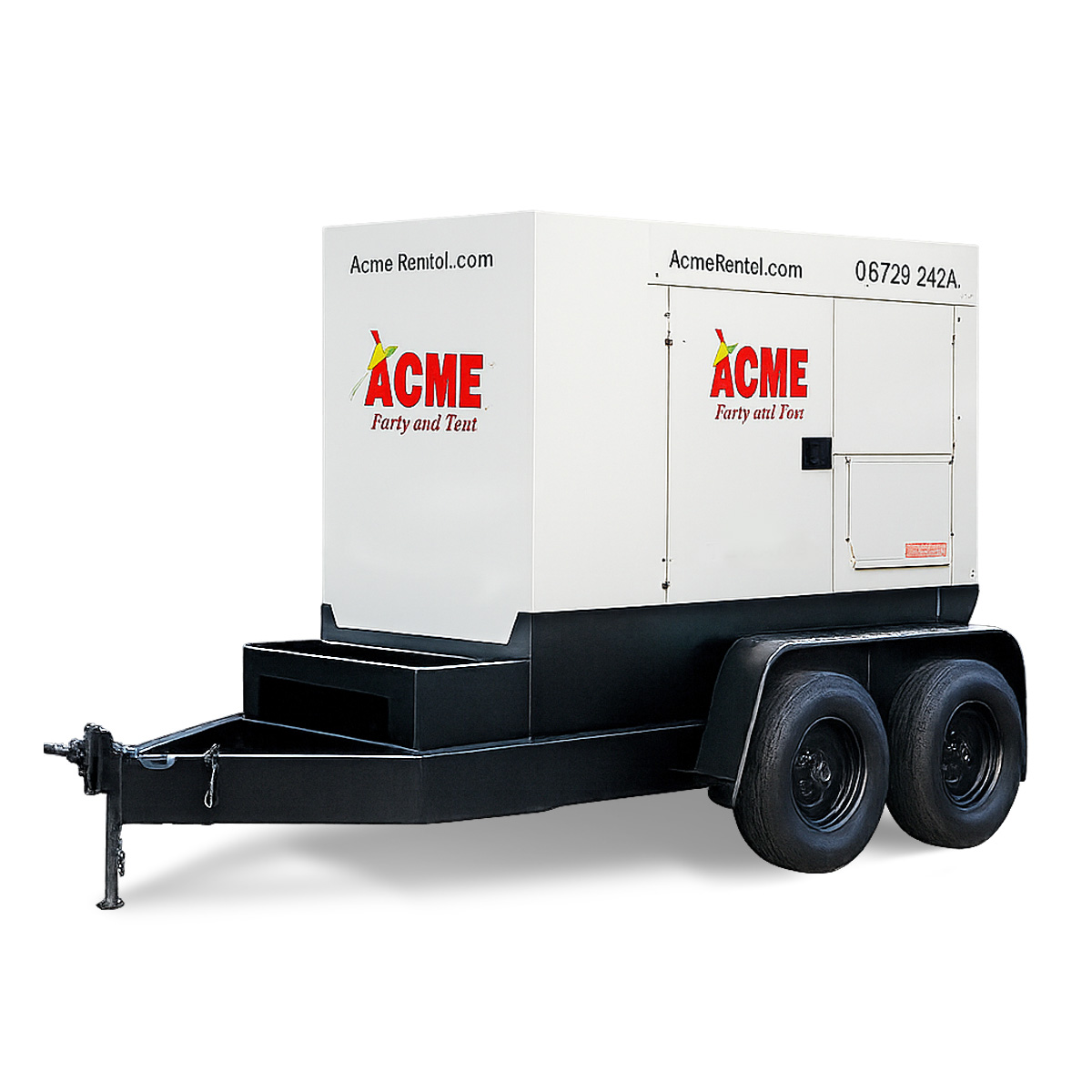
- Generator delivery, sized power units from our generator fleet, with distribution and cabling
- Power delivery, the full electrical picture: circuits, distribution boxes, covered cable runs, and technicians when the site calls for them
The Step Most Facilities Miss: Pre-Vetting
Here’s the operational detail that separates a readiness plan from a phone number taped to a wall: get your vendors vetted and certified for your site before the emergency. Refineries and plants don’t let unvetted contractors through the gate, safety orientation, insurance verification, badging, and site certification all take time you will not have mid-crisis. ACME’s standing practice is to complete that vetting up front, as part of the readiness agreement, so that when the call comes the trucks roll to a site we’re already cleared to enter. That single step removes the biggest bottleneck in emergency response. The value isn’t just having a tent, it’s having zero lead time when the emergency hits.
Turnarounds: the Planned Version of the Same Problem
Not every deployment is an emergency. Planned turnarounds and maintenance outages need the same kit on a known schedule: covered work areas over equipment laydown, break and cooling structures for crews working long shifts, temporary warehousing for parts and materials, and power where the plant’s own systems are offline. The planning logic is identical to storm readiness, decide early, vet early, deliver on schedule, and facilities that run their turnaround support through the same standing agreement get the same benefit: no procurement scramble in the critical path. Long-duration needs are their own category too: ACME’s long-term tenting and lease program cover structures that stay up for months or years with maintenance included.
What "Ready" Looks Like in Practice
Picture two facilities the week a storm turns toward the coast. Facility A is calling vendors from a list, discovering half are committed, then starting gate-clearance paperwork for the rest. Facility B makes one call to a vendor already badged for their site, with structure sizes and generator loads already on file from the spring conversation, and spends the rest of the week on their actual operations. Same storm, same coast, the difference was one planning conversation made months earlier. That’s the entire argument for readiness, and it’s why the QRT’s standing practice is built around pre-vetting, pre-specification, and 24/7 dispatch.
Climate Control When It Matters Most
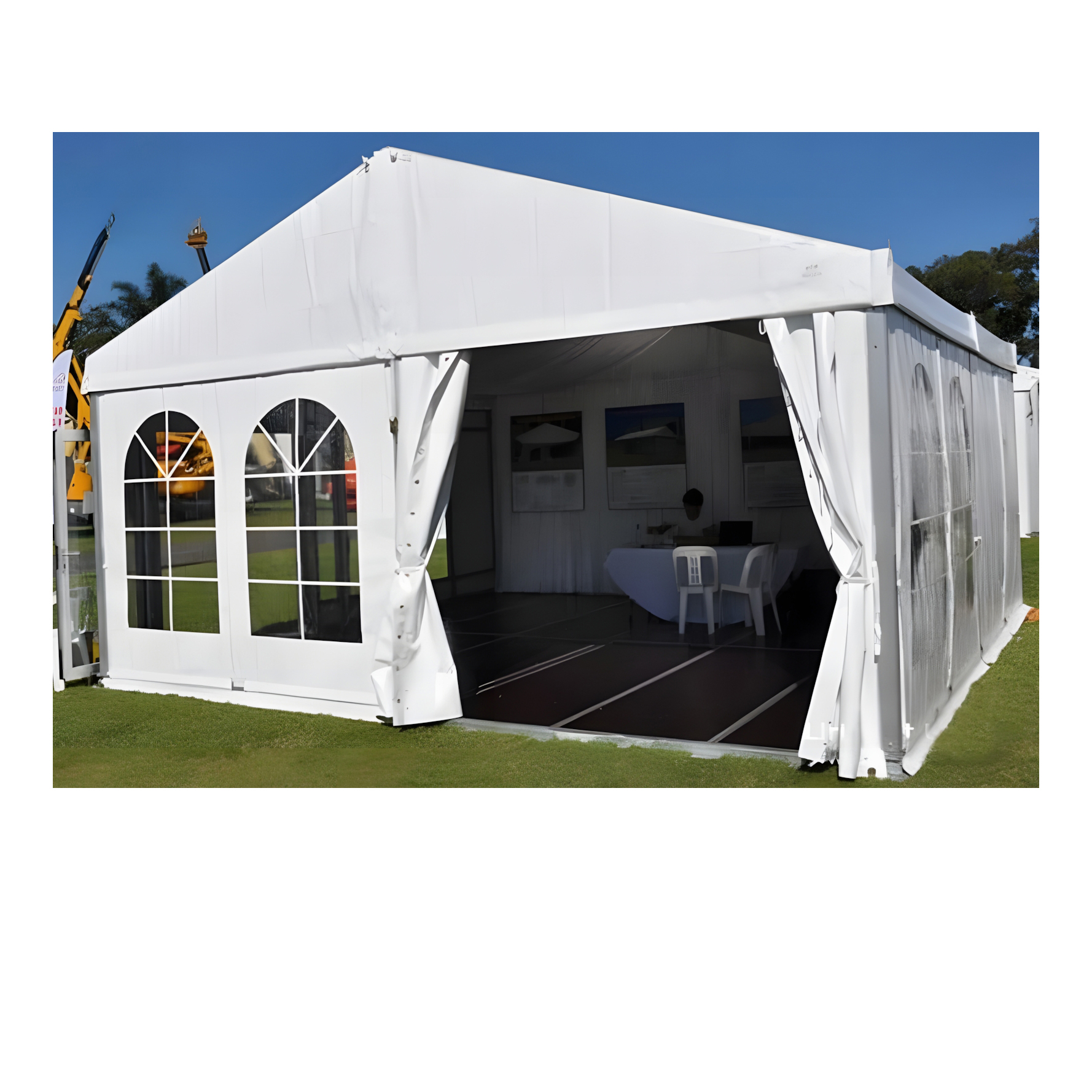
Gulf Coast emergencies and extended turnarounds happen in Gulf Coast heat. Climate-controlled structures protect the people doing hard work in punishing humidity, break areas and cooling stations that keep crews safe and effective, and protect sensitive equipment that can’t sit in a 100-degree tent. For extended operations, worker facilities with real cooling aren’t a comfort line-item; they’re how the work keeps going. See our worker facilities and turnaround and maintenance pages for how these builds come together.
Utility Response & Government Support
Storm response is bigger than any one facility. Utility crews restoring power after a major storm need staging areas, equipment shelter, and crew facilities deployed fast, wherever the damage is. Government and municipal operations need support structures for emergency staging, distribution points, and community shelter operations, the kind of large-scale response Houston has seen in its hardest flood years, when major venues and public spaces became hubs for relief. ACME supports these operations across the region: rapid-deploy structures, power, and crews that work at the pace an emergency demands. If your organization plans for utility response or public emergency support, that conversation belongs in the readiness plan too.
Beyond Hurricanes: Flood, Tornado & the Unnamed Emergencies
The named storms get the headlines, but most Gulf Coast disruptions never get a name. Flash flooding that takes a facility’s ground floor. A tornado that opens a warehouse roof at 2 a.m. A fire that displaces an operations team for a quarter. An unexpected equipment failure mid-production. The response kit is the same, covered space, power, climate, fast, and the readiness logic is identical: the facilities that recover fastest are the ones whose vendor relationships, site clearances, and equipment specifications existed before the bad day. A readiness agreement isn’t hurricane insurance; it’s continuity insurance, and it covers the whole family of emergencies the Gulf Coast writes.
Industries We Serve, and Why Readiness Differs
- Refineries, turnaround support and rapid structures inside vetted, badged sites
- Chemical plants, safety-conscious structures and power for maintenance and emergency operations
- Manufacturing, production continuity: covered space and power that keep lines moving through disruption
- Municipal, emergency shelter, staging, and distribution operations at public scale
- Medical, healthcare surge and support structures where climate control is non-negotiable
The Economics of Readiness
Put numbers on the two paths. Downtime at an industrial facility is measured in tens of thousands of dollars per day, sometimes per hour. Emergency-market procurement adds premium pricing, expedited freight, and days of delay to everything. Against that, the readiness path costs a planning meeting, a vetting packet, and standard rates locked before demand spikes. Even one avoided day of downtime pays for years of the discipline. Operations leaders don’t need convincing that preparedness beats reaction, the readiness agreement just turns that belief into standing infrastructure: cleared access, specified equipment, and a vendor already moving while competitors are still dialing.
Coverage: The Full Gulf Coast
ACME’s response footprint isn’t limited to Houston. We deploy along the full Gulf Coast, Texas, Louisiana, Alabama, Mississippi, and Florida, the same coastline the storms work. For multi-site operators, one readiness agreement can cover facilities across the region.
How to Set Up a Readiness Plan
It takes one conversation before the season: your sites, your likely needs (structures, power, cooling, worker facilities), your vetting process, and your contacts. From that, ACME builds a standing plan, site certifications completed, equipment earmarked, response expectations set. Then the plan sits quietly, costing nothing, until the day it becomes the best decision your operation made all year.
Start the conversation or call 713-729-2424 (emergencies: ext. 22). The season is coming either way, meet it ready.
Frequently Asked Questions
Three things: a list of your sites and their vetting requirements, a sense of your likely needs (break structures, warehousing, cooling, power loads), and the name of the person who’ll make the call when it counts. We handle the rest, including completing your site’s contractor clearance up front.
The QRT operates 24/7 year-round and mobilizes on short notice. Pre-vetted sites get the fastest response, because gate access is already solved, which is exactly why the readiness agreement matters.
The planning conversation and site vetting cost you nothing but a little time before the season. You pay for equipment and services when they deploy, the agreement just guarantees you’re at the front of the line instead of the back.
Yes, multi-site operators commonly set up one readiness agreement covering facilities across the region, with per-site vetting completed for each location and a single point of contact when the season turns. It’s the cleanest way to standardize storm response across an operations footprint.
Yes, ACME deploys across the full Gulf Coast: Texas, Louisiana, Alabama, Mississippi, and Florida.
All three, as one delivery: engineered structures, sized generators with full distribution, and climate control, plus onsite technicians for complex operations.


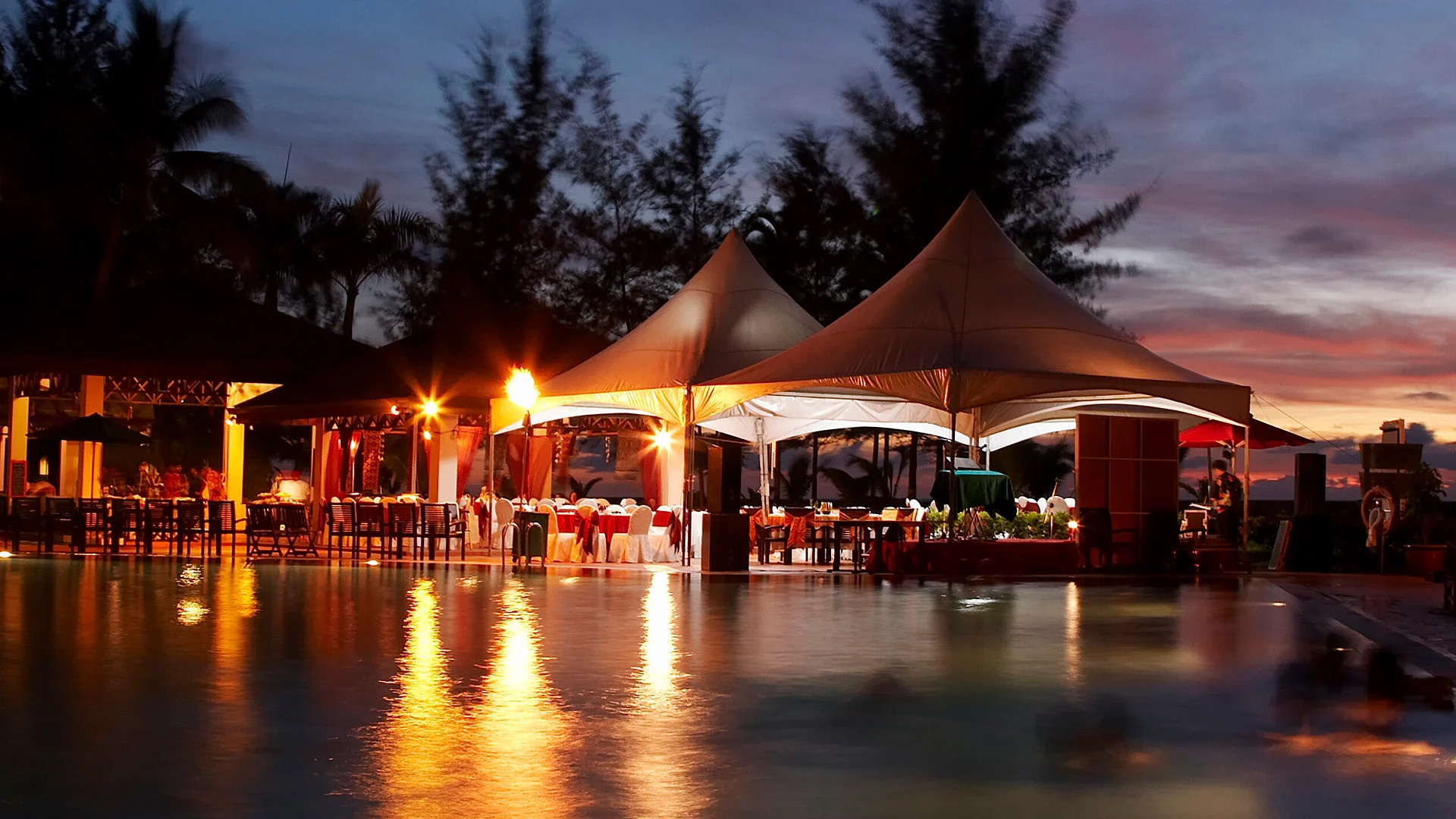
Plan your next event with ACME and let us worry about the details!
Tell us the date, the crowd, and the vision, one call covers all of it.

- Planning an Outdoor Wedding in Houston: Weather, Tents & Building Your Own Venue - September 20, 2026
- 5 Costly Mistakes to Avoid When Renting a Tent for Your Houston Event - September 20, 2026
- Fall & Holiday Event Rentals in Houston: 2026 Trends - September 14, 2026
No related posts.