Event Power & Generator Sizing Guide for Houston
How to power a tent, a wedding, or an 80,000-person festival, without a single tripped breaker
Why Event Power Planning Matters
Power planning isn’t just “bring a generator.” It’s a coordination problem before it’s an equipment problem. For every power need at your event, you need to know four things: who needs power (the band, the caterer, each vendor, the tent itself, the AV rig), what they’re actually powering, where they sit physically relative to where the generator can go, and how their needs interact with everyone else’s on the same site.
Here’s the contrast that sets the stakes: powering a single band on a single stage is straightforward, one generator, one cable run, done. Powering a full festival, multiple stages, food vendor rows, private tent parties, all spread out and running simultaneously, is a fundamentally different planning challenge. It’s logistics plus electrical engineering, not just equipment rental. That’s the discipline this guide walks through, and it’s the same discipline ACME brings to every generator and power rental we deliver across the Gulf Coast.
How to Estimate Your Power Load
Start by listing every load at the event, category by category:
- Tents, lighting plus any climate control run off tent-specific loads
- Climate control, A/C is usually the single largest concentrated load, and often needs its own dedicated generator
- Catering, ranges from light (a laptop and a card reader) to heavy (full commercial cooking equipment)
- Stage & AV, sound systems, lighting rigs, video walls and screens
- Vendors, every booth is different, and that's exactly the point
The rule that saves events: never average the load. One vendor may need a full 50-amp service for commercial cooking equipment while their neighbor only needs to charge a phone and run a point-of-sale tablet. Estimating an “average” per vendor is how sites end up simultaneously over-built in one zone and browning out in another. Each user gets assessed individually, and the totals get built zone by zone.
A worked instinct for tented events: a fully enclosed, climate-controlled tent for a hundred guests, with lighting, a band, and catering, is really three load groups (A/C, kitchen, stage) that deserve their own circuits and, often, separate generators. Our climate-control guide covers the A/C half of that math in detail.
Generator Sizes & Quiet Diesel Options
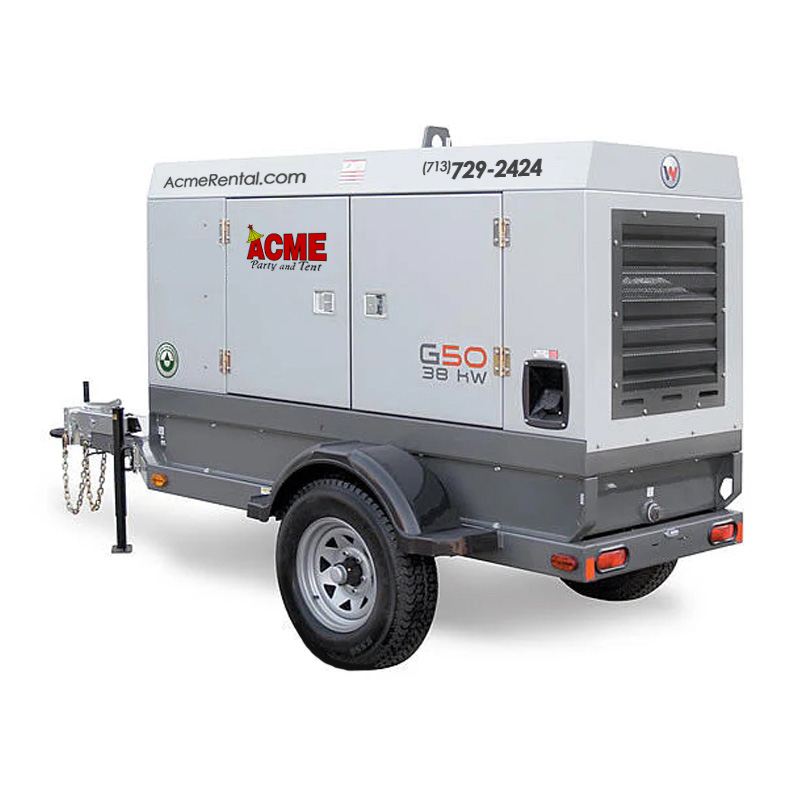
ACME’s fleet runs the full range: small gasoline units suited to a backyard tent or tailgate, mid-size mobile generators for weddings and corporate events, and large 70kVA towable diesel units with distribution boxes and cabling for major loads. Two decisions matter beyond raw wattage:
- Quiet diesel: near stages, speeches, wedding ceremonies, or residential-adjacent sites, a quiet-rated unit protects the audio and the guest experience
- One vs. many: for spread-out events, multiple generators placed in different zones beat one central unit, shorter cable runs, cleaner circuits, and no single point of failure
- Distribution boxes: towable units feed quad boxes that split and route power to multiple points, so each vendor cluster gets its own breakered feed
Sizing is a conversation, not a chart, the same 100-guest event can need double the power if the caterer is cooking on site instead of dropping off. Talk to an ACME event professional with your equipment list in hand and we’ll spec it with you.
Distribution, Cabling & Safety
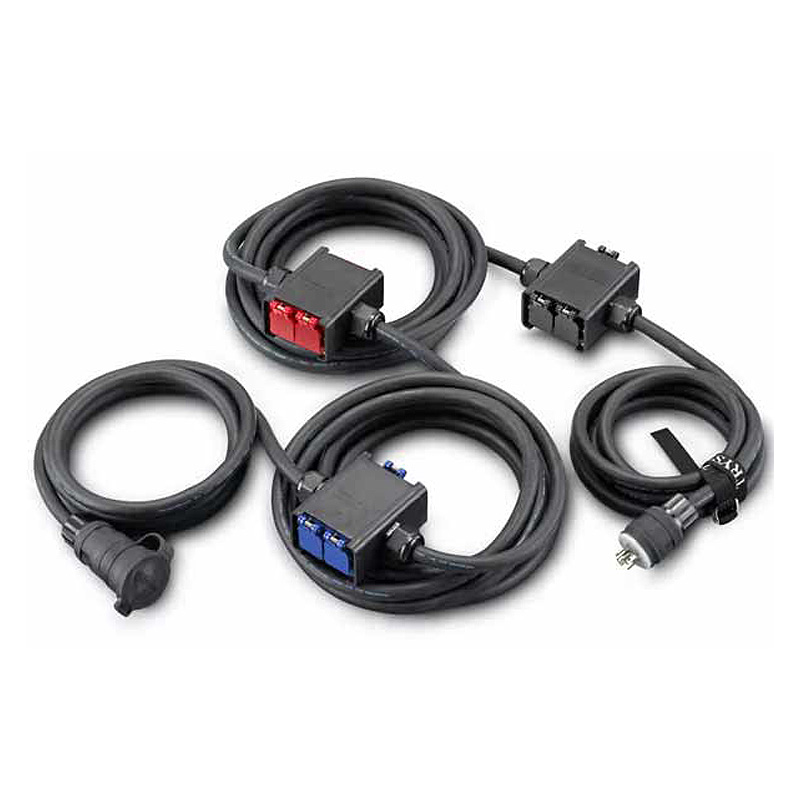
Once power spreads across a large or multi-zone site, cabling becomes a genuine safety plan, not an afterthought. Four rules govern every ACME layout:
- Cables are laid deliberately, based on where each load actually sits relative to its generator, never improvised on the day
- Any cable crossing a walkway or public area gets covered with cable protectors, trip hazards are the most preventable event injury there is
- Breakers are planned in advance: we know what's on every circuit before the first guest arrives, so nothing overloads and nothing trips mid-event
- Pre-planned layouts are required on complex sites, and for larger builds, onsite technicians actively manage and monitor the power system for the duration of the event
That last point separates a delivery from a service. For a backyard party, drop-off and pickup is plenty. For a festival or a multi-vendor corporate campus, a technician stationed with the power system is what keeps a tripped breaker from becoming a dark stage.
Fuel, Runtime & Backup
Fuel planning happens before the event, not reactively. If estimated runtime says refueling will be needed mid-event, that gets planned in advance, including how and when refueling happens without interrupting power to active loads. For critical loads, redundancy is worth a conversation: what happens if one unit has an issue three hours into a six-hour gala? On events where the answer is “unacceptable,” a backup unit or a zone-by-zone contingency plan is cheap insurance. This is the same readiness thinking behind ACME’s 24/7 Quick Response Team, which delivers structures, generators, and power across the Gulf Coast when the stakes are highest.
Worked Example: An 80,000-Person Street Festival Across 5 Blocks
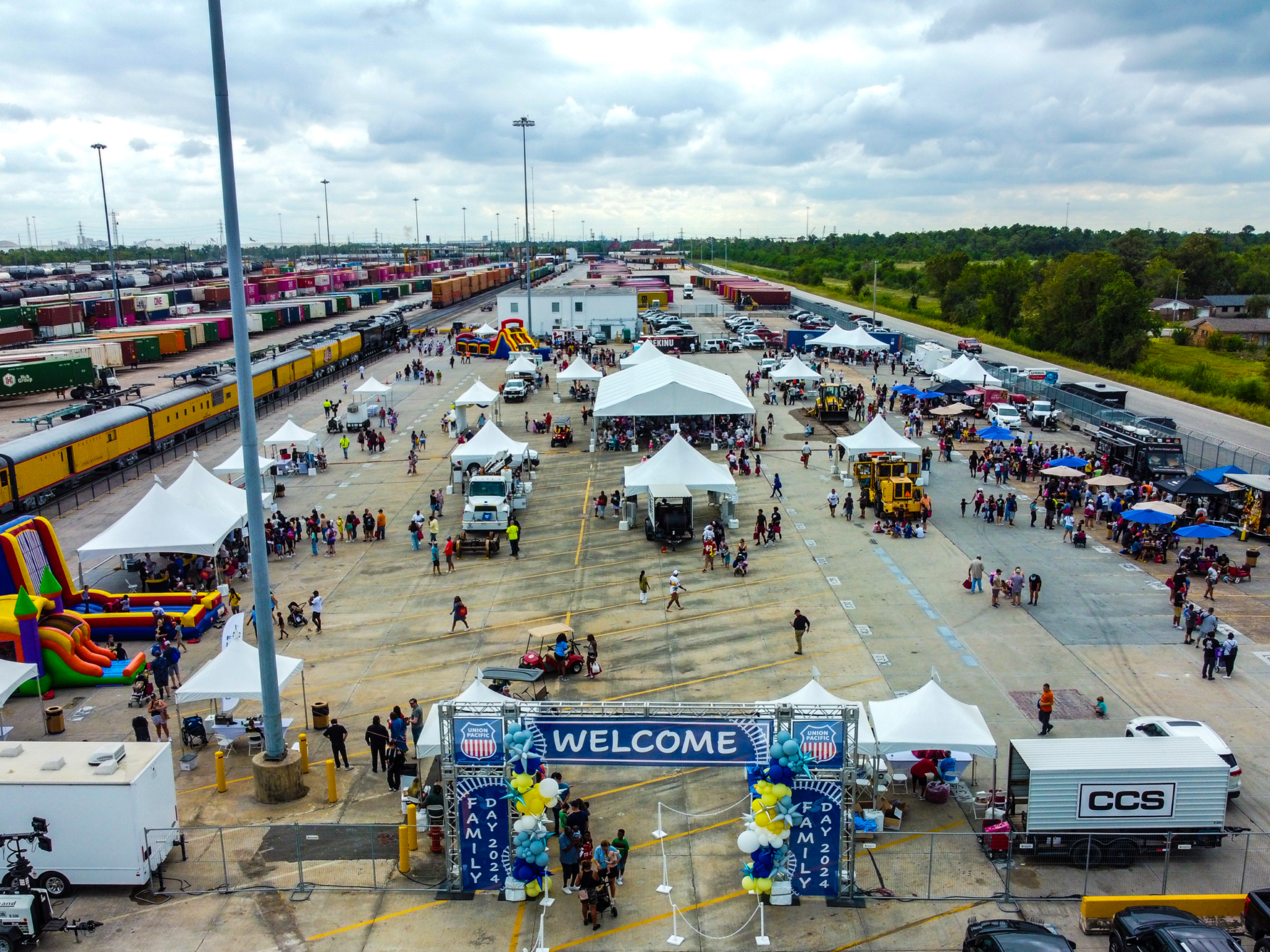
Here’s everything above applied to a real-scale scenario, a street festival drawing 80,000 attendees across five city blocks, with multiple stages, food vendor rows, and private tent parties running simultaneously.
- Multiple generators at different points, not one central unit. Each block or zone gets its own appropriately-sized generator, cutting cable runs and isolating failures
- Vendor-by-vendor load assessment, heavy cooking rigs get 50-amp service; a merch booth running a card reader shares a light circuit. No averaging
- Distribution boxes and mapped cable routes per zone, with covers on every pedestrian crossing
- Breaker and circuit planning per vendor cluster, so one overloaded fryer can't darken a stage two blocks away
- A refueling plan matched to multi-day runtime, scheduled around show hours
- Onsite technicians stationed per generator zone for the duration
That’s what “power planning” means at scale: by the time the first generator starts, every question has already been answered on paper. Whether your event is five blocks or one backyard, that’s the standard the plan should meet. See how this fits the bigger picture in our festival services and event electrical planning pages.
Frequently Asked Questions
It depends on your actual equipment list, not just guest count. Climate control is usually the largest single load and often warrants its own generator; catering can range from a laptop to a full commercial kitchen. Bring your equipment list to an ACME event professional and we’ll size it precisely, from small gas units to 70kVA towable diesel with full distribution.
Yes, quiet-rated diesel units are the right choice near ceremonies, speeches, stages, and residential areas, and we position them (and route the cabling) to keep sound and sight lines clean.
Sometimes, but for spread-out sites, several smaller generators placed by zone usually beat one large central unit: shorter cable runs, cleaner circuits, and no single point of failure. We’ll recommend the layout that fits your site.
Yes. Distribution boxes, deliberate cable routing, covered walkway crossings, and per-circuit breaker planning are part of the delivery, and for complex sites we station onsite technicians to manage the power system throughout your event.
Runtime and refueling are planned before the event. If a multi-day or long-runtime event needs mid-event refueling, it’s scheduled so active loads are never interrupted.
Plan your event's power with ACME
Tell us what you’re powering and where, we’ll handle the sizing, distribution, and safety plan.