What Determines Tent Rental Price in Houston?
Every factor that shapes your quote, sizes, styles, add-ons, and honest Houston ranges
If you’ve started shopping for a tent rental, you’ve probably noticed that quotes can vary a lot from one event to the next, even for tents that look similar in photos. That’s because tent pricing isn’t a single flat number. It’s built from several factors that stack together: the size of the tent, the style you choose, the add-ons your event needs, and even where and when your event is happening.
Understanding these factors ahead of time won’t just make the quoting process faster, it’ll help you budget realistically and avoid surprises. Here’s a breakdown of everything that goes into your final tent rental price.
Tent Size & Guest Count
The starting point for almost every tent quote is square footage. Rental companies generally price tents on a per-square-foot basis, and that number is directly tied to how much space your guest count requires.
A good rule of thumb: the more people you’re hosting, the bigger the tent footprint, and the more the square footage (and cost) climbs. But size isn’t just about headcount, it’s also about what’s happening inside the tent. A seated dinner needs more room per guest than a cocktail-style reception. If you’re adding a dance floor, a stage, a bar, or buffet stations, all of that space gets added on top of your seating area.
This is why two events with the same guest count can end up with very different tent sizes, and very different price tags. When you request a quote, it helps to think not just about “how many people” but “what will they be doing,” since that shapes the square footage your event actually needs. Our Houston tent size guide walks through the math.

Tent Style: Frame vs. Structure

Once size is set, the next major price factor is tent style. The two most common categories are frame tents and structure (or “clearspan”) tents, and each comes with its own pricing and use cases.
- Frame tents use a rigid metal frame instead of center poles, which means there’s no obstruction inside the tent. They can typically be set up on almost any surface, grass, pavement, or a driveway, making them a flexible, cost-conscious choice for many backyard and private events.
- Structure tents are engineered for larger-scale or longer-duration events. They offer a cleaner, more architectural look, higher ceilings, and greater customization, but they generally come at a higher price point than a comparable frame tent.
As a general pricing range, tent rental (top and frame) typically runs between roughly $0.80 and $1.18 per square foot, depending on the style, the tent’s condition, brand, and local market. That range covers the base structure, the tent canopy and frame itself, before you factor in sidewalls or any of the add-ons below.
Sidewalls Matter Too
Sidewalls aren’t automatically included in that base price, and the type you choose affects the total:
- Solid sidewalls are the most economical option and are a great choice if you don’t need to see outside or want a more private, enclosed feel.
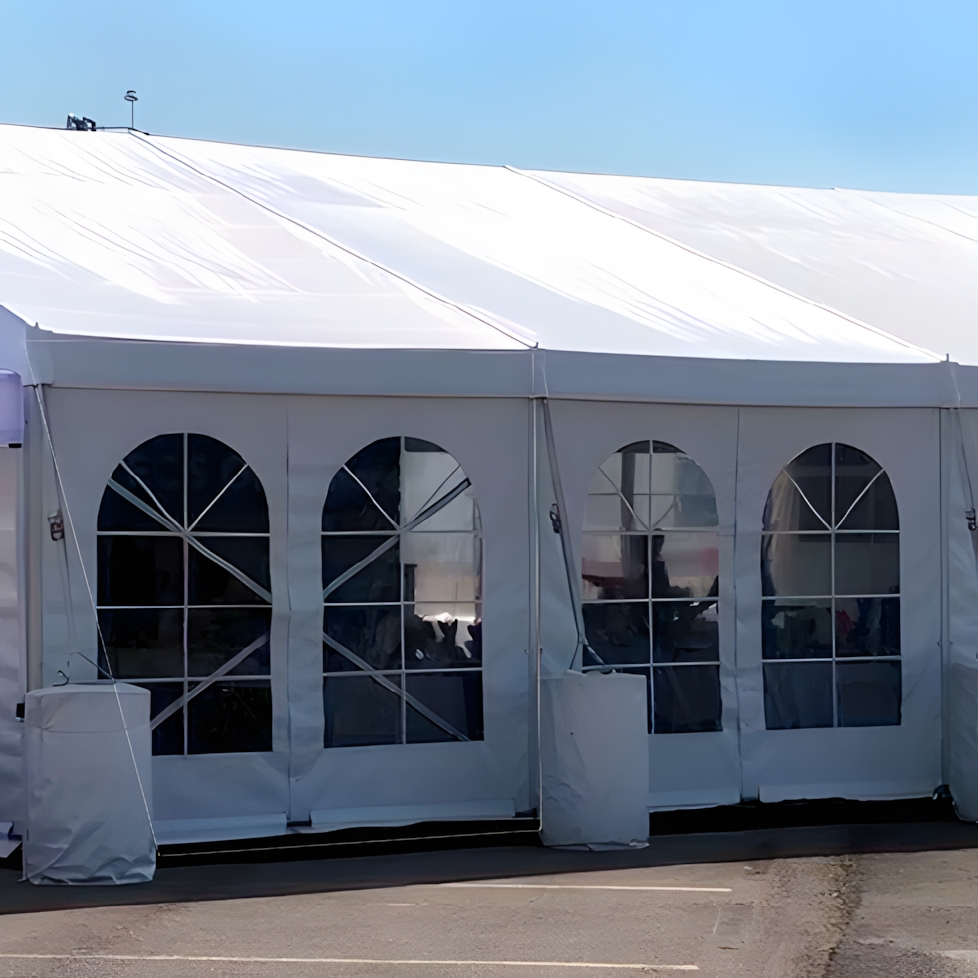
- Window sidewalls (solid panels with clear vinyl window inserts) cost a bit more than solid walls, offering some visibility while still providing coverage.
- Clear (fully transparent) sidewalls are the most premium option, letting in natural light and views of the surrounding scenery, but they come at an added cost above solid or window walls.
Solid Top vs. Clear Top
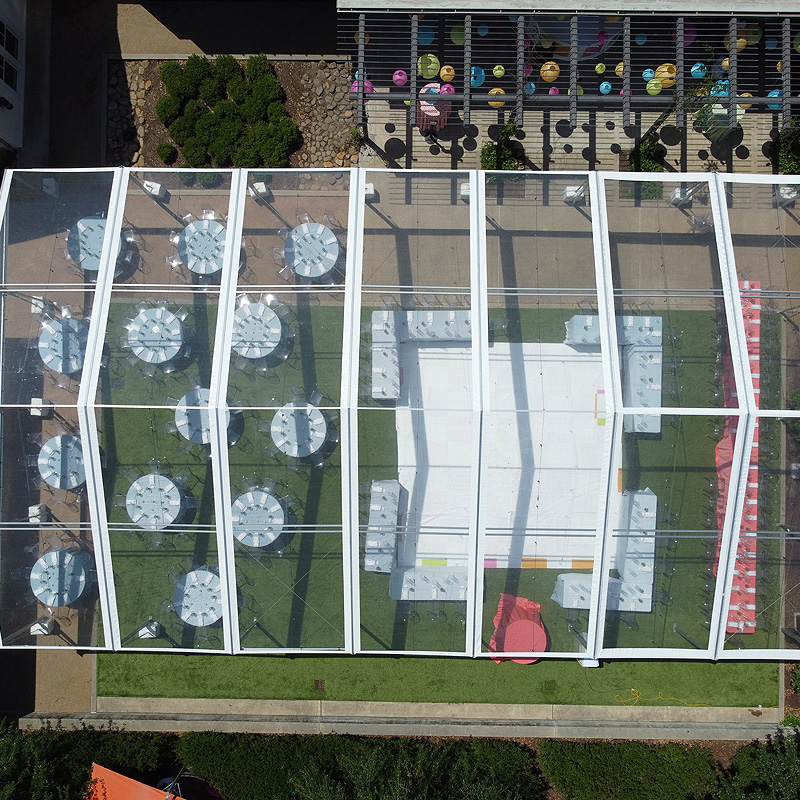
The tent’s roof material follows a similar logic. A solid top is the more economical option and is the standard choice for most events. A clear top, which lets guests see the sky, string lights, or a sunset through the canopy, creates a memorable atmosphere but comes at an added cost compared to a solid top. One Houston-specific note: clear tops trap heat, so they shine in cooler months and are generally not the right choice for peak summer.
Add-Ons That Change the Total
Beyond the tent itself, a handful of add-ons tend to have the biggest impact on your final price. Here’s what to budget for.
Anchoring & Ballasting
Every tent has to be secured, but how it’s secured depends on the surface it’s sitting on, and that has a direct effect on cost.
- On grass, tents are typically staked directly into the ground. This is the standard, no-additional-cost method of anchoring.
- On hard surfaces like concrete or asphalt, staking isn’t possible, so the tent has to be secured with ballast, concrete blocks, water barrels, or similar weighted anchors. Because this equipment has to be sourced, transported, and placed, it’s an added cost compared to grass staking.
If you’re not sure what surface your event will be on, or you’re considering a paved area like a parking lot or patio, flag this early, it can meaningfully affect your quote.
Flooring
Flooring is one of the most requested (and most variable) add-ons. Pricing starts at around $1.70 per square foot and goes up from there, depending on the type of flooring and any additional finishes.
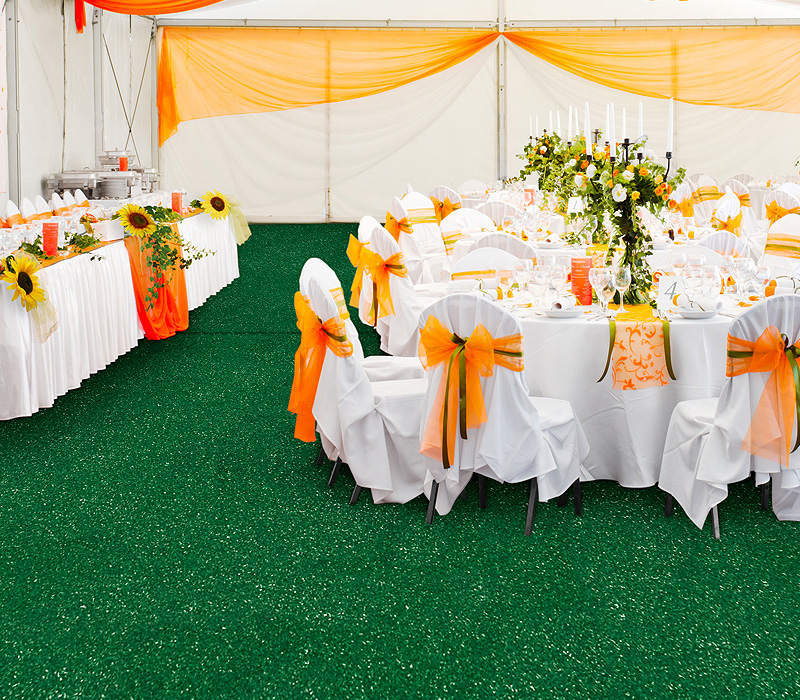
Base flooring provides a solid, level surface, important for dance floors, high heels, tables, and accessibility. But many events go a step further and add carpeting or other finishing touches on top of the base floor, which increases the overall flooring cost. If you’re picturing a polished, “walk right off the red carpet” look, plan for flooring plus carpet as a combined line item.
Doors
For fully enclosed tents, doors are often a required addition rather than an optional upgrade, especially for climate-controlled tents, where you need a way to keep conditioned air in and outside air out. Beyond function, doors also give your entrance a more finished, professional look, so they’re a popular add whether or not they’re strictly necessary for your setup.
Lighting
If your tent is totally enclosed, solid sidewalls, solid or clear top, doors installed, lighting becomes essential rather than decorative. Without it, your event space will be dark once the sun goes down (or during the day, if the walls are solid). Lighting packages range from basic functional lighting to full ambiance packages with string lights, uplighting, or chandeliers, so this is another area where your total can flex up or down depending on what you’re going for.
Climate Control (Air Conditioning & Heating)
In hot, humid climates, air conditioning isn’t a luxury add-on, it’s a must for guest comfort, especially for events running several hours or during peak summer months. But climate control isn’t a single flat-rate item you can just add to the invoice. It requires:
- The right size A/C unit(s) for your specific tent’s square footage and guest count
- Enough power to run that equipment reliably, often a dedicated generator
- Proper air distribution so cooling actually reaches every part of the tent, not just the area near the unit
Undersizing any of these pieces means guests near the back of the tent may still be uncomfortable, even with A/C running. This is a spot where working closely with your rental company really pays off, since they can calculate the right equipment for your specific tent and event conditions.
Delivery, Setup & Season
A few final factors round out your quote:
- Delivery and setup costs depend on distance from the rental company’s warehouse, site accessibility, and the complexity of the installation (a simple frame tent on flat grass is a much quicker setup than a large structure tent with flooring, walls, and climate control).
- Season plays a role too, and in Houston, every season is different. Spring brings peak wedding demand and pop-up storms that argue for sidewalls; summer makes climate control close to mandatory and puts A/C equipment in its highest demand; fall is Houston’s busiest stretch of festivals, corporate events, and galas, so the best equipment books earliest; and winter is the value window, when clear tops are at their best and availability is widest. The same tent can quote differently in March than in November simply because of what else is happening on the calendar.
How to Get an Accurate Quote
With all these variables, size, style, walls, top, anchoring, flooring, doors, lighting, and climate control, it’s easy to see why tent pricing isn’t a one-size-fits-all number. The most reliable way to get an accurate price is simple: talk to an ACME Party and Tent event professional. Share your guest count, your date, what’s happening inside the tent, and what surface it’s sitting on, and we’ll spec the tent and add-ons your event actually needs, no guesswork, no surprises on delivery day.
Request a quote or call us at 713-729-2424. Plan your next event with ACME and let us worry about the details.
Frequently Asked Questions
The tent itself (top and frame) typically runs roughly $0.80-$1.18 per square foot, before sidewalls and add-ons like flooring (from about $1.70/sq ft), lighting, doors, and climate control. Your total depends on size, style, surface, and season, which is why a quick conversation gets you a far more accurate number than any chart.
Square footage first, then style (frame vs. structure), then the add-ons, climate control and flooring are usually the largest line items after the tent itself.
Yes. Grass allows standard staking at no extra cost; concrete or asphalt requires ballast (weighted anchors), which adds equipment and labor.
Earlier is always better in Houston’s spring and fall peaks. For summer events, book climate control as early as the tent itself, A/C equipment is the first thing to run out.


Plan your next event with ACME and let us worry about the details!
Tell us the date, the crowd, and the vision, one call covers all of it.

- Planning an Outdoor Wedding in Houston: Weather, Tents & Building Your Own Venue - September 20, 2026
- 5 Costly Mistakes to Avoid When Renting a Tent for Your Houston Event - September 20, 2026
- Fall & Holiday Event Rentals in Houston: 2026 Trends - September 14, 2026