Warehouse Tent Rentals in Houston, TX
Engineered temporary warehouse and storage structures — clear span space for inventory, equipment, and operations, installed on your timeline.
A warehouse tent is covered square footage without the lease, the build or the wait. ACME installs clear-span storage structures across Houston and the Gulf Coast — for a season, a turnaround, or as long as the operation needs them.
What Is A Warehouse Tent?
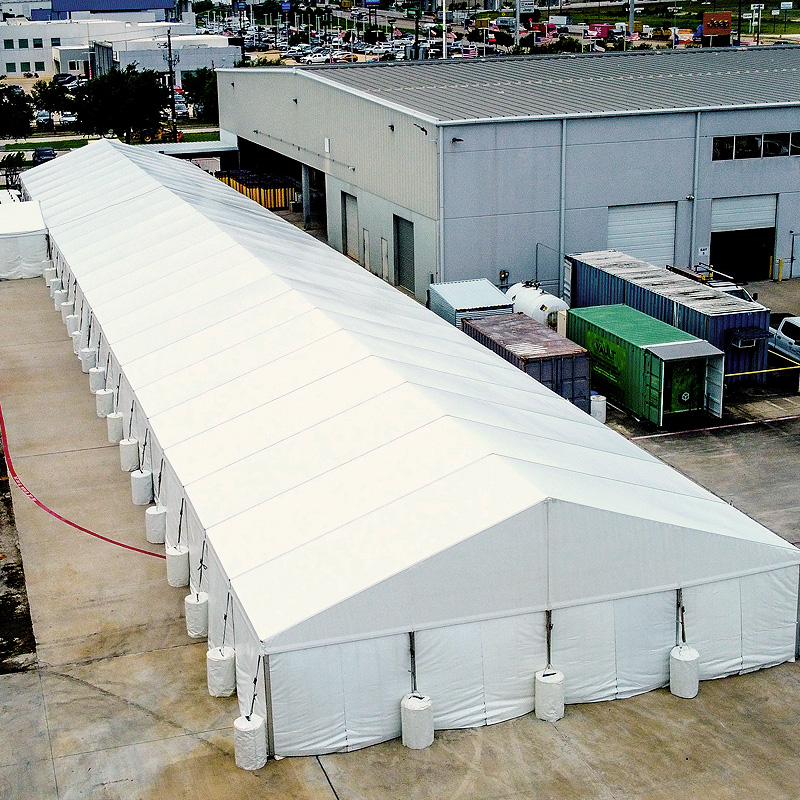
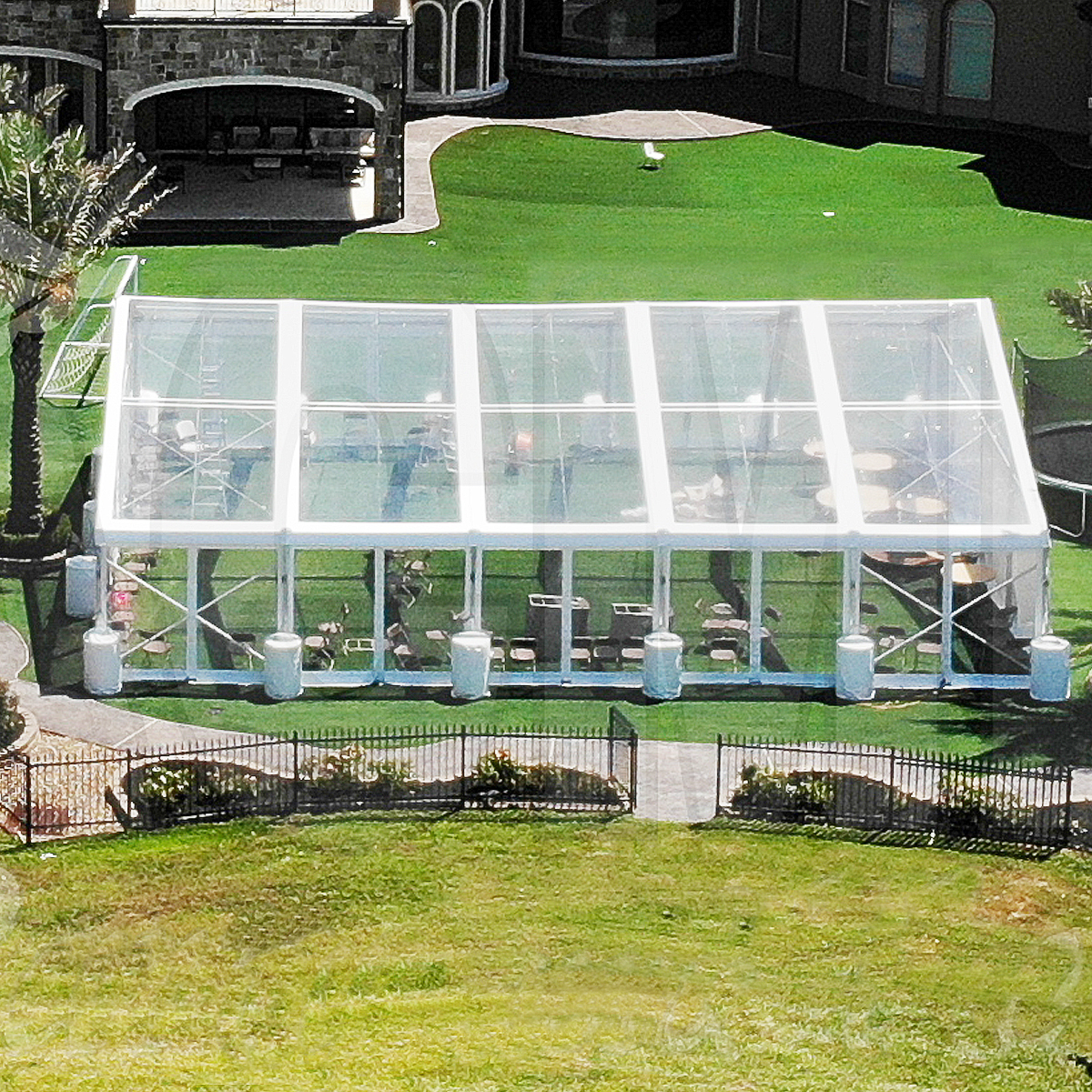
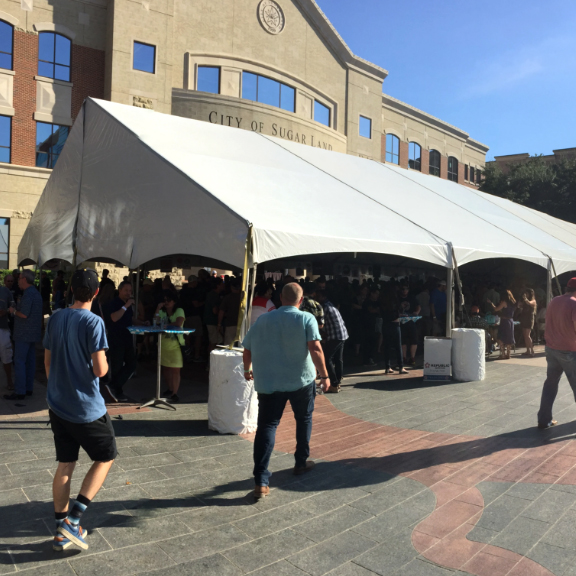
A warehouse tent is a clear-span structure used as storage or working space — a building’s function without a building’s timeline.
Clear span is the important part. There are no interior poles, so the floor is one uninterrupted area. That is what makes it usable for racking, pallets, vehicles or machinery, rather than just cover.
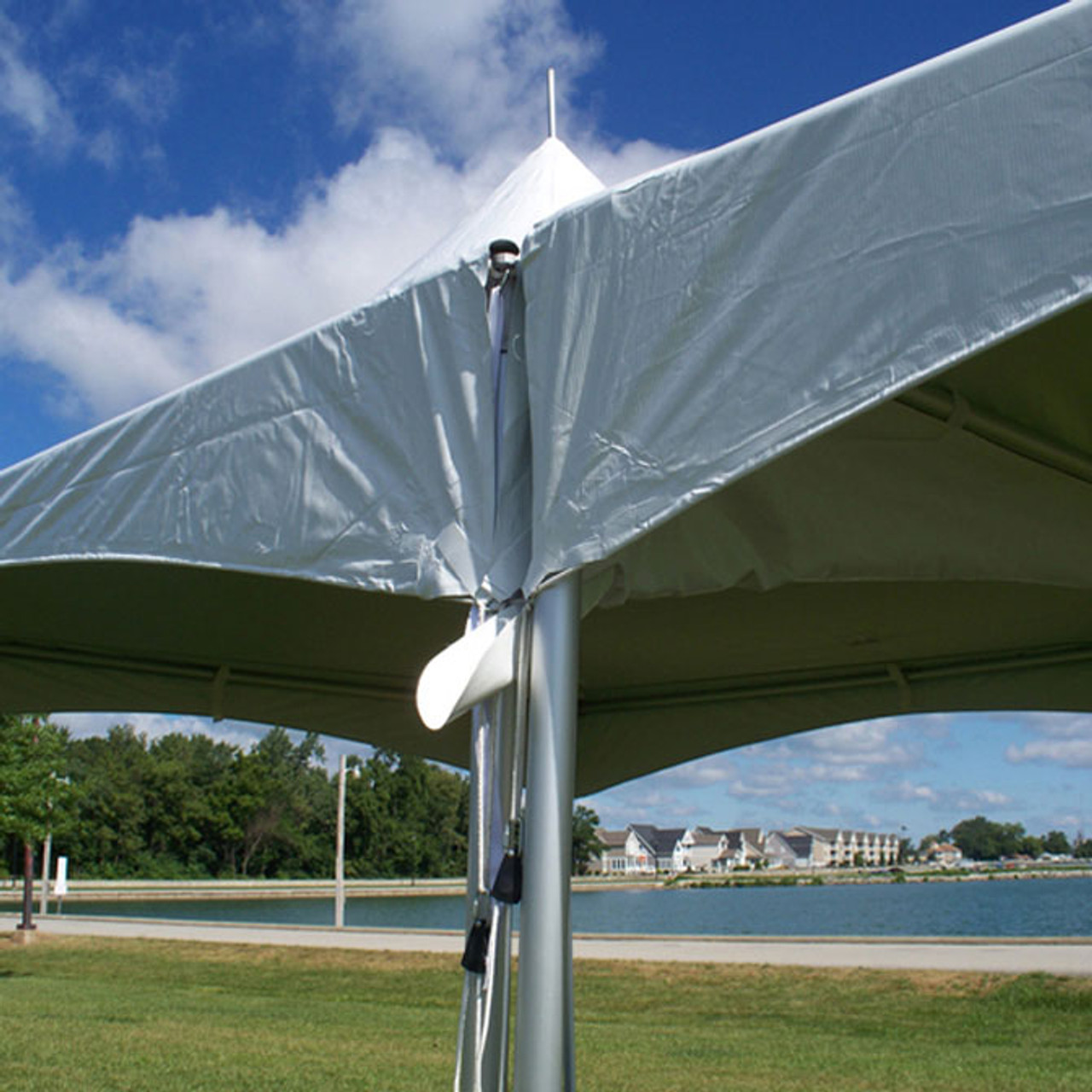
Unlike an event tent, it is specified to stand. Heavier frame, engineered anchoring, walls and doors as standard, and construction that expects months of Houston weather rather than one weekend.
Businesses reach for one when they need space faster than they can build it, cheaper than they can lease it, or only for as long as a particular job lasts.
When Does A Warehouse Tent Beat Building Or Leasing?
Three situations, mostly.
When the need is temporary. A seasonal surge, a turnaround, a contract with an end date — signing a multi-year lease for a nine-month problem is expensive in a way that does not show up until month ten.
When the need is urgent. A structure can be standing in days. Warehouse space takes months to find, fit and occupy; a building takes longer still.
When the space has to be where you are. Offsite storage means transport, double handling and time. A tent goes on your own yard, next to the operation that needs it.
If none of those apply and the need is permanent, build. If any of them do, cover is usually the better instrument.
What Do Businesses Store Under Them?
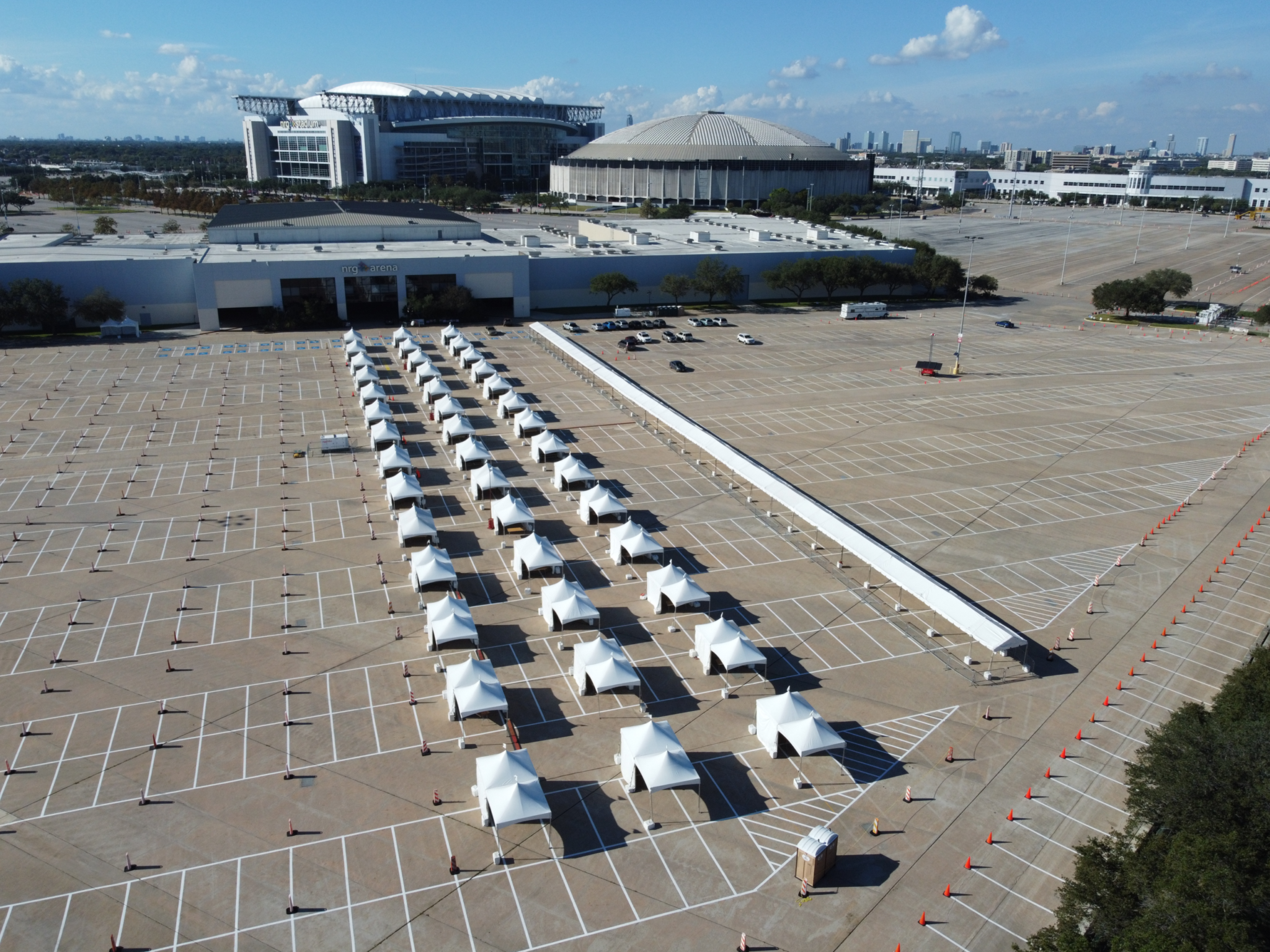
Anything that needs to be out of the weather and near the work.
Inventory and pallet overflow is the common one — seasonal stock, raw materials, finished goods waiting on transport. Equipment and vehicles sit under them during projects. Parts staging for turnarounds is a standard use: everything laid out, covered, and next to the plant rather than across town.
Then the working uses: covered workspace, assembly, sorting and distribution. And on emergency jobs, warehouse tents become the temporary operation while a damaged building is out of service.
What they are not is a sealed, climate-stable environment by default — if your stock needs conditions, plan climate control as part of the structure.
How Big Can A Warehouse Tent Be?
Bigger than most people assume, and the way it scales matters.
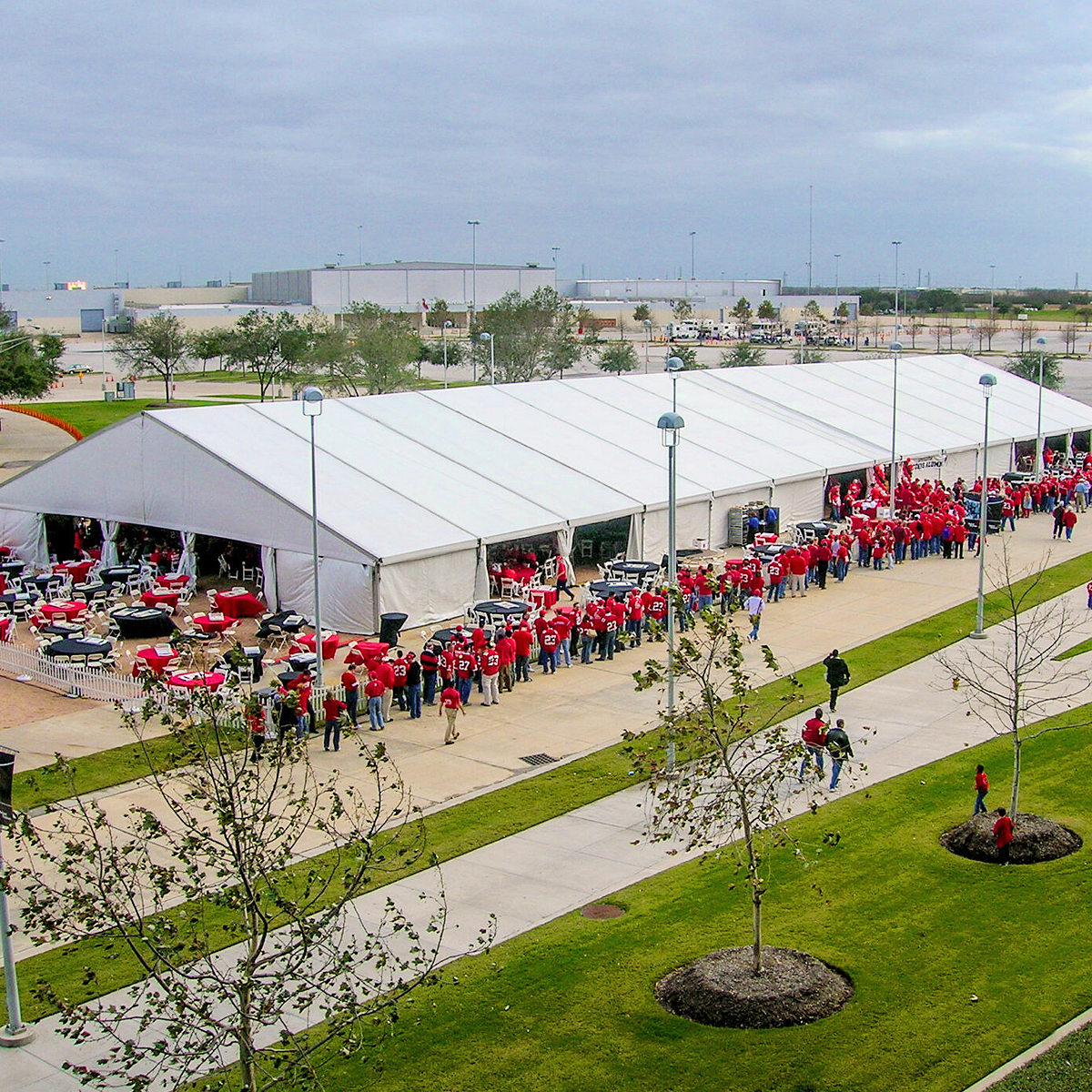
Structure tents come in clear-span widths and extend in bays along their length, so you scale by adding length rather than by finding one enormous tent. For the largest or most demanding spans, Keder track systems handle what a standard frame will not.
Height is the specification people forget. Leg height decides whether a forklift can work under the eave, whether racking fits, and whether a truck can back in. Leg extensions add clearance where the standard height is tight.
Tell us what has to fit under it — the machine, the racking, the vehicle — and the structure gets sized to that, not to a floor area guess.
What About Flooring, Power And Climate?
A roof on bare ground is rarely the finished answer for storage.
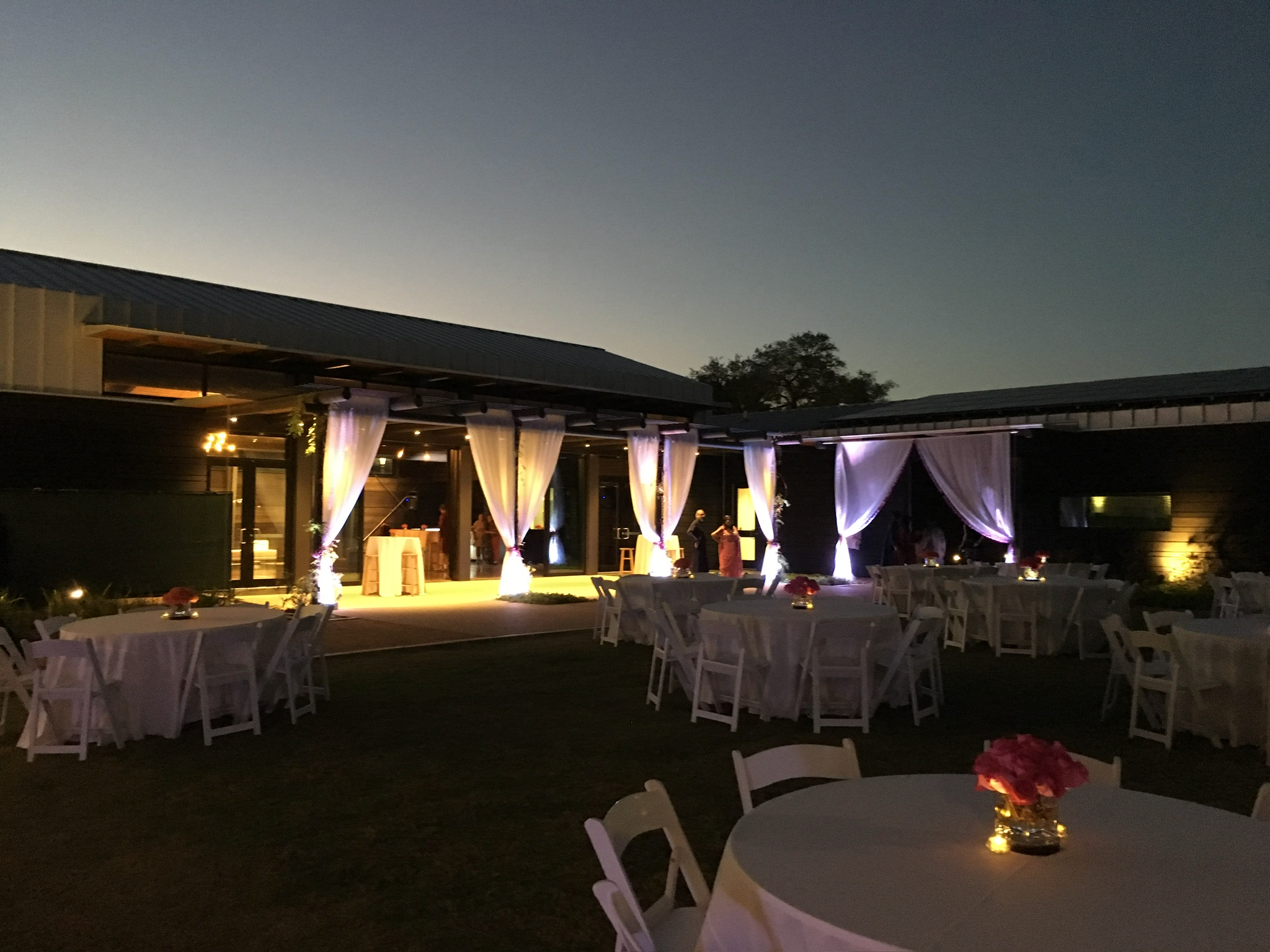
Flooring matters if you are moving pallets, running equipment or storing anything that cannot sit on dirt. Power means lighting to work by and running whatever is inside — generators and distribution where mains does not reach.
Climate is the Houston question. A closed structure in summer gets hot, and humidity is its own problem for some stock. Cooling, heating and ventilation get specified against the structure size and what is inside it.
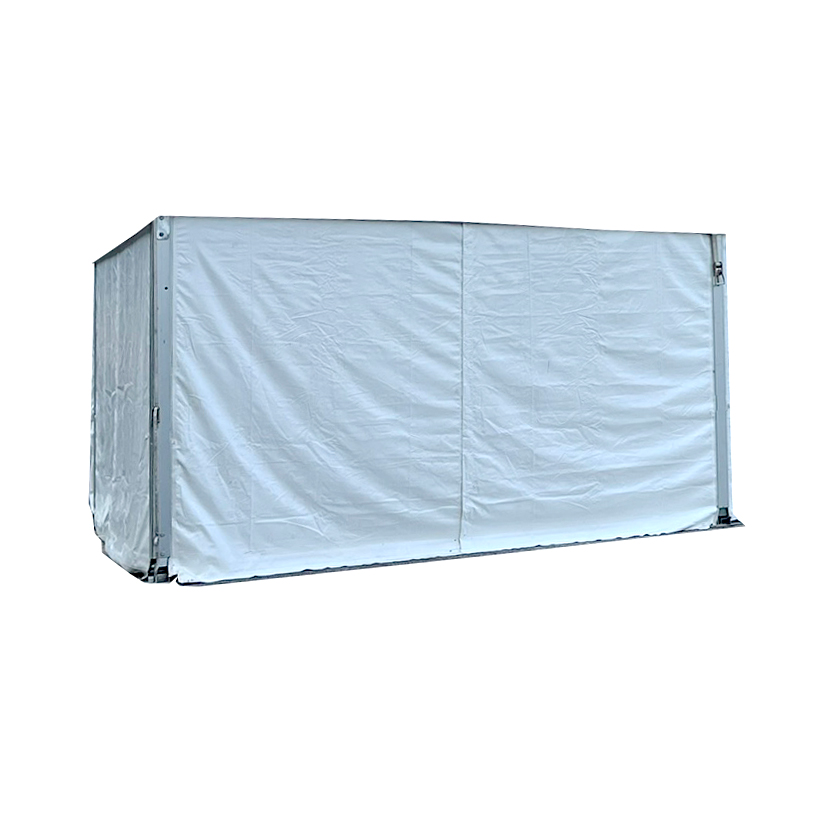
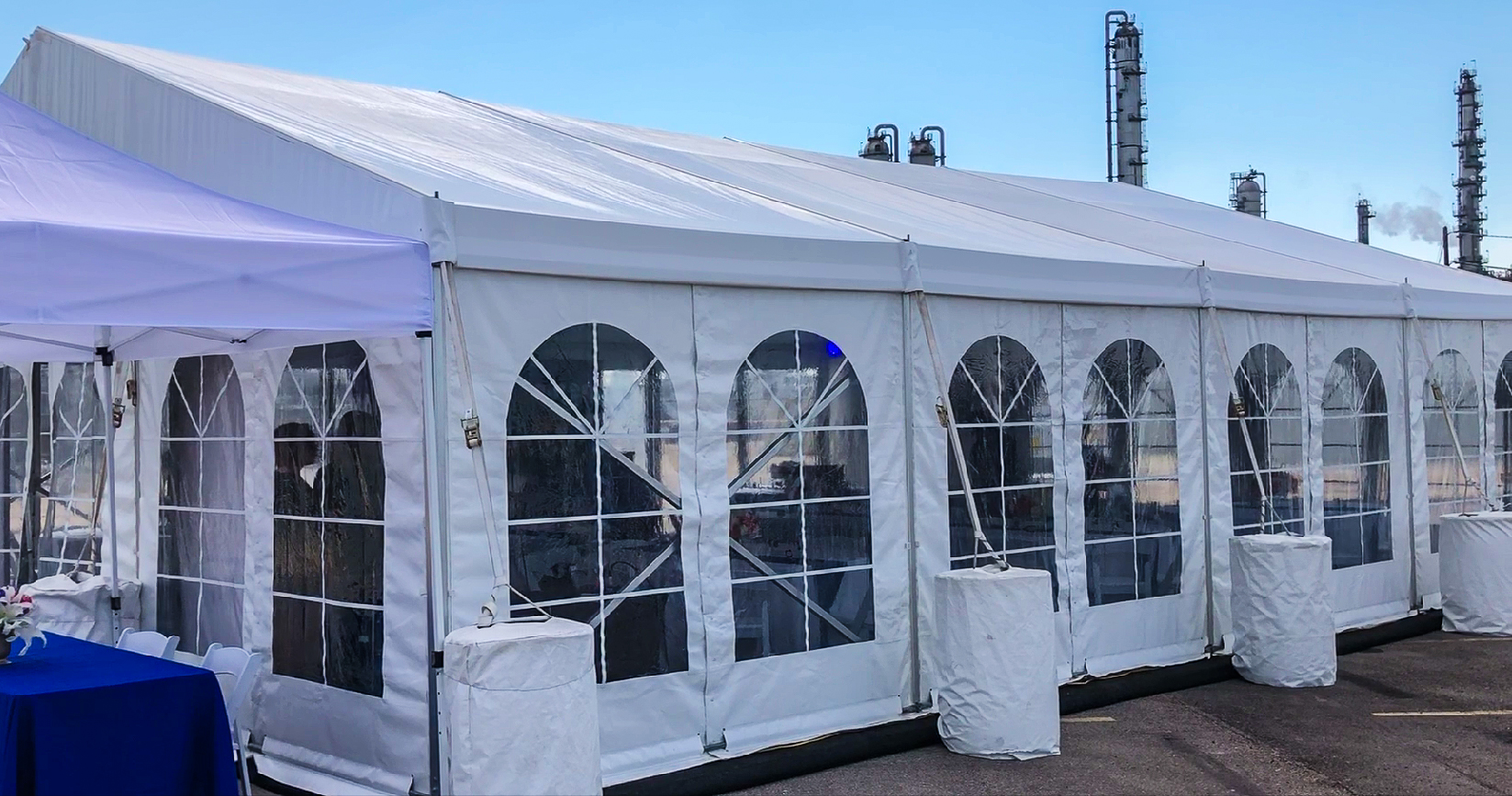
And walls: solid sidewalls and doors are what turn a covered area into something securable rather than merely shaded. See tent accessories.
How Long Can It Stay Up? Rent Or Lease?
Long enough that the pricing model should change with it.
Short-term rental suits a defined window — a turnaround, a season, a project. Once the need runs into months, a long-term lease is usually the better structure, both financially and technically: leased structures are specified to stand, be maintained and be handed back.
The trap is renting month to month for what turns out to be a year, and paying event-rental economics for warehouse-duration cover.
If your timeline is genuinely open-ended, say so at the quote stage. We would rather scope it as a lease than have you discover the difference in month eight.
What Does The Site Need?
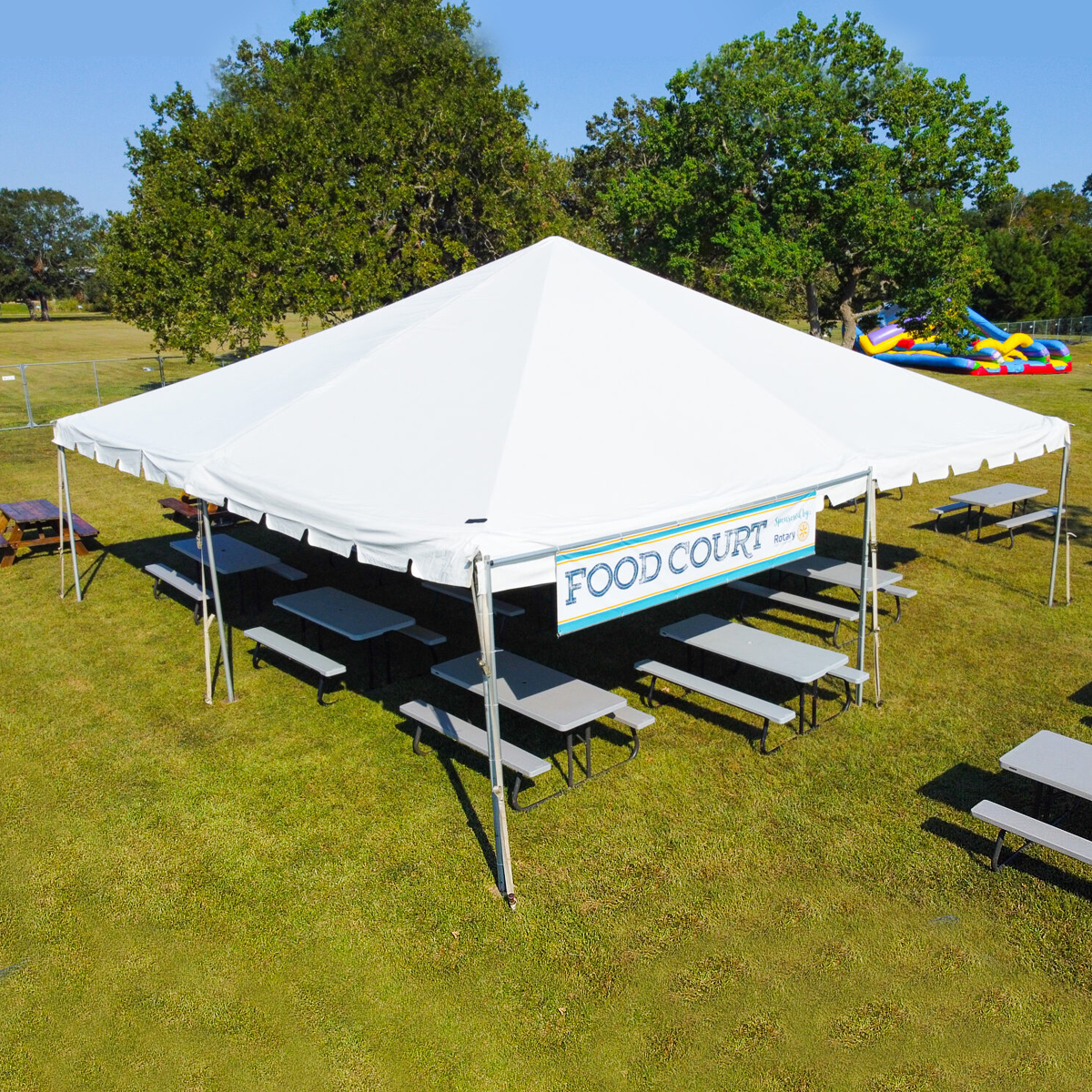
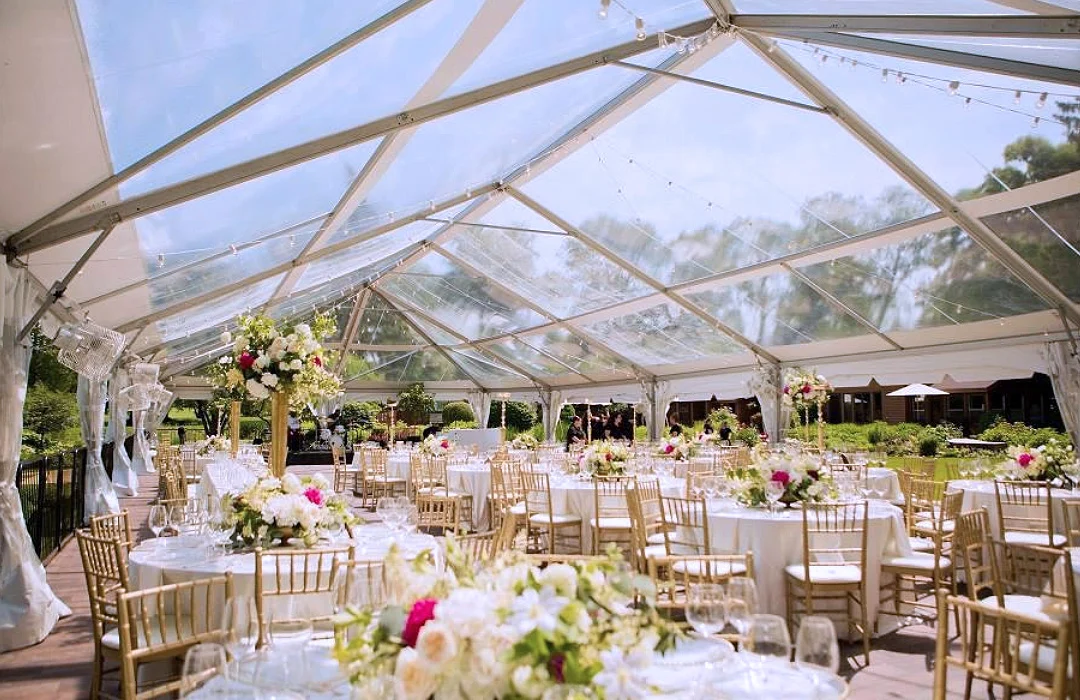
Warehouse tents are heavier and stand longer, so the site matters more than it does for an event.
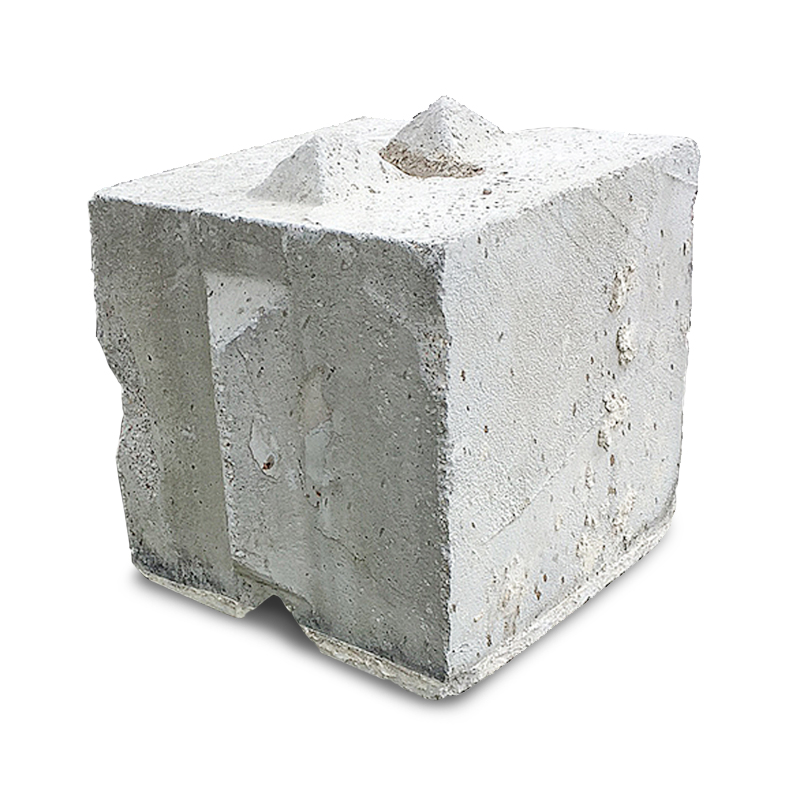
Surface and anchoring: turf can normally be staked; concrete, asphalt and anywhere with services below cannot, so the structure is ballasted — which takes perimeter space you need to leave clear.
Level: a long clear-span structure wants ground that does not fall away under it. Drainage: decide where a Houston storm sends the water before it decides for you. Access: truck reach to the setup point drives install time, and forklift routes in and out drive whether the thing is usable once it is up.
A site survey settles all of this before anyone quotes.
How Does Delivery And Install Work?
Crewed, scheduled, and worked around your operation rather than dropped in the middle of it.
The sequence is survey, quote, permit support where needed, install, then a collection plan. On a working site that means fitting your access rules, safety requirements and production schedule — so the conversation starts earlier than an event booking.
ACME has served Houston since 1997 and installs across Greater Houston and the Gulf Coast, including Katy, Sugar Land, The Woodlands and Galveston, with 24/7 capability when cover is needed at short notice.
To scope covered space, request a quote or call 713-729-2424.
Frequently Asked Questions
A warehouse tent is an engineered temporary structure — typically a clear span structure or Keder track tent with solid sidewalls — used as covered storage or workspace. It installs far faster than permanent construction and can be removed or relocated when the need ends.
As long as the project requires. For extended timelines, ACME offers a tent lease program and long-term industrial site tenting with structures suited to long-duration use.
Often, yes. Anchoring and flooring are engineered to the site — staked where surfaces allow, ballasted on concrete or asphalt — and we evaluate drainage and access as part of every quote.
Yes. Lighting, generators, power distribution, ventilation, and climate control are all available from ACME, so the structure supports whatever happens inside it.
Call 713-729-2424 (ext. 22 for emergencies). ACME’s 24/7 Quick Response Team handles urgent deployments, including post-storm and facility-failure situations.
Since 1997
Family-owned & serving Houston for decades
Houston & Gulf Coast
Delivering across Southeast Texas
24/7 Quick Response
Disaster relief & emergency deployments
One Vendor
Tents, furniture, power, climate & service
Plan your next event with ACME and let us worry about the details!
From corporate gatherings to a festival for thousands, ACME’s event specialists will walk you through the entire process.