5 Costly Mistakes to Avoid When Renting a Tent for Your Houston Event
The five planning mistakes that cost Houston events the most — and how to dodge every one
Most tent rental problems don’t happen on event day — they happen weeks earlier, in the planning decisions nobody thought twice about. After decades of setting up tents across Houston, we’ve seen the same handful of mistakes derail timelines and budgets again and again. Here are the five that cost people the most, and how to avoid every one of them.
1. Underestimating the Space You Need
The core mistake: skipping a proper measurement of the location before locking in tent size and style.
A tent that “fits” on paper can fail on site. Trees, fences, slopes, property lines — or simply how your guest count needs to flow between tables, the dance floor, the bar, and buffet stations — all change the actual footprint required. A 40-guest seated dinner and a 40-guest cocktail party need very different layouts, and both need more space than a headcount alone suggests.
Here’s how that plays out in practice. Say you’re hosting 100 guests for a seated dinner. Seating alone needs roughly 1,000–1,200 square feet. Add a dance floor and you need another 300–400. A bar, a buffet line, a gift table, a DJ — each claims its own real estate. Suddenly the 20×40 tent that “felt big enough” is a 40×60 requirement, and if the yard can’t hold it, better to know in week one than on delivery morning.
The fix: measure the actual space first — length, width, height clearance, and any obstacles — before finalizing size, and think in terms of “what will guests be doing,” not just “how many are coming.” Our tent size guide is the starting point, and ACME can evaluate your site remotely or come out to measure for more substantial builds.

2. Ignoring Delivery Access & Buildability
The core mistake: not confirming the tent can actually be delivered and built in the intended spot.
Some locations look fine for the tent itself but fail on access — narrow gates, overhead wires or tree limbs, second-floor patios and rooftops, tight turns for trucks, or HOA and property restrictions. Load-in and load-out obstacles like fences, trees, and air-conditioning units matter too. And some sites simply can’t support a tent build at all.
This is the mistake that produces the worst event-day phone calls, because by the time a crew discovers the gate is 36 inches wide or a live oak hangs over the only flat spot, your options have collapsed. Rooftop and parking-garage builds — which ACME does regularly — are absolutely achievable, but only when they’re planned as rooftop builds from the start, with equipment and rigging chosen for the access that actually exists.
The fix: confirm the delivery path and buildable ground before booking — not the day of setup. Walk the route your equipment will take from the street to the site, and flag anything narrow, overhead, or locked. ACME can evaluate access remotely or on site as part of planning.
3. Skipping the Site Survey: Terrain, Anchoring & Wind
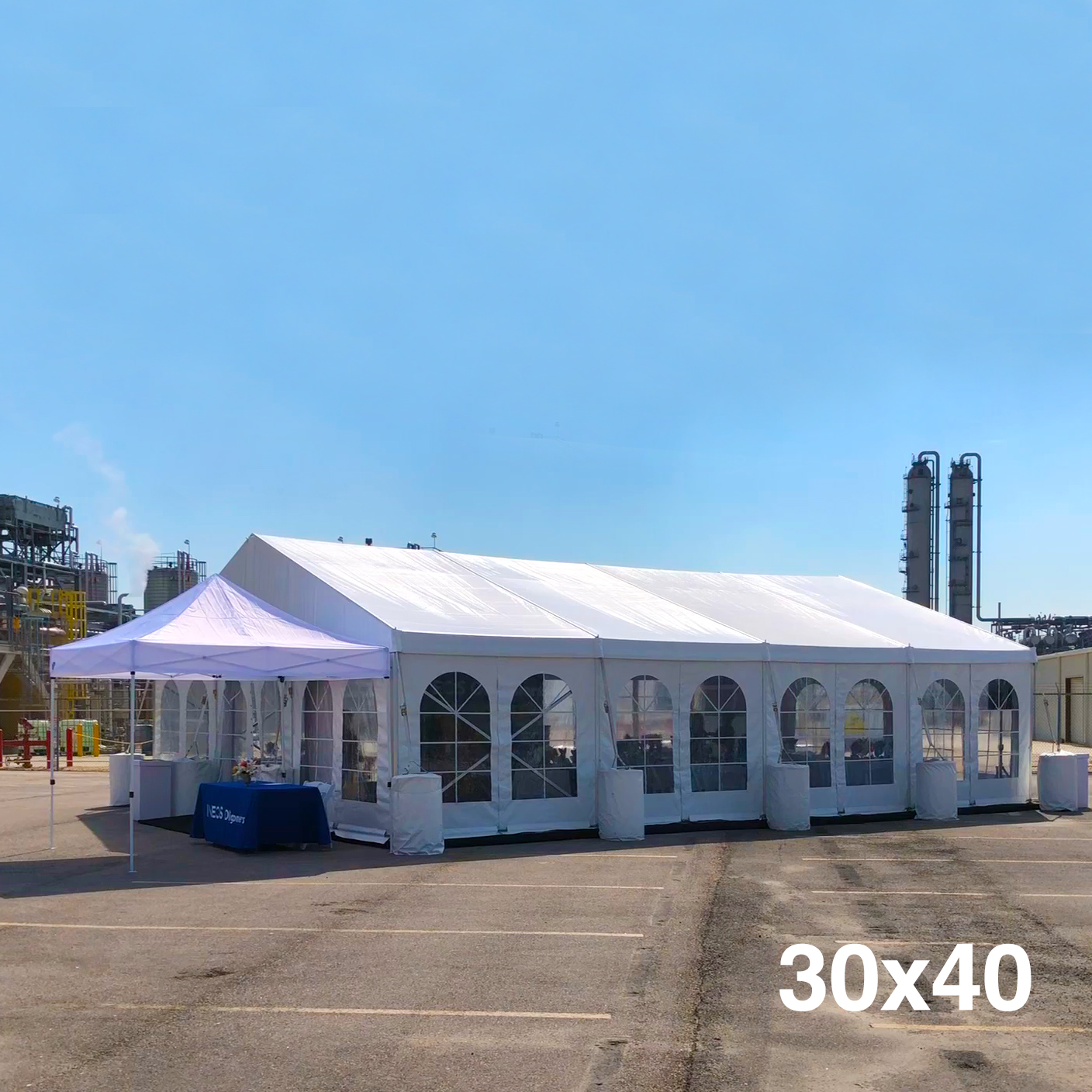
The core mistake: not knowing the terrain type or wind exposure before deciding how the tent gets secured.
This one has several moving parts, and each can bite:
- Surface type. Grass, dirt, gravel, concrete, or asphalt determines whether we’re staking or using ballast (concrete blocks or water barrels).
- Water access. If water barrels are the anchoring plan, is there a water source on site to fill them?
- Wind exposure. Open yards, waterfront sites, and elevated ground catch more wind — which can mean extra ballast beyond the standard amount.
- Irrigation risk. If we’re staking into grass, is there a sprinkler system underground? Staking blind risks puncturing irrigation lines, so sprinkler locations need to be identified before stakes go in — the same goes for any underground utilities or perimeter restrictions.
- Permits. Larger tents — generally over 1,200 square feet — may require a permit, and that takes lead time. Our Houston event permit guide covers the basics.
The fix: a site survey up front catches all of it — surface, wind, water, and utility lines — so the anchoring plan is right the first time.
4. Treating Flooring, Sidewalls & Doors as Afterthoughts
The core mistake: not planning the exact placement of sidewalls, doors, and flooring before delivery day.
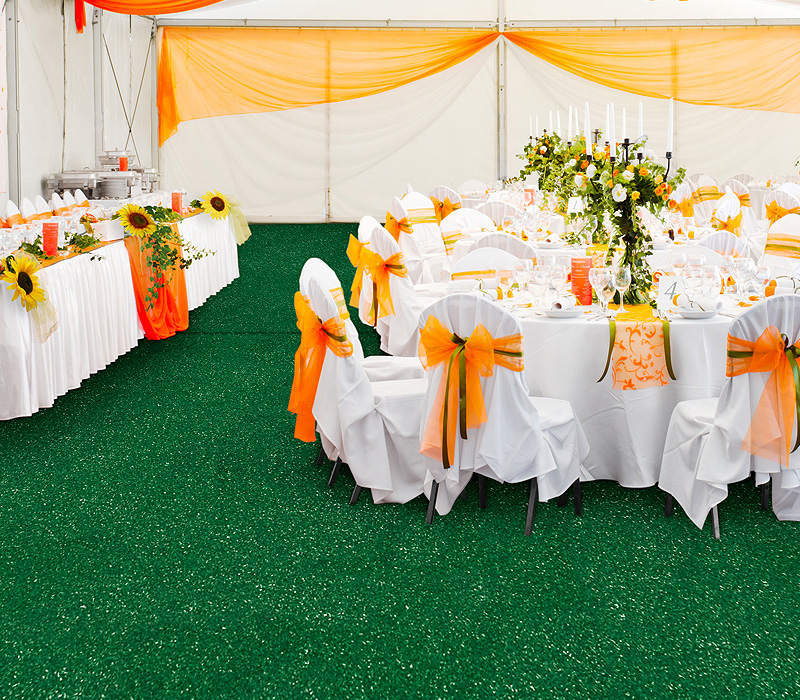
Flooring needs an exact, level fit — it’s not a “close enough” install. Doors need to go in exactly the right spot for guest flow and function, especially on fully enclosed or climate-controlled tents where conditioned air has to stay in. Deciding these details after the crew arrives causes delays and rework.
The fix: finalize sidewall, door, and flooring placement before delivery, as part of the planning conversation — it costs nothing to decide early and real money to change on site.
5. Not Planning for the Unexpected
The core mistake: cutting things too close — assuming exactly what’s ordered is exactly what’s needed.
If something’s missed — not enough lighting, not enough tables and chairs — a second or third delivery trip is expensive, eats up time, and adds labor charges. It’s almost always cheaper and smoother to slightly over-plan than to send a truck back out on event day.
Think about what a shortage actually costs. A second truck roll isn’t just the delivery fee — it’s crew hours, schedule disruption while everyone waits, and the very real chance the missing item is out of stock that weekend. Compare that to the modest cost of one extra table and a spare string of lights ordered up front, and over-planning stops looking like an upsell and starts looking like the obviously cheaper path.
The fix: build in a small buffer — an extra table or two, an extra sidewall, a bit more lighting — as standard practice. Guests never notice a little extra; everyone notices a shortage.
Bonus: Under-Planning Power & Lighting
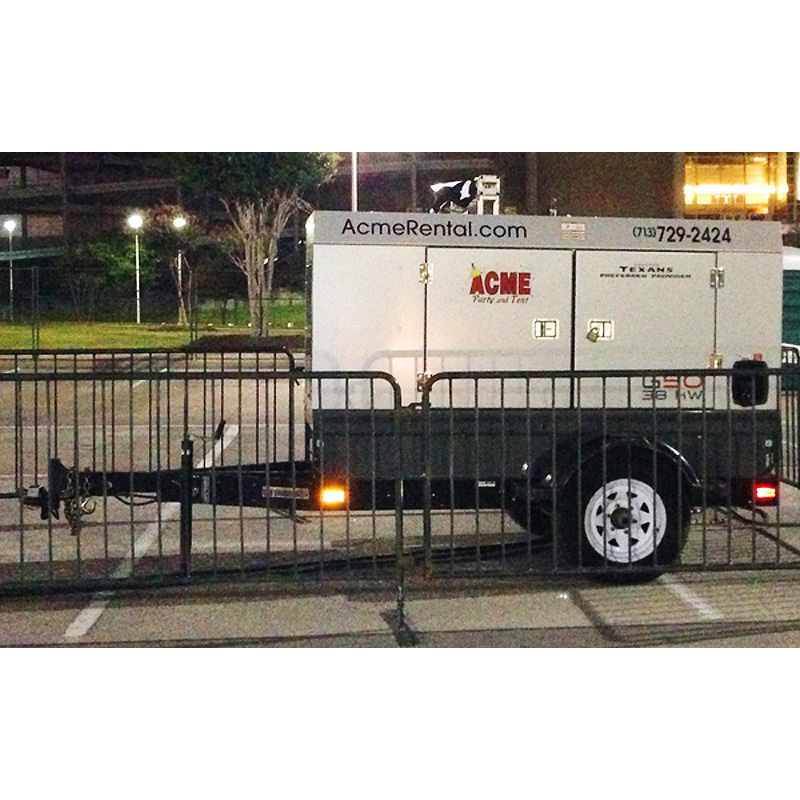
Enclosed tents need real lighting (see mistake #4’s cousin: a beautifully walled tent that’s dark by 7 p.m.), and power for lighting and A/C has to be planned alongside the equipment — not improvised on site. If house power won’t carry the load, a generator sized to your actual equipment solves it, but only if it’s on the truck.
The fix: map lighting and power needs during the quote conversation, not after setup begins.
A Houston-Specific Note: Respect the Weather Window
Every one of these mistakes gets more expensive in Houston’s climate. Summer heat makes climate control — and the power to run it — part of the core plan rather than an upgrade. Spring and fall bring pop-up storms that make sidewall decisions matter. Wind exposure on open or waterfront sites changes anchoring math. And hurricane season rewards the planners: the events that sail through a rough forecast are the ones whose tents were specified, anchored, and scheduled with weather in mind from the first conversation. When you plan with a company that tents the Gulf Coast year-round, that thinking is built in — it’s the same discipline our crews bring to emergency response work across the region.
The Common Thread: Plan Once, Set Up Once
Every one of these mistakes traces back to the same root — decisions made too late. The good news is they’re all avoidable with one early conversation. Share your site, your guest count, and your plans with an ACME event professional, and we’ll walk the details with you: sizing, access, anchoring, layout, lighting, and power, all settled before the truck rolls.
Request a quote or call 713-729-2424 — and let us worry about the details.
Your Pre-Booking Checklist
Before you sign off on any tent rental, you should be able to answer yes to each of these: I’ve measured the actual site, including height clearance and obstacles. I know what surface the tent will sit on, and whether that means stakes or ballast. I’ve walked the delivery path and flagged gates, wires, and tight turns. I know where the doors, sidewalls, and flooring will go. I’ve checked whether my tent size needs a permit. My lighting and power plan matches my equipment. And I’ve added a small buffer for the things guests always end up needing. Ten minutes with that list — or one call to ACME, where we run it for you — is the difference between a smooth setup day and an expensive one.
Frequently Asked Questions
For spring and fall peak season, as early as you can — the best equipment and crews book first. For any event, booking early leaves time for a proper site survey, permits if your tent is over roughly 1,200 square feet, and a layout you’re not rushing.
For small setups, a remote evaluation is often enough — measurements and photos, or even a look via satellite imagery. For larger or enclosed builds, an on-site survey is the cheapest insurance you can buy against event-day surprises.
Yes — tents on hard surfaces are anchored with ballast (concrete blocks or water barrels) instead of stakes. It adds some equipment cost, and water-barrel plans need a fill source on site, which is exactly the kind of detail the site survey settles early.
Tell us before staking. We locate sprinkler lines (and any underground utilities) first, or shift the anchoring plan to ballast so nothing gets punctured.
Plan your next event with ACME and let us worry about the details!
Tell us the date, the crowd, and the vision — one call covers all of it.

- Fall & Holiday Event Rentals in Houston: 2026 Trends - August 22, 2026
- Hurricane-Season Readiness: How Gulf Coast Businesses Use Rapid-Deploy Tents - August 22, 2026
- Planning an Outdoor Wedding in Houston: Weather, Tents & Building Your Own Venue - August 22, 2026