Blast-Resistant Tenting
Temporary structures for siting inside a plant’s blast radius — specified against your facility’s own siting study.
Inside an operating plant, where a structure stands matters as much as what it is made of. Blast-resistant siting is governed by your facility’s process hazard analysis, not by a rental catalogue. We work to that study — talk to us early, on 713-729-2424.
What Does Blast-Resistant Actually Mean?
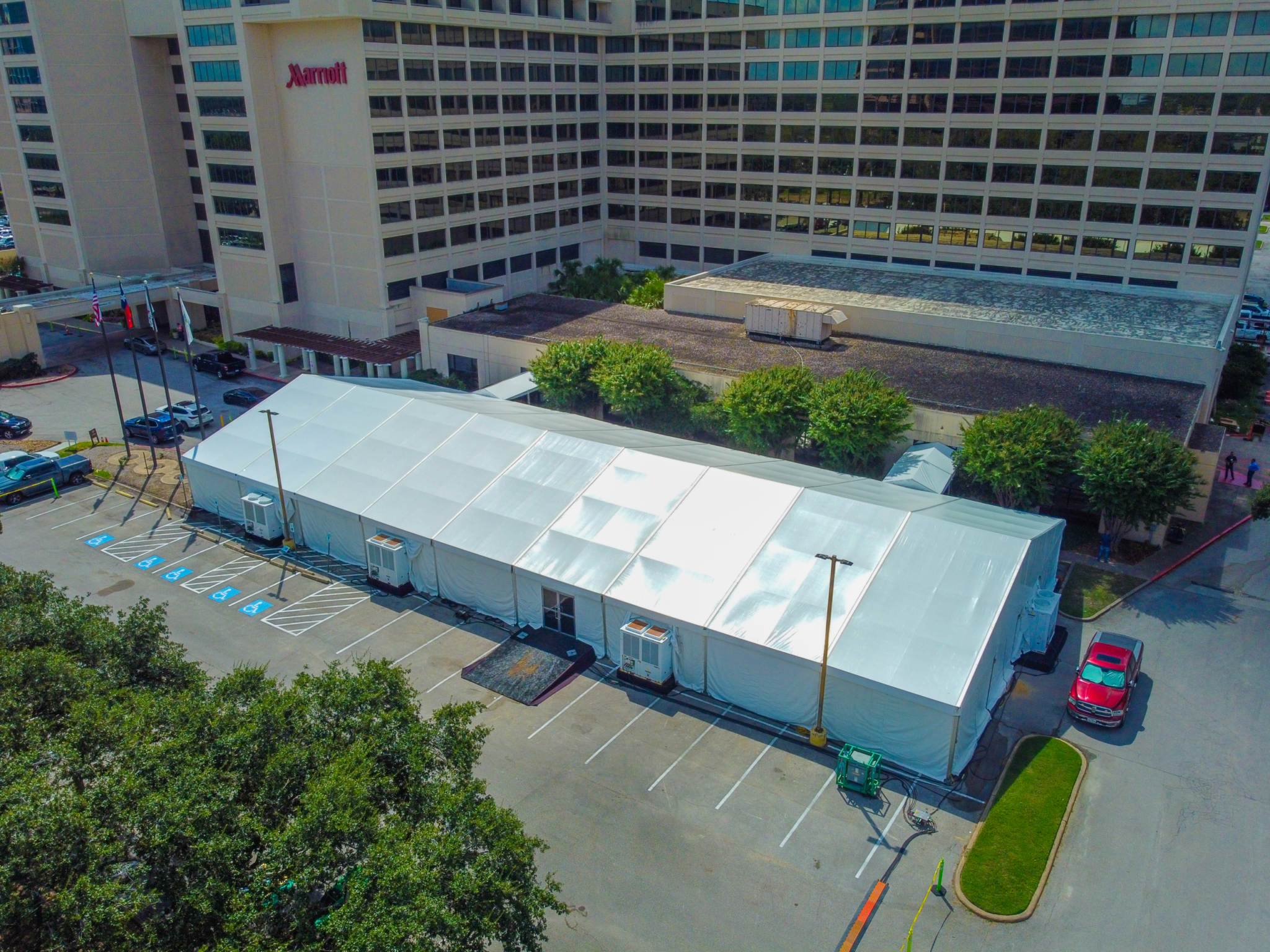
It is a rating against a specific overpressure, not a general claim of toughness.
Blast-resistant structures are engineered to withstand a stated peak overpressure and duration — the figures come out of your plant’s own siting study, done under API RP 752 and 753 or your operator’s equivalent standard. A structure that is right for one location is wrong for another a hundred feet away.
That is the important point for anyone planning a turnaround: the rating is a property of the location, not a product you pick off a list. Nobody can quote it without your numbers.
Send us your siting study and required overpressure rating and we will tell you what fits — and, just as importantly, when the answer is a different solution.
When Is It Required?
When people have to occupy space inside the blast radius of live process equipment.
Most often that is a turnaround: a contractor workforce arrives, needs somewhere to muster, brief, eat and coordinate, and the only available ground is inside the unit. Same story for extended refinery and chemical plant work.
It is a facility siting decision, made by your process safety people, before it is a rental decision. If your study says an occupied structure at that location needs a rating, that is the requirement. If it says the location is outside the radius, a standard structure is appropriate and cheaper.
What Are The Alternatives?
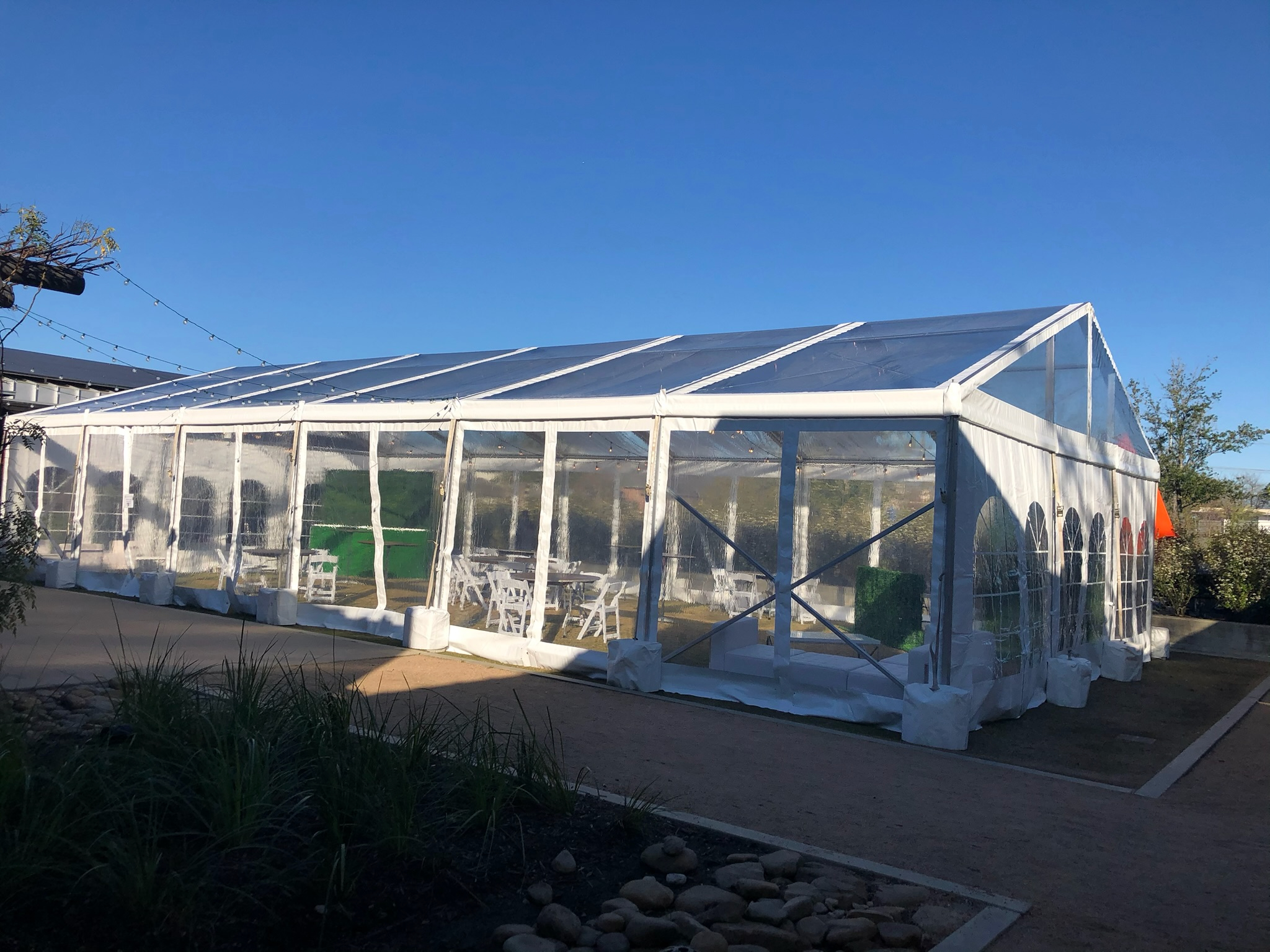
Often the cheapest answer is to move the structure rather than harden it.
Blast-rated space is expensive and slow to source. Where the study allows it, siting an ordinary structure outside the radius does the same job for a fraction of the cost — and for most break rooms, muster points and welfare space, that works.
See worker break room and cooling for what that looks like in practice, and long duration site tenting for anything standing for months.
We will tell you when you do not need the expensive answer. That is worth more to you than a sale, and it is why the conversation starts with your study rather than our catalogue.
How Do You Start?
With your numbers, not ours.
Bring us: the facility siting study or the required overpressure rating, the intended location and occupancy, how long it stands, what runs inside it, and your site’s own contractor and safety requirements.
With those we can tell you what is appropriate, what we can source, and where the honest answer is that you need a specialist blast-resistant module supplier instead of a tenting company. We would rather say that early than late.
ACME has served Houston industry since 1997 and our yard is minutes from the refining corridor. 713-729-2424, or the QRT line ext. 22 if this is an emergency.
Start With Your Siting Study
Send us your required overpressure rating and intended location. We will tell you what fits — including when the right answer is siting a standard structure outside the radius, or a specialist supplier.
Frequently Asked Questions
It’s a rating against a specific peak overpressure and duration, not a general claim of toughness. The required figures come from your facility’s siting study – typically done under API RP 752 or 753, or your operator’s equivalent. A structure suitable at one location may not be suitable a hundred feet away.
No, and be wary of anyone who does. The rating is a property of the location, not a catalogue item. We need your siting study or the required overpressure rating before we can tell you what’s appropriate.
When people have to occupy space inside the blast radius of live process equipment – most commonly during a turnaround, when a contractor workforce needs muster, briefing and welfare space and the only ground available is inside the unit. Your process safety team makes that call, not us.
Often, yes. If your siting study allows the structure to go outside the blast radius, a standard industrial tent does the same job for far less. We’ll tell you when that’s the case rather than sell you the expensive answer.
Your facility siting study or required overpressure rating, the intended location and occupancy, the duration, what runs inside, and your site’s contractor safety requirements. With those we can tell you what fits – or that you need a specialist blast-resistant module supplier rather than a tenting company.
Your facility’s process safety people, through the siting study. We build to the requirement that study sets; we don’t determine it. If you don’t have a current study for the location, that’s the first step and it comes before any rental conversation.
Since 1997
Family-owned & serving Houston for decades
Houston & Gulf Coast
Delivering across Southeast Texas
24/7 Quick Response
Disaster relief & emergency deployments
One Vendor
Tents, furniture, power, climate & service
Plan your next event with ACME and let us worry about the details!
From corporate gatherings to a festival for thousands, ACME’s event specialists will walk you through the entire process.